
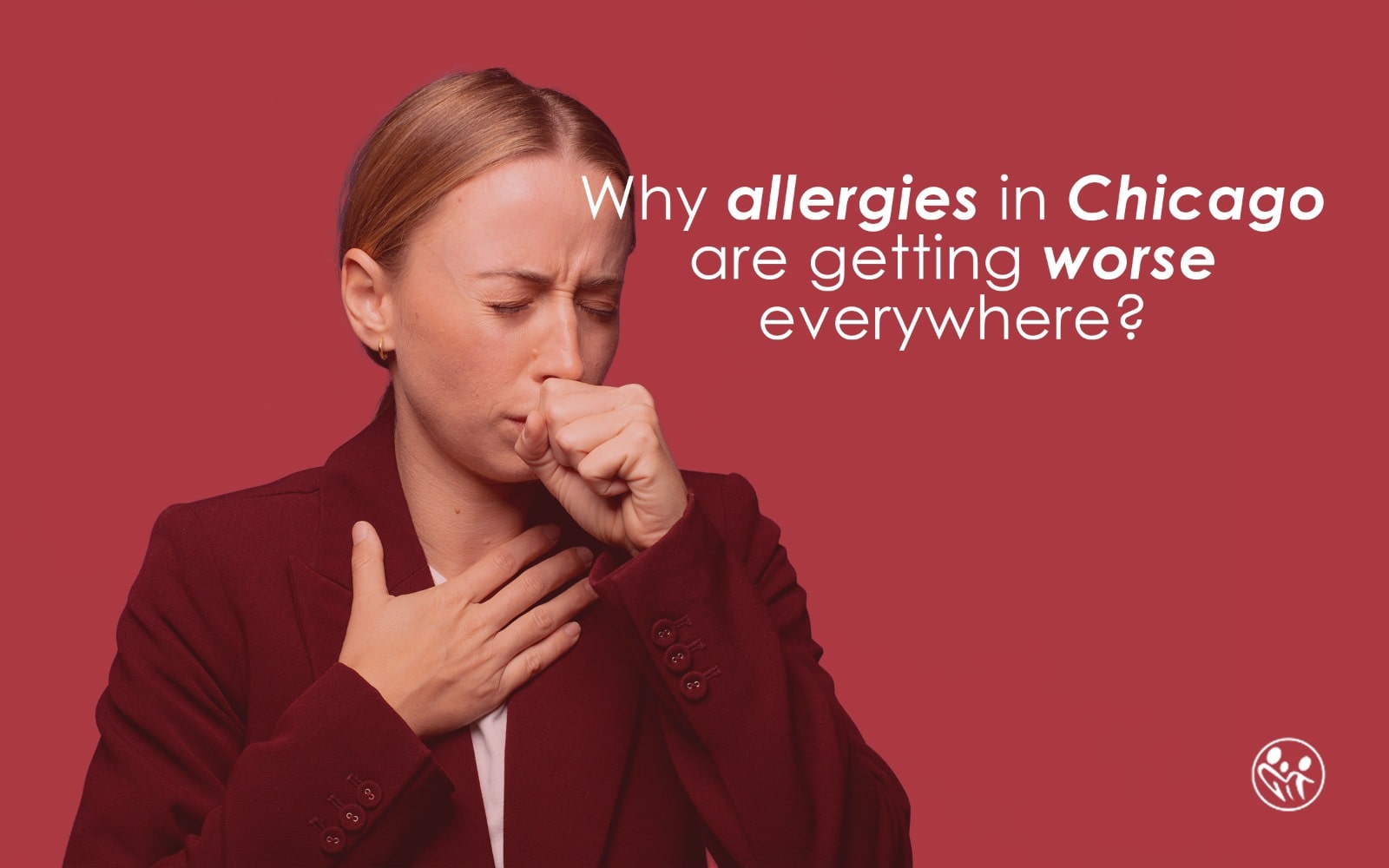
Allergies in Chicago aren’t predictable anymore. People now see symptoms appear earlier in the year, stay around longer, and get worse with time. Sneezing, itchy eyes, congestion, and sinus pressure feel more like a routine discomfort, no matter if you’re outside in the city or spending most of the day indoors.
The change isn’t personal. A study reports that over 25% of U.S. adults suffer from seasonal allergies, and the number has been rising over time. In a city like Chicago, where allergens like pollen mix with air pollution, the temperature keeps changing, and indoor irritants are your everyday companions, allergies are getting harder to manage and even feel more intense than before.
In this article, we will discuss the factors behind year-round allergies and the precautions you can take to minimize the effects.
Let’s dive in to find out.
Longer Allergy Seasons and Climate Changes
The most common reason for longer seasonal allergies is the warmer temperatures, which change how plants behave. Spring now comes earlier, and fall frost starts later. This gives pollen-producing trees, grasses, and weeds more time to grow and release allergens into the air.
As a result, people don’t get a good break to recover, as they are affected by one trigger after another so frequently. In Midwest cities like Chicago, this continuous effect makes symptoms last longer, feel more intense, and harder to escape.
Another leading factor that people don’t often hear about is high carbon dioxide levels. Extra CO₂ in the environment works like fertilizer for plants, especially pollen-producing species like ragweeds. This helps them grow more and produce stronger pollen than before.
Urbanization and Air Quality
City life can make your allergy symptoms worse over time. Whether we talk about air pollution, industrial activities, or smoke, they all irritate the lungs and make pollen more aggressive. When pollution sticks with pollen particles, the reaction becomes stronger.
Additionally, Chicago’s landscape consists of dense buildings and paved surfaces. This creates a heat island effect, due to which the temperature goes up in surrounding areas. As a result, plants release pollen for a longer period, which comes with greater potency. That’s why allergies are found more in urban living as compared to less developed areas.
Indoor Allergies
We often don’t pay attention to winter allergies. However, they often cause real discomfort because of what’s inside our homes.
In Chicago, spending more time indoors increases exposure to common triggers like dust mites, animal dander, and mold. These allergens tend to build up in carpets, bedding, and damp areas such as bathrooms and basements, especially in older buildings.
With windows closed and airflow limited, especially in winter, these irritants continue to circulate. This can lead to sneezing, wheezing, and itchy, watery eyes, even when outdoor pollen levels are low.
When Seasonal Allergies Turn Into Chronic Symptoms
Seasonal allergies are not confined to seasons anymore and linger longer than expected. When your body gets exposed to allergens for extended periods, the nasal passages stay inflamed, which leads to sinus pressure, prolonged congestion, and constant fatigue.
This persistent discomfort can lead to more serious issues like sinus infections occurring often, asthma symptoms, and headaches. The symptoms that seem to fade in a few weeks slowly turn into long-term issues as the triggers are present both indoors and outdoors. Another common reason is that people often overlook the condition due to which symptoms get severe and hard to manage year after year.
What You Can Do Right Now to Reduce Exposure in Chicago
If you are looking to manage seasonal allergies in Chicago, you don’t have to go all in with major life changes. Knowing the allergy triggers and how they happen can help you control them to a greater extent. Below are some practical measures you can follow.
- Check the pollen forecast and limit outdoor exposure accordingly. Pollen levels are usually high in the mornings, so the best time to plan your outdoor activities is sometime later in the day, preferably in the evening.
- During high pollen seasons, try to keep your windows closed and replace your AC or HVAC filters to avoid catching allergens, especially if you live in an older building.
- Keep your home clean, shower after being outdoors, and wash clothes frequently to remove pollen and avoid its spread indoors.
- Use a HEPA-filtered vacuum and wipe surfaces regularly.
- Wear a mask when you go outside, especially during high pollen season, to prevent pollen from entering your body through your airways.
Conclusion
In Chicago, allergy season lasts for months, especially due to indoor allergens like dust, mold, and poor circulation that stay all year long. In winter, people spend more time indoors, that trigger more allergies. If you experience wheezing, sneezing, nasal congestion, and watery eyes that interfere with daily functions, it’s time to get checked by a doctor.
With early medical intervention, you can prevent symptoms from getting worse or becoming a long-term issue. At Urgent care in chicago, we offer a convenient solution for all your allergy concerns. With fast access, quick relief, and expert guidance, we help you stay safe and sound from every seasonal illness.
FAQs
1. Who is at most risk during allergy season?
People who are more likely to catch an allergy during high-risk seasons include children, older adults, and anyone infected with asthma or have a history of allergies. Also, those who spend a lot of time indoors may be at high risk as indoor allergens stay longer and can lead to chronic symptoms.
2. Why is the air quality so bad in Chicago?
The poor air quality of Chicago is due to smoke from distant wildfires, traffic pollution, and changing weather patterns. This not only disturbs breathing but also worsens allergy symptoms.
3. What is the worst time for allergies?
Mainly, in the early morning hours and on dry, windy days, are when you are most likely to catch allergies. Generally, allergies are year-round, with spring and fall as peak seasons, as different pollen types are prevalent during these times.
4. Can hot water reduce allergies?
While hot water doesn’t treat allergies directly, taking warm showers helps you rinse off pollen from your skin. Similarly, washing clothes and bedding in hot water also helps you remove allergens like dust mites. Also, if you have nasal congestion, inhaling steam works wonders to ease the discomfort.