
Table of Contents
ToggleGet Fast Relief From Food Poisoning At Family Urgent Care
You have been dealing with worse abdominal pain, non-stop nausea, and vomiting for the past hour or two. And it all traces back to that not-so-healthy food you ate at the party last night.
Your energy is already gone, and you are trying to figure out your next move. This is a critical moment.
Don’t wait it out. If you need urgent care for food poisoning, walk into our clinic now and get quick relief. As a walk in clinic for food poisoning, we take patients without an appointment across Chicago and Northwest Indiana.
Our healthcare professionals assess your symptoms fast and give you the right food poisoning treatment.
But before we get into food poisoning treatment at urgent care, let’s untie every knot of doubt about the symptoms, the causes, and when you should actually seek care.
Signs And Symptoms Of Food Poisoning You Shouldn't Ignore
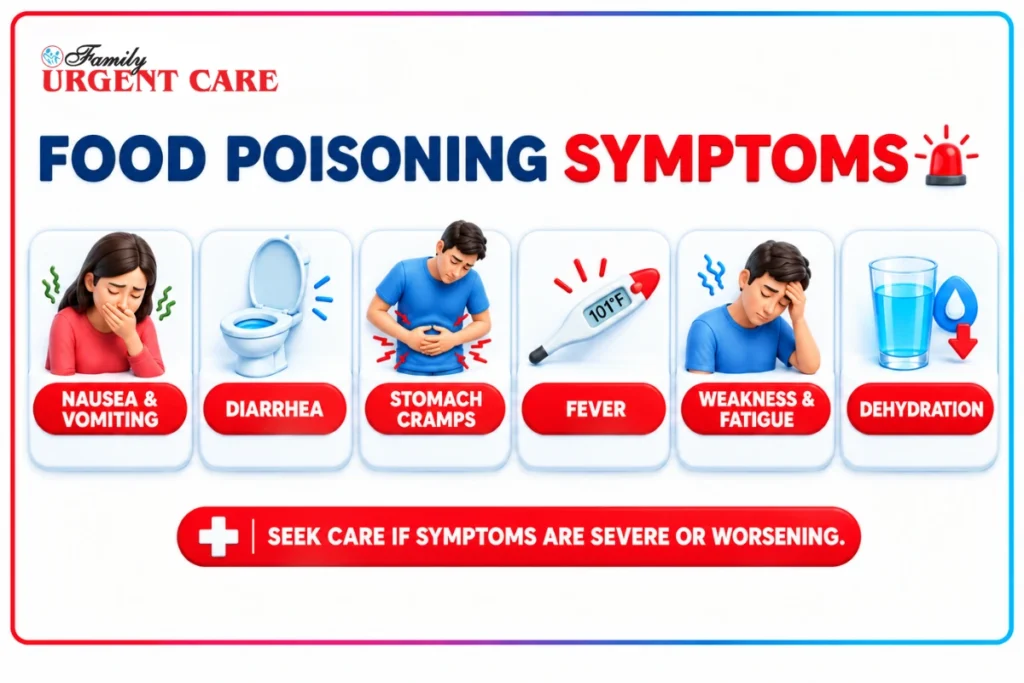
Food poisoning has a way of hitting hard and fast. Signs can show up within 2 to 6 hours of eating contaminated food, though some germs take a day or longer to make you sick.
Here are the common symptoms that call for medical attention:
- Nausea and persistent vomiting
- Loose, watery diarrhea that lasts more than 3 days
- Fever (usually over 102°F)
- Moderate to severe abdominal cramps
- Loss of appetite
- Body aches, headaches, and fatigue
- Trouble keeping down solids or liquids
- Dehydration (dizziness, tiredness, dry mouth, little or no urination)
If any of these stick around for a day or two, see a doctor right away. Early food poisoning treatment helps you recover faster and prevents complications.
Mild vs Severe Food Poisoning: How To Know The Difference
Not every case looks the same, and knowing mild vs severe food poisoning helps you make the right call.
Low Grade (Mild) Food Poisoning
Low grade food poisoning often stays mild. You may feel queasy, tired, and crampy, but you can still keep down small sips of fluid and it starts easing within a day or two. This is where a walk in clinic works well.
When Food Poisoning Turns Severe
Severe food poisoning is a different story. Watch for food poisoning diarrhea with blood, extreme belly pain, a very high fever, or signs of heavy dehydration.
Food Poisoning Urgent Care or ER: Where Should You Go?
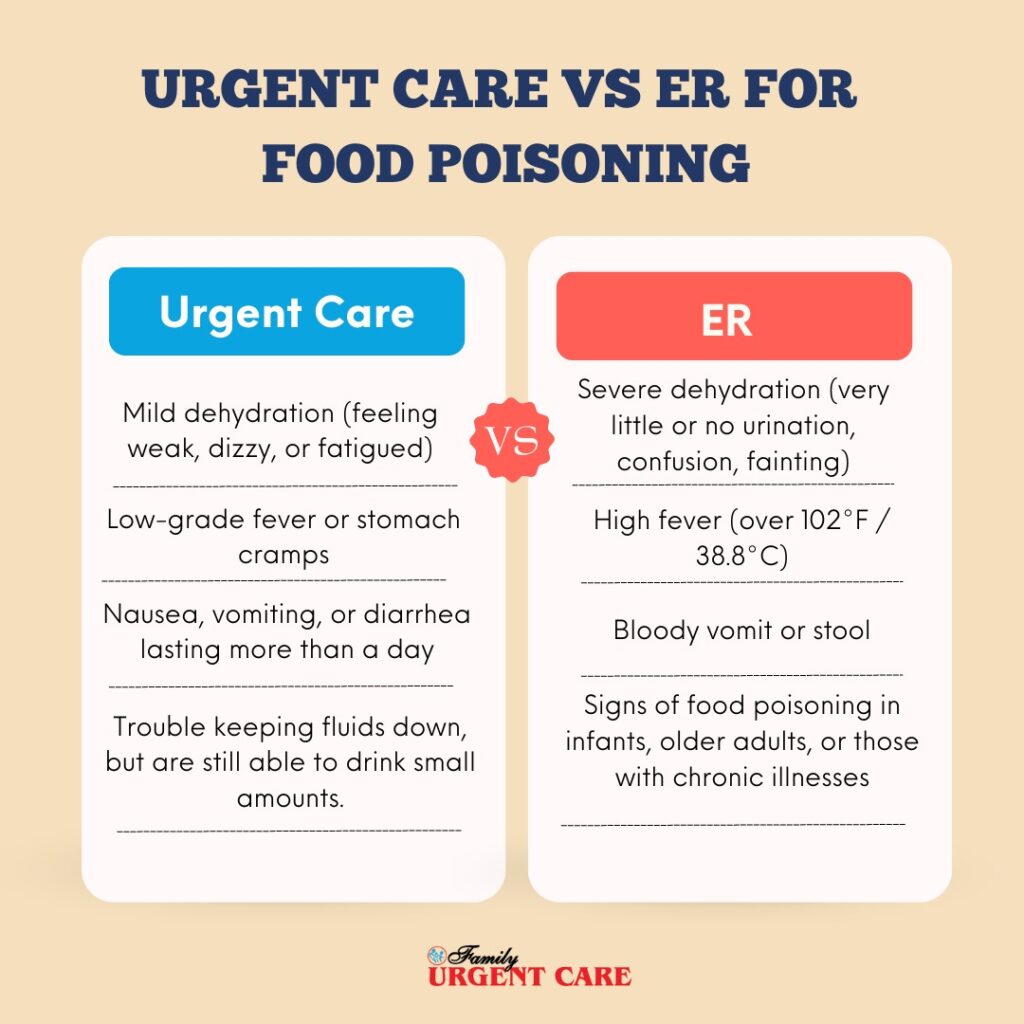
Still unsure whether it’s food poisoning urgent care or ER you need? Here’s the simple rule:
- Choose urgent care for food poisoning when symptoms are mild to moderate, you’re alert, and you can take small sips of fluid.
- Choose the emergency room for food poisoning if you have food poisoning bloody diarrhea, blood in your vomit, severe pain, a very high fever, confusion, blurred vision, dizziness, dark or no urine, or you can’t keep any fluids down.
When in doubt, call us. We’ll help you decide fast.
What Causes Food Poisoning? The Common Germs Behind It
Food poisoning happens when you eat food or drink water carrying bacteria, viruses, parasites, or fungi. A handful of germs cause most cases:
- Salmonella: Often linked to beef, poultry, eggs, and milk. It usually spreads when a food handler skips proper handwashing.
- E. coli: Common in undercooked meat, raw milk, dairy, and raw produce like lettuce and sprouts. In serious cases it can affect the kidneys.
- Campylobacter: Found in undercooked poultry, raw milk, and unwashed produce. Symptoms can drag on longer than usual.
- Listeria: Hides in soft cheeses, deli meats, and hot dogs. It can be especially risky during pregnancy.
- Norovirus: Comes from raw shellfish, leafy greens, and fresh fruit. It spreads easily from person to person.
- Shigella: Often in cream or mayo based salads. It can cause blood or mucus in your diarrhea.
Undercooked food, unclean water, poor storage, and unwashed hands are how most of these germs reach your plate. Your risk also climbs when you travel abroad, which is why this is sometimes called traveler’s diarrhea.
Is Food Poisoning Contagious?
Some types are. When a germ is behind your illness, you can pass it on through tiny particles from vomit or stool that linger on your hands and surfaces. It can spread fast at home, in daycares, and in schools. So wash your hands often, and don’t prepare food for others until you feel better.
Who Is Most At Risk Of Food Poisoning?
Anyone can get sick, but some people get hit harder and dehydrate faster:
- Children under 5, whose immune systems are still developing
- Adults over 65
- Pregnant women
- Anyone with a weaker immune system, including people with diabetes, cancer, or those on certain medications
If you or someone you care for falls into these groups, don’t wait it out. Reach out to a provider sooner rather than later.
How Long Does Food Poisoning Last?
Recovery time depends on the germ and how sick you are. In healthy people, symptoms often last 12 to 48 hours. Your age, immune health, and overall condition all play a part.
For people with diabetes or other health conditions, recovery can take longer. A weaker immune system makes it harder for the body to clear the infection.
Food Poisoning Treatment At Urgent Care
Your food poisoning treatment in Chicago and Northwest Indiana depends on how severe your symptoms are. Our providers check your symptoms, review your medical history, and ask about the foods you ate recently.
Lab Tests We May Run
If needed, we order lab tests to pin down the exact germ:
- Stool tests to find bacteria, viruses, or parasites
- Blood tests to check for infection or dehydration
- Urine tests to measure hydration levels
Fast Rehydration With IV Fluids
Replacing lost fluids and electrolytes is one of the most important steps. It prevents dangerous dehydration. So we offer quick IV fluid therapy to restore your fluid levels fast.
Can’t Make It In? Try a Virtual Visit
If you feel too unwell to travel to the clinic, you can still reach our healthcare professionals through a phone or video consultation. That’s what makes our walk in clinic for food poisoning easy to reach when you need it most.
Do You Need Antibiotics For Food Poisoning?
Not always. Most cases clear up on their own once your body flushes out the germ. Food poisoning antibiotics only help with certain infections, so our provider decides based on your test results. In many cases antibiotics won’t help, and they can even make things worse.
We also tend to avoid anti-diarrheal medicine in these cases, since it can trap the germ and drag the illness out longer. For mild symptoms, an over the counter option like Pepto-Bismol may bring some relief.
What You Can Do At Home To Recover Faster
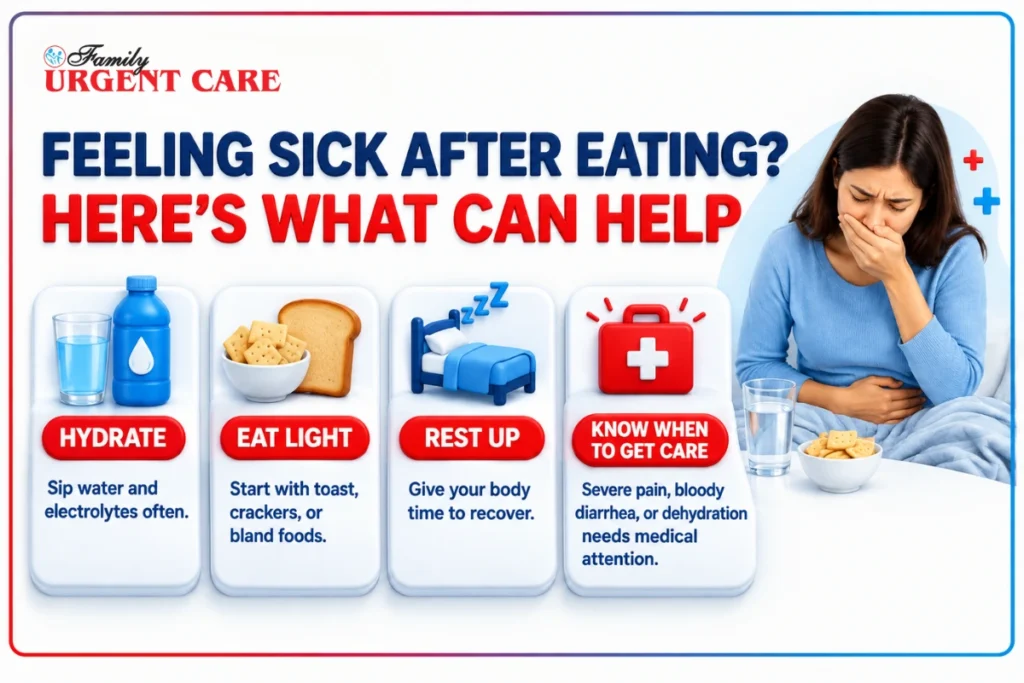
Mild cases often settle within a few days. Until you feel steady again, keep it simple:
- Skip solid foods and dairy at first, and let your stomach rest.
- As your appetite returns, start with bland foods like toast and crackers.
- Sip water and oral rehydration or sports drinks to stay hydrated.
- Avoid caffeine and dairy drinks. They can make symptoms worse.
- Rest as much as you can while your body clears the infection.
If symptoms get worse instead of better, don’t push through it. Come in or call us.
How To Prevent Food Poisoning
A few simple habits go a long way:
- Wash your hands well before you cook or eat.
- Keep raw meat and eggs away from produce.
- Cook meat, poultry, and seafood all the way through.
- Be careful with raw milk and raw produce.
- Refrigerate perishable food within two hours.
FAQ's
Some people find relief with over the counter options like bismuth subsalicylate (Pepto-Bismol) for upset stomach, oral rehydration solutions to replace fluids, and anti-diarrheal medicine such as loperamide. But go easy here. If you have bloody diarrhea or a high fever, skip anti-diarrheals and see a provider first, since they can make certain infections worse.
Head to urgent care for food poisoning when symptoms last more than a day or two, you can't keep fluids down, you feel dizzy or very weak, or you have a fever that won't break. Our providers can test, treat, and rehydrate you quickly.
Not exactly instantly, but it can come on fast. Some toxins, like those from Staph bacteria, can trigger symptoms within 30 minutes to a few hours. Other germs take a day or more to show up, which is why the timing can be confusing.
We check your symptoms and history, run stool, blood, or urine tests if needed, and treat the cause. That may include food poisoning antibiotics, anti-nausea medicine, and IV fluids to fix dehydration fast.
Morning sickness is tied to pregnancy. It usually brings nausea and sometimes vomiting, often in the morning, without fever or diarrhea. Food poisoning comes from contaminated food or water and adds cramps, diarrhea, and fever. If you're pregnant and not sure which one it is, check with a provider to stay safe.
They feel alike but start differently. Food poisoning comes from contaminated food or water, and symptoms often hit within hours. Stomach flu is caused by a virus that spreads from person to person, and it usually takes a day or two to show up. Food poisoning also tends to fade faster once the germ leaves your body.
For most healthy people, food poisoning clears up in 12 to 48 hours. It can last longer for young children, older adults, and anyone with diabetes or a weaker immune system.
Yes, they often do. You might feel a wave of nausea or cramps, get a short break, then feel it return as your body works to clear the germ. If the pattern drags on past a couple of days or gets worse, come see us.