
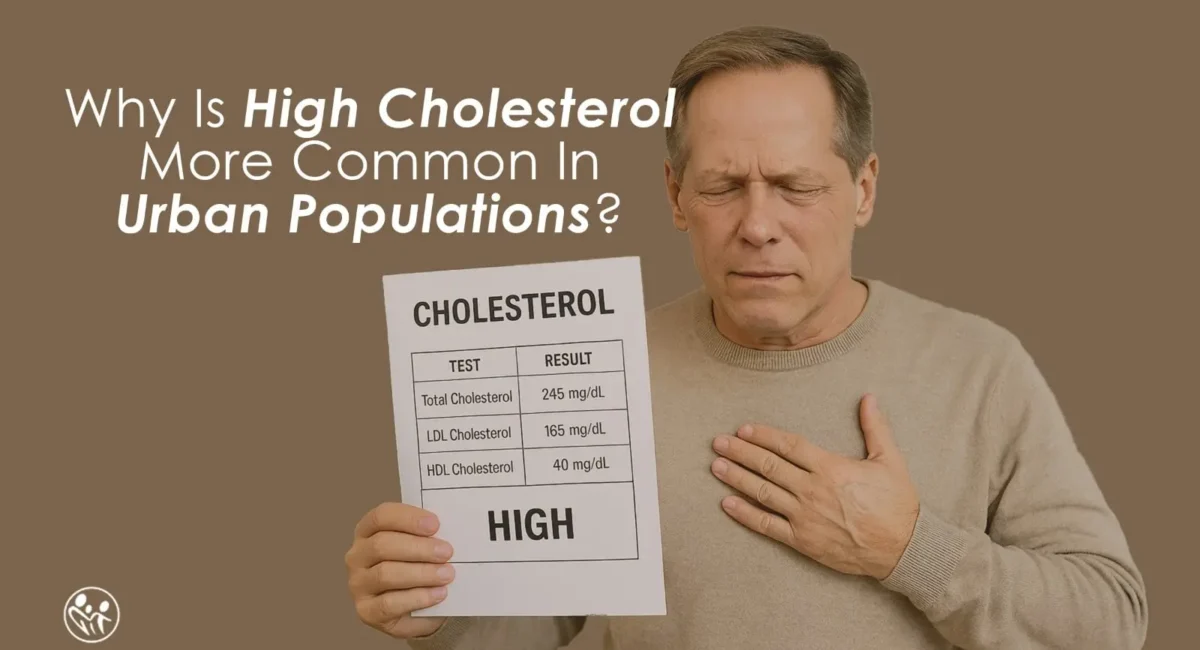
High cholesterol refers to too much waxy fat-like substance in your blood. It is a crucial component that helps form hormones, Vitamin D, cells, and digestion. However, when cholesterol, especially bad cholesterol (LDL), stays at high levels in your blood, it starts to build up inside blood vessels and disturbs the blood flow. This leads to various heart related issues.
According to the CDC, about 86 million people in the US above age 20 or older have total cholesterol levels of 200mg/dl. And you know the highest numbers are observed in cities rather than rural areas. This is because a city lifestyle gives rise to habits that silently increase cholesterol levels.
Understanding these triggers and minimizing them can help you avoid serious complications. This article mentions the common factors that raise cholesterol levels faster before you realize it, with easy prevention tips.
Continue reading to find out.
Table of Contents
ToggleUrban Lifestyle Patterns That Quietly Raise Cholesterol Levels
Wondering what’s behind the high cholesterol counts in your blood lately? Let’s have a detailed look below.
Sedentary Work Culture
Being busy doesn’t always mean that you are physically active, especially if your job involves sitting for hours. High workloads, back-to-back meetings, and packed schedules can make you feel like you are in a phase of continuous movement. However, your muscles aren’t working much. This slows down the process of fat metabolism, due to which LDL (“bad”) cholesterol starts to build up in the bloodstream.
To counter this, physical activity works wonders, and that doesn’t mean you have to go for long workouts. Even if you try short walks, it’s enough to raise HDL (“good” cholesterol) that takes extra cholesterol away from the bloodstream and back to the liver for removal. The WHO recommends that doing 15 minutes of regular exercise or 75 minutes of intense physical activity is ideal for better heart health and other body functions.
Convenience Eating & Hidden Fats
City life often pushes us towards restaurant meals, packaged snacks, and takeout, as they are quick to grab and make life easier. However, these food choices aren’t good for nutrition and contain refined carbs and saturated fats that raise your cholesterol levels over time.
Moreover, skipping breakfast or staying long hours without eating can make this worse, as it interferes with hormones that regulate appetite. This leads to overeating later in the day.
Your food portions also increase the amount of LDL (bad) cholesterol in your blood. Large servings mean more oil, more sugar, and more hidden fats in one sitting.
However, choosing grilled or baked options, reducing your portions, and adding fiber-rich foods like fresh fruits, vegetables, or whole grains can help. These small changes remove excess fat from blood, support HDL (“good” cholesterol), and keep your heart healthy in the long run.
Chronic Stress
City life is quite demanding and comes with a lot of pressure. Whether it’s traffic chaos, tight deadlines, or rising expenses, our bodies rarely get the rest they deserve. This leads to chronic stress over time.
In high-stress conditions, our body has a hard time handling fats, due to which cholesterol, especially LDL, slowly accumulates in the blood. It majorly happens due to high levels of cortisol hormone, which our body releases during times of stress. This is why people in cities can develop high cholesterol even when their diet seems reasonable.
Prevention starts with reducing daily stress with simple habits. These include short walks, deep breathing, meditation, and taking small breaks between tasks.
Poor Sleep
City life doesn’t really leave space for rest. Late nights, shift work, and long screen times disturb our sleep patterns. Some days we oversleep, while others lead to sleep deprivation. When sleep is too short, the body stays stressed and starts holding on to fat. When sleep is too long, energy drops, movement decreases, and metabolism slows. Both states lead to high cholesterol levels in the blood.
Research backs this up. In a study of 1,666 men and 2,329 women over age 20, women who slept less than 5 hours a night had higher triglycerides and lower HDL (“good” cholesterol). Sleeping more than eight hours showed a similar effect. Men were affected too, though they were less sensitive to oversleeping than women.
To avoid the risk, you should make a consistent sleep routine and try incorporating the following hacks.
- Aim for 7–8 hours
- Dim lights before bed
- Limit screen time
- Use earplugs or white-noise apps to block urban noise.
Even small steps to improve sleep can lead to healthier cholesterol levels and protect heart health.
Smoking
Smoking is more common in urban settings and has a direct impact on cholesterol. The chemicals, especially nicotine in cigarettes, damage blood vessels and make it easier for LDL (“bad” cholesterol) to stick to artery walls. At the same time, smoking lowers HDL (“good” cholesterol), which normally helps clear excess fat from the bloodstream.
Even light or social smoking adds up. Regular exposure keeps the body in an inflammatory state. This makes cholesterol harder to control and increases strain on the heart. However, cutting down or quitting smoking quickly improves HDL levels and blood vessel health. Even within weeks, the body starts repairing itself, lowering long-term cholesterol and heart risks.
FAQs
1. Why does my cholesterol go up?
Cholesterol often rises slowly because of everyday habits. Sitting too much, moving too little, staying stressed, sleeping poorly, or having a family history can all affect how your body handles fats. It’s usually a buildup over time, not one bad meal.
2. Why do office workers in cities have high cholesterol?
Most office jobs involve long hours of sitting, quick meals, and constant mental pressure. Even if the day feels busy, the body isn’t moving much. This lack of movement, combined with stress, makes cholesterol go up quietly.
3. Can high cholesterol occur even if you are not overweight?
Yes, it can. Cholesterol doesn’t depend only on weight. People who look healthy can still have high cholesterol because of stress, inactivity, poor sleep, or genetics.
Conclusion
Living in a city doesn’t automatically mean high cholesterol. What matters is being aware of the small choices we make every day, like moving a little more, eating a bit smarter, getting enough sleep, and finding ways to handle stress.
You must also check your cholesterol regularly by consulting a doctor. This helps keep your heart in good shape while reducing the risk of stroke and heart disease.
At Family Urgent Care, we offer blood tests to help you get ahead of rising cholesterol levels. If you are not sure about your numbers and doubting your heart health, our skilled doctors are here to give you clear answers without long waits.