
Get Expert Care For Stomach Flu At Family Urgent Care
We all know that icky feeling when your stomach suddenly feels “off”, your energy drops, and within hours, you’re battling waves of nausea or an unexpected rush to the bathroom. That sudden shift is often the result of the stomach flu.
Stomach flu, also known as viral gastroenteritis, is an infection that inflames the stomach and intestines. It’s usually caused by viruses like norovirus or rotavirus.
Although commonly referred to as the “flu,” it’s not related to influenza. It’s a digestive infection that spreads easily through contaminated food, unwashed hands, shared surfaces, or close contact with someone who’s sick. This is why it often affects multiple people in a household or workplace at once.
While anyone can get it, young children, older adults, and people with weaker immune systems are more likely to experience severe symptoms or lose fluids quickly.
At Family Urgent Care, we understand how draining stomach flu symptoms can be. That’s why our team offers prompt evaluations, gentle symptom relief, and hydration support to make your recovery smoother, safer, and more comfortable.
Symptoms of Stomach Flu
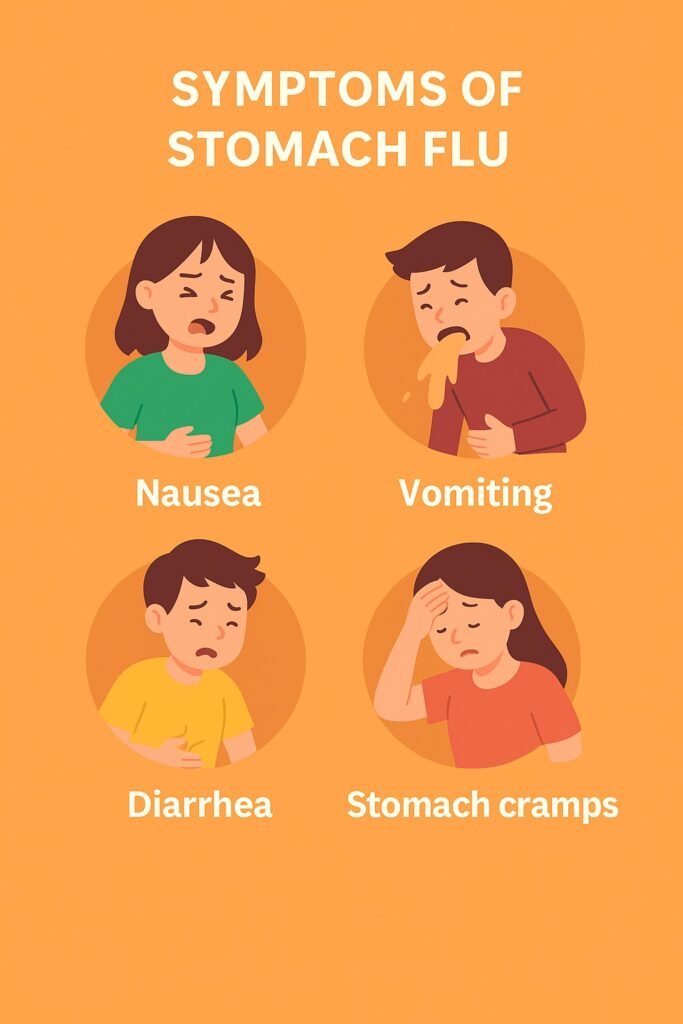
Stomach flu symptoms typically appear within 12 to 48 hours of exposure and can range from mild to severe. These include.
- Nausea
- Vomiting
- Watery diarrhea
- Stomach cramps or abdominal pain
- Low-grade fever
- Body aches or chills
- Headache
- Fatigue or weakness
- Loss of appetite
If you notice these symptoms, especially if they’re getting worse or making it hard to stay hydrated, visit Family Urgent Care for immediate relief.
Is Norovirus & Stomach Flu the Same Thing?
Norovirus and stomach flu are closely connected, but they’re not exactly the same. Stomach flu is a general term people use to describe viral gastroenteritis (an infection that causes nausea, vomiting, diarrhea, and stomach cramps). Norovirus is one of the most common viruses that causes this condition.
In short, stomach flu is an illness, and Norovirus is one of the leading causes of that illness.
Norovirus spreads quickly, especially in shared environments, and often causes the classic stomach flu symptoms that many people recognize. While other viruses (like rotavirus or adenovirus) can cause similar issues, Norovirus remains the most frequent culprit.
At-Home Care Tips for Stomach Flu
With a few mindful steps at home, you can ride out the stomach flu easily while keeping your family safe from catching the bug.
- Stay hydrated: Take small, frequent sips of water, broths, or oral rehydration solutions to replenish lost fluids and maintain steady energy levels.
- Take Care of Your Diet: Stick to easy-to-digest foods like toast, rice, bananas, or applesauce, and skip anything greasy, spicy, or heavy until your stomach settles.
- Get Plenty of Rest: Give your system the downtime it needs to fight the infection, so prioritize sleep, lounge, and keep physical strain to a minimum.
- Prevent the Spread of Germs: Wash your hands often, clean high-touch surfaces, and avoid sharing cups, utensils, or towels to protect your loved ones.
When To Go to the ER for Stomach Flu
Most cases of stomach flu improve with rest, fluids, and time. But in some situations, the illness can become more serious and may require emergency care. Knowing when to seek help can prevent complications, such as severe dehydration.
You should go to the ER or seek urgent care immediately if you experience
- Persistent vomiting or can’t keep fluids down.
- Symptoms of dehydration may include dry mouth, dizziness, or very little urination.
- High fever or blood in your vomit or stool.
- Symptoms that last longer than two or three days.
- Illness in infants, older adults, or people with weakened immune systems.
If you’re unsure whether your symptoms need emergency attention, Family Urgent Care can help. Our medical team will assess your condition and guide you to the right level of care, ensuring you receive the treatment you need, when you need it.
How Family Urgent Care Treats Stomach Flu
 At Family Urgent Care, we understand how quickly the stomach flu can leave you feeling unwell, causing fatigue, dehydration, and discomfort. Our mission is to help you feel better without unnecessary delays and get back to your routine safely.
- Quick check-up: We examine your symptoms carefully to understand how severe they are and make sure nothing else is causing your discomfort.
- Hydration Help: If you’re losing fluids, we guide you on drinking enough OR provide IV fluids to restore your body’s balance quickly.
- Relief from discomfort: Our specialists provide targeted medications to ease nausea, vomiting, and stomach cramps so you can feel more comfortable while your body heals.
- Tips for a Faster Recovery: We provide easy-to-follow advice on rest, diet, and hydration at home.
- Prevent the spread to others: We share simple steps to keep your family and coworkers safe from contracting it.
