
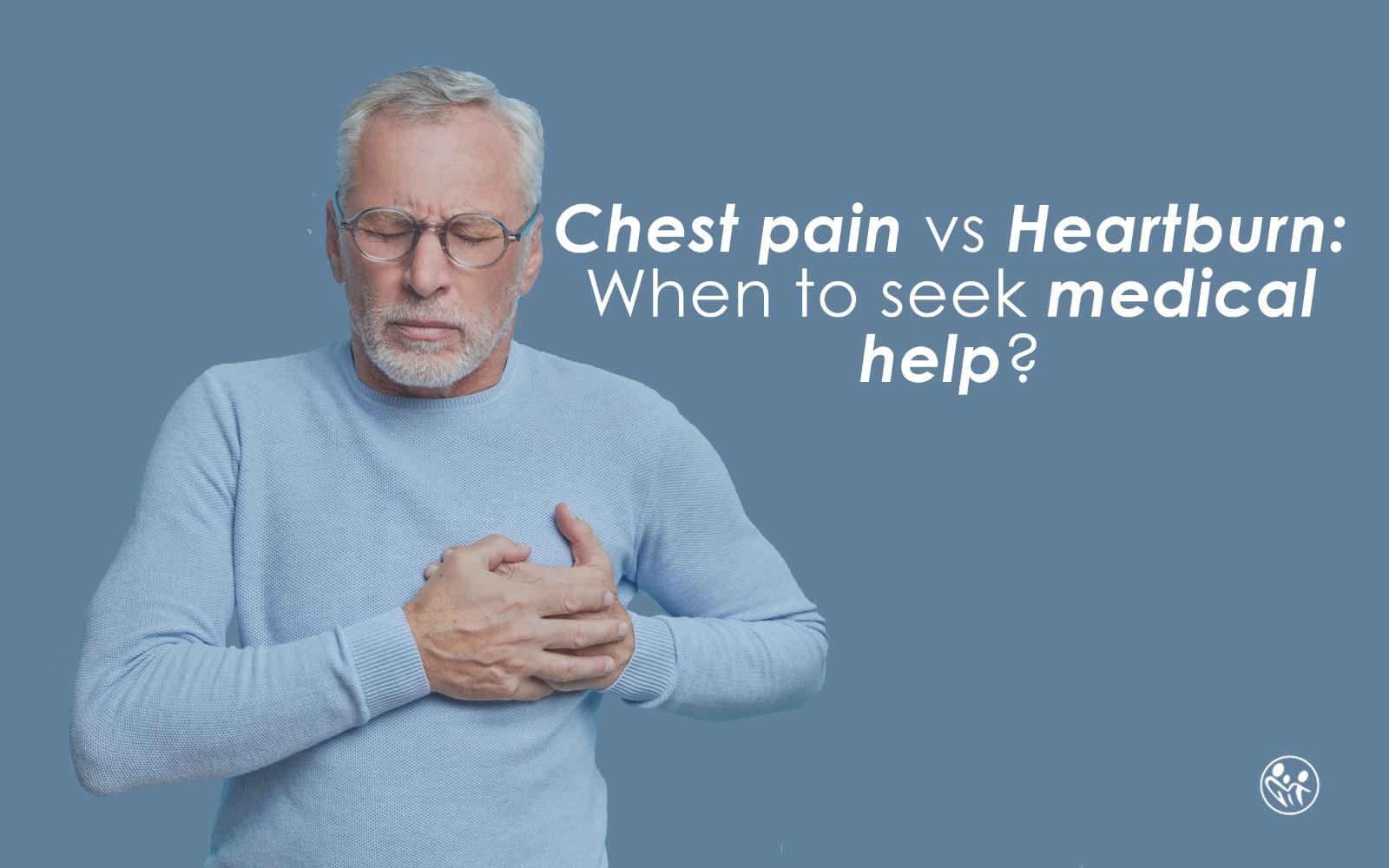
Have you experienced that sudden tightness and burning in the chest that stops you mid-moment while having a meal, lying in a bed, or doing a regular chore? For a split second, our mind goes for the worst-case scenario and starts to wonder,” What if it could be life-threatening?”
Chest discomfort is something impossible to ignore, yet easy to misread. Most people take it as heartburn, especially if it happens after meals, while others immediately assume it is a heart problem and start to worry. The similarity in how these sensations feel is what makes the situation so confusing and sometimes risky.
While not every chest pain is serious, knowing the difference between the two can reduce stress, save time, and help you make the right call during times of uncertainty.
As Dr. Asrar puts it,
“Not every chest discomfort is dangerous, but every unexplained one deserves your attention.”
What Is Chest Pain?
Chest pain is any discomfort or unusual sensation felt in the chest area. It can range from a sharp stab to a dull ache, tightness, or pressure. While many people immediately associate it with a heart attack, not all chest pain is heart-related. In fact, it can come from several different systems in the body.
Common causes include:
- Heart-related (cardiac): Reduced blood flow to the heart, inflammation, or other cardiac conditions.
- Lung-related: Infections, inflammation, or issues like blood clots affecting the lungs.
- Muscle or rib issues: Strain, injury, or inflammation of the chest wall, often from physical activity or poor posture.
- Lung-related: Infections, inflammation, or issues like blood clots affecting the lungs.
- Muscle or rib issues: Strain, injury, or inflammation of the chest wall, often from physical activity or poor posture.
Chest pain doesn’t always feel the same, and its seriousness can vary. In some cases, it may be mild and temporary, while in others, it can point to a medical emergency. That’s why it’s important to consider how it feels, when it happens, and any other symptoms that come with it.
What Heart-Related Chest Pain Often Feels Like?
Heart-related chest pain often feels like a kind of pressure, heaviness, or tightness in the center of the chest. You may feel as if something is sitting on your chest or squeezing it.
The discomfort comes on suddenly and spreads to other areas like the left arm, jaw, neck, or back. Some people also notice it during times of emotional stress or during physical work, and get better with rest.
This type of pain surfaces with symptoms like shortness of breath, fatigue, lightheadedness, sweating, or nausea. This makes it more severe and intense than usual localized chest discomfort.
What Is Heartburn?
Heartburn or acid reflux is that uncomfortable burning feeling in your chest that often shows up after you’ve eaten. Despite the name, it’s not related to your heart. It actually starts in your digestive system.
It happens when stomach acid moves upward into the esophagus instead of staying where it belongs.
Certain everyday habits can trigger it more easily, like.
- Eating spicy, greasy, or acidic foods
- Lying down right after a meal
- Having large or late-night dinners
- Feeling stressed or overwhelmed
However, if it keeps happening frequently, it’s worth paying attention to, because your body might be trying to tell you something isn’t quite right.
Chest Pain vs Heartburn: Key Differences
Both chest pain and heartburn cause discomfort in the chest area, so it becomes difficult to differentiate between the two conditions. However, certain factors help us determine what sets heart-related chest pain apart from heartburn. Let’s explore the differences below.
| Location | Center of the chest; may spread to the arm, jaw, neck, or back | Center of the chest, often behind the breastbone |
| Sensation | Pressure, tightness, squeezing, or heaviness | Burning feeling, sometimes rising toward the throat |
| Timing | Often during physical activity or emotional stress | Common after eating or when lying down |
| Relief | May improve with rest, but can persist or worsen | Often improves with an antacid or sitting upright |
Risk Factors for Heart Disease
When it comes to heart-related problems, certain factors make chest pain more concerning. You should take the symptoms seriously if you have one or more of these risk factors.
- Smoking: It damages your blood vessels, which results in poor oxygen supply to the heart, increasing the risk of heart disease.
- High cholesterol: It deposits in the form of plaque in your arteries, further restricting blood flow.
- Family history: If you have a history of heart disease in your family circle or among close relatives, you may also be at risk, no matter the age.
- Sedentary lifestyle: Desk work or lack of physical activity can also lead to poor heart health, obesity, and other risk factors.
Having these triggers doesn’t confirm that every chest pain is serious, but you should be more cautious and never ignore warning signs.
When to Seek Medical Help Immediately
You must not just wait it out and seek medical help immediately if you notice any of the following symptoms.
- Chest pain that lasts more than a few minutes or does not go away.
- Sudden pain that worsens.
- Pain that spreads to other parts, like the arm, jaw, neck, or back
- Shortness of breath even when you are at rest
- Dizziness, nausea, Sweating
Even if you are not sure what the actual cause is behind the symptoms, it’s safer to act early and get checked immediately before things get worse.
Conclusion
Chest discomfort can be alarming, but knowing the key indicators helps you understand the intensity of the condition. Heartburn is mostly the result of heavy and spicy meals that get better with simple remedies.
However, heart-related chest pain is usually severe, spreads to other parts, and comes with other warning symptoms.
If you have any doubt about the symptoms, visit your nearest Family Urgent Care clinic. We have expert physicians who provide proper evaluation of your chest pain to find the actual cause and give timely care before it’s too late.
FAQs
1. How do I know if chest pain is serious?
If it feels like pressure, spreads, or comes with breathlessness, seek help immediately.
2. Can heartburn feel like a heart attack?
Yes, heartburn can mimic chest pain, but it usually happens due to heavy meals, and antacids work well for it.
3. Should I go to urgent care for chest pain?
Urgent care centers usually evaluate mild symptoms. If you have sudden pain that gets severe, emergency care is the right option at that time.
4. How long does heartburn last?
It usually lasts some minutes to a few hours and gets better with medication or posture changes.
5. What should I do if I have persistent chest pain?
If your chest pain feels unusual or keeps coming back and you aren’t sure if it’s heartburn, seek immediate medical help, even if it turns out to be minor.