
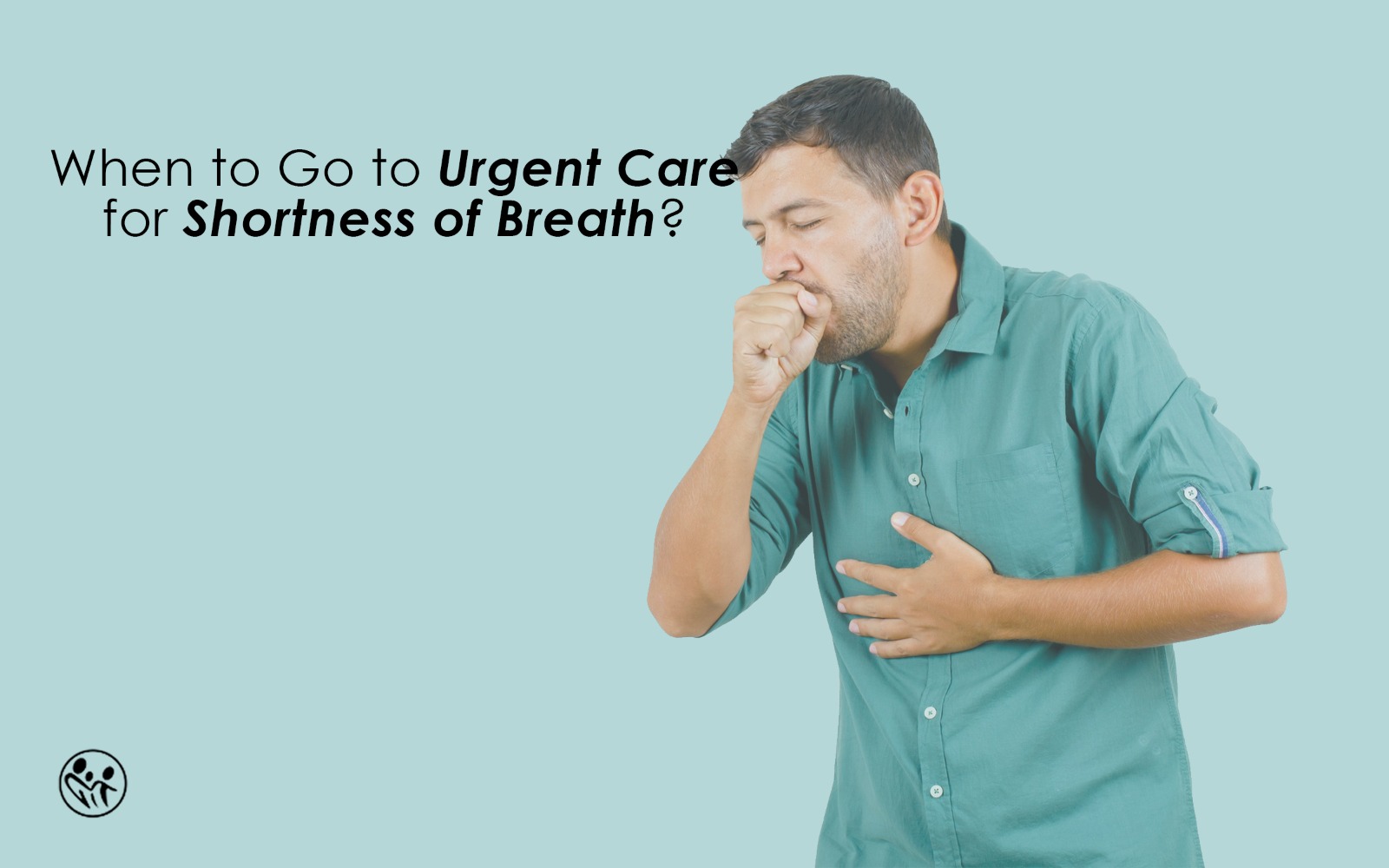
You start your day, leave home for work, and are in a hurry when you suddenly feel like it’s harder to breathe.
You may notice it when climbing stairs, especially if you need to stop and catch your breath.
At first, you think it’s just tiredness or stress. But after some time, the feeling doesn’t go away, and your breathing becomes more difficult.
In some cases, shortness of breath comes and goes, but in others, it can last longer and become more concerning
Because of this, it’s important to know when you can manage symptoms at home and when to seek medical care at an urgent care clinic near you.
In this blog, we will explain all the causes and symptoms of shortness of breath and when to visit urgent care for shortness of breath.
Common Reasons for Breathing Problems
There are several common causes of breathing problems, ranging from mild conditions like colds to more serious health issues.
Common reasons for breathing issues are:
- Chest infections (like bronchitis or pneumonia)
- Asthma or asthma attacks
- Long-term lung problems (like COPD)
- Anxiety or panic attacks
- Heart problems
- Blood clot in the lungs
- Smoke, dust, or pollution
- Being overweight or not active
- Low blood levels (anaemia)
By understanding these causes, you can better recognize your symptoms and decide when it’s time to visit an urgent care center near you.
Who Is More at Risk for Breathing Issues?
Certain groups are more likely to experience breathing issues due to factors like age, weakened immunity, pregnancy, or underlying health conditions. For instance:
- Young children, especially infants, have smaller lungs and airways, making them more vulnerable to breathing problems.
- People who are age 65 and above have weaker immune systems and also have underlying health conditions that increase the risk of respiratory illnesses.
- People who have chronic medical conditions such as lung diseases, heart diseases, and chronic kidney disease are at higher risk of severe illness from respiratory infections.
- People with obesity may find it harder to breathe due to higher pressure on the lungs, and individuals who have frequent allergies are more vulnerable to getting shortness of breath.
Mild vs. Severe Shortness of Breath: How to Know
Shortness of breath can feel different for everyone; sometimes it’s mild and passes quickly, while other times it can be intense and difficult to ignore.
| Mild | Severe |
| Slight difficulty, manageable breathing | Very hard to breathe, feels like suffocating |
| Happens during activity (walking, stairs) | Happens even at rest |
| Can speak full sentences easily | Can only speak a few words or not at all |
| Improves with rest | Does not improve or gets worse |
| May include mild fatigue | May include chest pain, dizziness, confusion, or blue lips |
Knowing this difference can help you decide whether your symptoms require an urgent care visit for shortness of breath or can be managed at home.
How Anxiety and Panic Attacks Affect Breathing
Anxiety and panic attacks can make it feel hard to breathe, even when your lungs are working normally. When you feel stressed or scared, your body reacts by speeding up your breathing.
This can lead to rapid, shallow breathing that makes you feel like you’re not getting enough air.
You may also notice chest tightness, dizziness, or a strong urge to take deep breaths repeatedly.
In most cases, this type of shortness of breath improves once you calm down. Taking slow, deep breaths, relaxing your body, and stepping away from stress can help your breathing return to normal.
However, if your symptoms feel severe, are different from usual, or don’t improve with rest, it’s important to visit urgent care to make sure there isn’t another underlying cause.
How Weather and Air Pollution Can Worsen Shortness of Breath
Weather and air pollution can also affect how easily you breathe. Even if your breathing is usually fine, certain conditions can make it harder and more uncomfortable.
Changes in weather can quickly affect your breathing. Cold air can make your airways tighten, so it becomes harder to take a deep breath.
On the other hand, hot, humid weather can make the air feel heavy, leaving you exhausted and short of breath.
Air pollution can also make breathing worse. Things like dust, smoke, car fumes, and pollen can irritate your lungs.
Breathing in these particles can cause coughing, chest tightness, or wheezing. If you have asthma or allergies, symptoms may worsen; seek urgent care for flare-ups and go to the ER if they become severe.
By paying attention to the weather and air quality, you can protect yourself. Try to avoid going outside when the air quality is poor.
When Can You Treat Shortness of Breath at Home?
You can manage shortness of breath at home if your symptoms are mild, improve with rest, and do not interfere with your daily activities.
- Mild symptoms
- No chest pain
- Does not interfere with your daily life.
- No history of serious heart or lung condition
It’s important to monitor your symptoms closely so they don’t become more severe or frequent.
How Urgent Care Can Help for Shortness of Breath
Urgent care centers can quickly assess breathing problems and help you feel better without the long wait of an emergency room. They focus on prompt evaluation and immediate relief to ensure your symptoms don’t worsen.
- Quick evaluation of symptoms: Providers check your breathing rate and oxygen levels and listen to your lungs to understand what’s causing the issue.
- On-site testing: Basic tests like pulse oximetry, chest X-rays, or rapid infection tests help identify conditions such as infections or inflammation.
- Immediate treatment: You may receive treatments like breathing support (nebulisers), oxygen therapy, or medications to open your airways.
- Medication support: Prescriptions for inhalers, antibiotics, or steroids can be provided to manage symptoms and prevent worsening.
- Monitoring and reassurance: Your condition is observed for a short time to ensure treatment is working before you go home.
- Guidance for next steps: Providers explain how to manage symptoms after your visit and when to seek further care.
When you should go to the ER for Shortness of Breath
Shortness of breath can sometimes become serious very quickly. Urgent care clinics can manage mild symptoms. However, certain signs require immediate attention. Seek emergency care as soon as possible.
You should seek emergency care if you experience any of the following symptoms:
- Chest pain
- Fainting
- Nausea
- Dizziness
- Bluish lips
If you experience these signs, do not ignore them. They can quickly become life-threatening.
It is not always easy to tell what is an emergency and what can wait for a doctor’s visit. That is why, if you experience any of these symptoms, you should not delay seeking emergency care.
Don’t wait to feel better, breathe easier today. Visit Family Urgent Care for quick, compassionate care you can trust. Book your appointment now to take the first step toward better breathing.
FAQs
Can anxiety-related shortness of breath be treated at urgent care?
Yes, urgent care providers can evaluate symptoms to rule out serious conditions and help manage breathing issues caused by anxiety or panic.
Will urgent care perform tests for breathing problems?
Depending on your symptoms, they may use tools like pulse oximetry, chest X-rays, or basic lab tests to identify the cause.
Is urgent care appropriate for children with breathing issues?
Yes, urgent care can assess mild to moderate breathing concerns in children, but severe symptoms should be taken to the emergency room.
Can I visit urgent care if my breathing problem comes and goes?
Yes, even intermittent symptoms should be evaluated to ensure there’s no underlying condition that needs attention.