
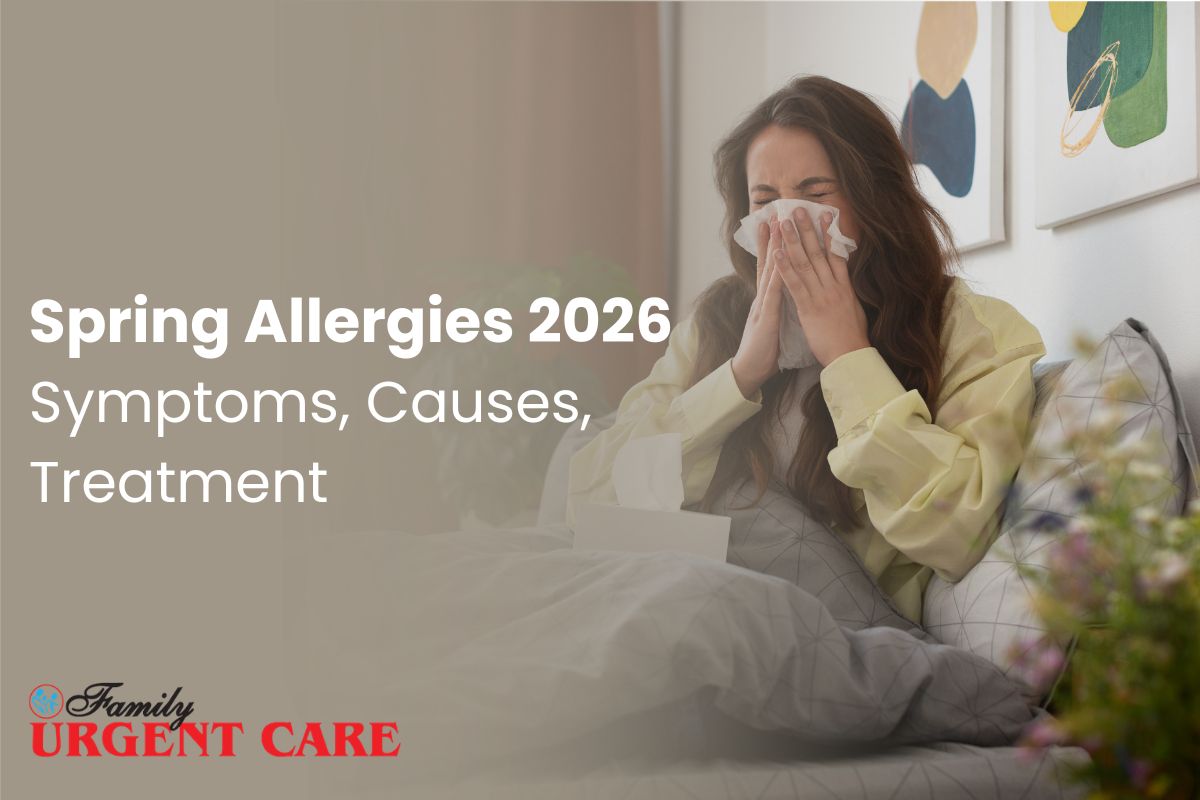
Is that sneeze in the morning just a little discomfort or the start of a pattern that follows you all day? It might hit you mid conversation during a meeting or probably when you sit down to relax after a long day.
As spring comes in, people usually go through subtle changes like frequent sneezing, a stuffy nose, or constant irritation in the eyes. These signs usually point towards spring allergies that happen when the body reacts to mold and pollen in the environment. While it seems manageable at first, the symptoms soon start to interfere with your work and daily life.
In this article, we will discuss common allergy symptoms, their triggers, and the steps you can take to avoid and treat them better. You will also get to know when you should go to urgent care vs emergency room
Continue reading to find more about spring allergies.
What are Spring Allergies?
Spring allergies, generally called allergic rhinitis or hay fever, occur when your immune system reacts to certain particles in the air, especially pollen released from trees, weeds, and grass.
Our body takes these allergens as a threat and tries to get rid of them by releasing chemicals like histamine. This leads to symptoms such as, sneezing, a runny nose, congestion, and itchy eyes. The reaction is also triggered by indoor allergens such as pet dander, dust mites and mold.
Over the years, we have seen people dealing with seasonal allergies year-round, and 2026 seems to continue the trend. This happens because plants release pollen earlier and at different times of year due to warmer temperatures and a longer growing season. As a result, symptoms last longer than expected, making allergies more likely beyond early spring.
Common Spring Allergy Triggers
During spring, certain allergens tend to show up more frequently and in higher amounts. These include.
Tree pollen
These are often the earliest triggers in spring. Some common examples of tree pollen include.
- Oak
- Birch
- Cedar
- Pine
- Maple
- Elm
- Ash
- Poplar
- Willow
Grass and weeds pollen
These become more common as the season progresses. Some of the popular ones are as follows.
- Bermuda grass
- Timothy grass
- Ryegrass
- Kentucky bluegrass
- Johnson grass
- Orchard grass
- Bahia grass
Mold spores
They grow in damp soil, fallen leaves, and humid conditions both indoors and outdoors. Hence, these are not usually season-specific. Common examples include.
- Alternaria
- Cladosporium
- Aspergillus
- Penicillium
- Fusarium
- Mucor
Mostly, pollen counts are high during breezy days as compared to rainy days that wash away those allergens. Also, they are very lightweight and travel easily through the air. That’s why it is hard to avoid them even if you spend limited time outdoors.
Common Symptoms of Spring Allergies
Spring allergies don’t always hit all at once. They often appear with a few extra sneezes or a slightly blocked nose and then gradually turn into a pattern you can’t ignore.
Common symptoms include:
- Frequent sneezing, especially in the morning
- Runny or stuffy nose that doesn’t fully clear
- Itchy, red, or watery eyes
- Post-nasal drip (mucus dripping down the throat)
- Dry or persistent cough
- Sore or scratchy throat
- Sinus pressure or facial discomfort
- Mild headaches or a heavy feeling in the head
- Reduced sense of smell or taste
- Ear congestion
While some people experience a few of these, others complain about the combination of the above symptoms that comes and goes throughout the day. Allergy symptoms can also feel similar to a cold, but they tend to stick around longer, depending on the duration of exposure.
If you have asthma and hay fever at the same time, the allergens could also trigger an asthma attack.
Why Symptoms Feel Worse in 2026
Many people are noticing that their allergies feel more intense or last longer than before. As per the CDC, about 1 in 3 adults and 1 in 4 children in the U.S. develop seasonal allergies.
A big reason for this is environmental change. Warmer weather and increased air pollution can both raise pollen levels and make the body more sensitive to allergens.
So while spring allergies are not new, the way they show up and how long they stick around continues to evolve. This shift helps you take symptoms more seriously and manage them more effectively.
Diagnosis
If your symptoms keep getting worse or don’t improve with basic care strategies, it’s best to consult with a healthcare provider for a proper diagnosis. The physician may ask you about the symptoms and assess whether they follow a seasonal pattern. They may also perform some basic tests to confirm the results, which are as follows.
- Skin Prick Test: This is one of the most common methods in which your skin, usually on the forearm or back, is lightly pricked with a small amount of allergen. If you’re allergic, a small raised bump appears within minutes. It’s quick and gives fairly immediate results.
- Blood test (IgE test): This test measures the level of allergy-related antibodies in your blood. It’s often used for people with certain skin conditions or those taking medications that could affect results.
- Intradermal test: In this test, a small amount of allergen is injected just under the skin. It’s more sensitive than a skin prick test and may be used when initial results are unclear, though it’s usually done in more controlled settings.
In many cases, there is no need for extensive testing. Your doctor may start the treatment after evaluating the pattern of your symptoms. If the symptoms are ongoing or start to affect your daily life, these tests are really effective in identifying the exact cause for a more targeted treatment.
Best Ways to Treat Spring Allergies
You can cure spring allergies through a wide range of approaches. It could be a mix of home remedies, medications, and routine adjustments to get rid of that constant sniffling feeling.
Home Remedies For Spring Allergies
With a few simple steps at home, you can visibly reduce the intensity of allergies and ease symptoms. Some of them are as follows.
- Saline nasal rinses: If you want to keep allergies at bay, the best way is to gently flush your nasal passages with saline solution. It flushes away all the allergens and mucus that cause congestion.
- Honey: Raw honey is also one of the most effective options if you are looking for a medicine-free way to treat seasonal allergies. You can try different doses starting from a single tea or tablespoon a day to increasing the amount as per your requirements. Try and test to see what works best for you.
- Stinging Nettle: Nettles naturally reduce histamines in the body. You can have it in the form of tea or capsules to reduce the worst effects of allergens.
- Stay Hydrated: Drinking high amounts of water and consuming fruits and vegetables with high water content helps thin mucus secretion, providing you relief from that scratchy throat. It also reduces inflammation, which is the main trigger for allergic reactions.
- Vitamin C: It works as a natural source of antihistamines and anti-toxins to ease hay fever symptoms. The recommended dose is 1000 milligrams, and you should take it 5 times a day for four to five days during allergy flare-ups to help manage symptoms. You can also spread the doses throughout the day, as the body absorbs it better this way.
Over-the-Counter (OTC) Medications
When home remedies aren’t enough, OTC options can provide faster relief:
- Antihistamines: These help in blocking the chemicals (especially histamine), which your body releases in response to allergens. As a result, you will experience less sneezing, itching, and sniffling.
- Decongestants: Useful for temporary relief from nasal congestion, though they shouldn’t be used long-term.
- Eye drops: Can relieve itchy, watery, or red eyes caused by pollen exposure.
These medications are widely available, but it’s important to choose one that fits your symptom pattern and health profile.
Prescription Medications
If your allergies don’t improve with home remedies or over-the-counter options, it may be time to talk to a doctor. Prescription treatments are usually chosen based on what’s triggering your symptoms and how severe they are.
Nasal Corticosteroid Sprays
These sprays work directly inside your nose to calm inflammation. They can ease stuffiness, a runny nose, and constant sneezing. Don’t expect instant relief as they usually take a few days to kick in. Using them regularly, especially during allergy season, makes a big difference.
Antileukotrienes
These medications block certain chemicals in your body that cause allergic reactions. They’re often added when nasal sprays alone aren’t enough. Think of them as extra support to help keep symptoms under control.
Immunotherapy (allergy shots):
This is a longer-term approach. Instead of just managing symptoms, it helps your body become less sensitive to allergens over time. It’s a gradual process, but many people notice more lasting relief and fewer flare-ups in the long run.
Since everyone’s allergies are a bit different, your doctor will look at your symptoms, triggers, and medical history before recommending the best option for you.
Lifestyle & Preventive Measures
While medications can work quite well, you can manage spring allergies with small, consistent habits and lifestyle changes. Following the practical steps given below, you can not only limit the exposure but also reduce the severity of allergens.
- Avoid going outside, usually in the early mornings and dry windy days during peak allergy season. Check your daily weather forecast to check pollen counts before making outdoor plans.
- Try wearing dust masks and sunglasses when going out during high pollen periods.
- Remove clothes after coming back inside and take a shower to wash pollen from your hair and skin.
- Use air conditioners with HEPA filters indoors and keep windows closed during peak pollen days.
- Clean surfaces frequently using a vacuum and control indoor humidity to stop the growth of indoor allergens.
- Eat food rich in vitamin C, probiotics, and healthy fats.
- Keep your shoes at the door to reduce the chances of bringing pollen inside.
When to Seek Urgent Care
Most spring allergies are mild, and you can easily manage them at home or with over-the-counter treatments. However, some symptoms can signal that allergies are more severe than a typical seasonal reaction, and you should seek urgent care immediately. These include.
- Severe shortness of breath or wheezing
- Rapid or labored breathing
- Swelling of lips, tongue, or throat
- Hives or widespread skin rash
- High fever
- Severe headache or facial pressure
- Dizziness or fainting
- Persistent vomiting or nausea
- Rapid heart rate or palpitations
- Confusion or trouble speaking
If any of these symptoms appear, it’s important not to wait and see if they improve on their own.
Mild Allergies vs Serious Reactions
Mild seasonal allergies can cause uncomfortable symptoms like sneezing, watery eyes, and nasal congestion. These symptoms are usually predictable and can come and go without affecting breathing or overall health much.
However, serious reactions begin suddenly and get worse rapidly with time. They affect more than one body system and potentially involve the respiratory and cardiovascular systems. Knowing how they differ from mild allergies can help you respond properly without unnecessary delays.
Urgent Care vs Emergency Care: What to Consider
If you go through moderate allergy symptoms like sinus pressure, chest pain, or itchy eyes, immediate care clinics in Schererville can treat you well. They provide relief by prescribing medications, checking for complications, and giving allergy shots.
However, emergency care usually comes in handy when the situation gets life-threatening. For instance, if you have severe breathing issues, fast swelling of the throat or face, and the signs of anaphylaxis (severe allergic reactions), emergency care is the safest call.
Knowing the difference and severity of the condition can help you take the most suitable action at the moment.
Conclusion
Spring allergies can throw you off track real quick. However, knowing the triggers and tracking your symptoms makes it easier for you to overcome them. Simple steps like lifestyle changes, home remedies, and taking the right medications can help a lot.
Additionally, reducing your exposure during high pollen season can also help you prevent the symptoms from taking over. With a few little tweaks and mindful choices, you can enjoy the spring without feeling run down by constant sneezes and sniffles.
If your allergies get overwhelming or come with concerning symptoms, don’t wait it out and visit Family Urgent Care right away. We have experienced doctors who assess your symptoms, provide you with quick relief, and guide you on the aftercare real soon.
Visit our nearest walk-in clinic in Rogers Park today to stay allergy free this season.
FAQs
What causes spring allergies, and why do they happen every year?
Spring allergies occur when your immune system identifies pollen from grass, trees, and weeds as a threat and overreacts to it. The same plants release pollen each season at the same time, which is why they happen every year.
2. How can I tell the difference between a cold and seasonal allergies?
Colds last a few days and come with symptoms like fever, body aches, and fatigue. However, allergies can last for weeks, especially during pollen season, and cause itchy eyes, sneezing, and a runny nose. Additionally, allergies have a sudden onset while colds develop gradually.
Read More: Spring Allergy vs Cold
3. Are Spring Allergies Hereditary?
Yes, allergies can also be influenced by genetics. If your parents have seasonal allergies quite often, you have a fair chance of developing them too.
4. Can children get spring allergies, and how are they treated?
Yes, children may also get allergies like adults, and treatment options are also the same, like you may give them saline rinses, avoid their exposure to pollen, and give antihistamines and nasal sprays after a doctor’s approval.
5. What are the best over-the-counter medications for relief?
Antihistamines, nasal sprays, and eye drops can help reduce sneezing, congestion, and itchy eyes. Pick one that matches your main symptoms.
6. How can I reduce pollen exposure at home and outdoors?
Check pollen forecasts, keep windows closed, shower after being outside, and use HEPA filters indoors. Avoid outdoor activities when pollen levels are high.
7. When should I see a doctor or go to urgent care?
See a doctor if symptoms are severe, last all season, or don’t improve with home care. Go to urgent care immediately if you have trouble breathing, swelling of the lips/tongue/throat, or a high fever.
8. Can diet or supplements help reduce allergy symptoms?
If you take a balanced diet that includes fruits, vegetables, and omega-3s, it helps your body cope with allergies. Yet they don’t quite replace medicines and other prescribed treatments.
9. Is immunotherapy (allergy shots) effective for long-term relief?
Yes, allergy shots are quite effective as they prepare your immune system against specific allergens. As a result, the symptoms get milder and appear rarely in the future.
10. Do weather changes affect the severity of spring allergies?
Yes. Warm, dry, and windy days often increase pollen levels, while rain can temporarily lower them by washing pollen out of the air.