
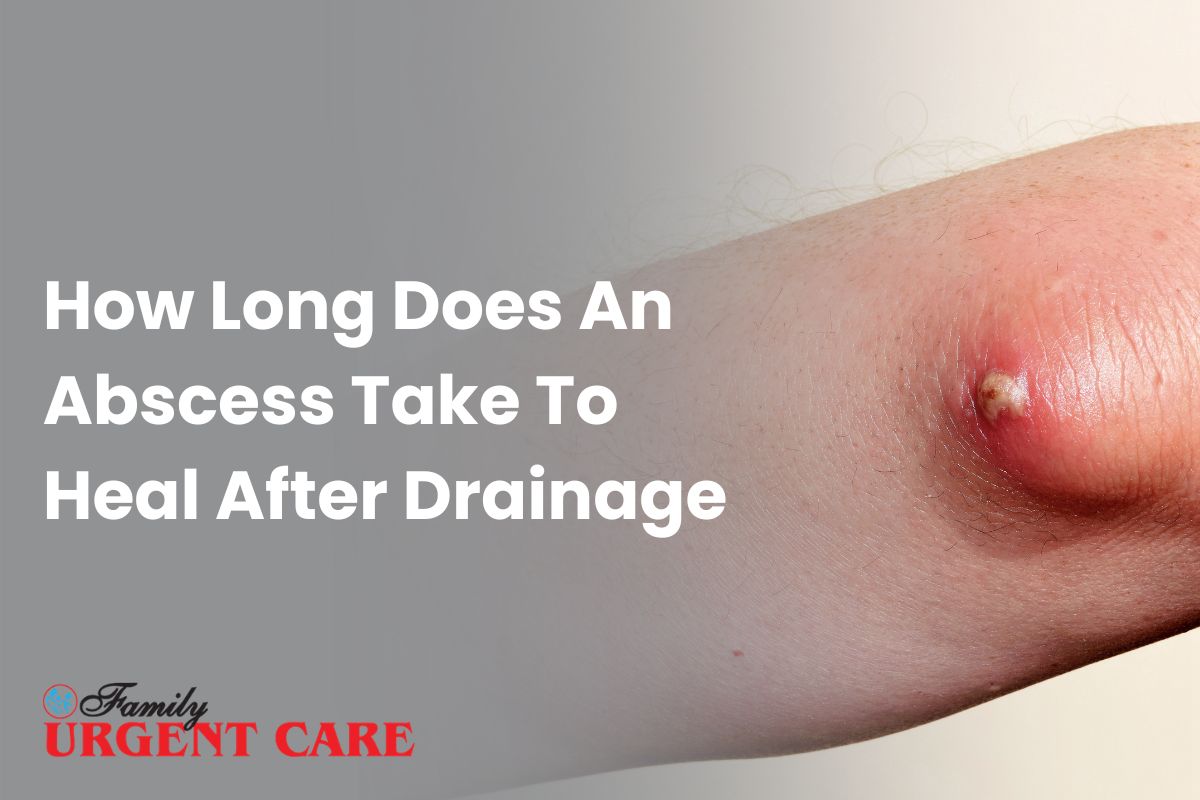
You’ve finally had your skin abscess drained, and now you are worried, thinking, “How long will it take to heal? Will it leave a scar? Can the abscess come back? And what can you do to heal the wound faster?
We understand you might be confused by these mind-boggling questions
Skin abscesses remain a common reason for urgent care visits this year as well. While treatment hasn’t quite changed, people better understand the aftercare practices and healing expectations today.
In this blog, you’re about to untie all the knots of doubt regarding the abscess wound drainage process and the healing period. You’ll even find some handy aftercare tips below on speeding up your wound healing.
Let’s dive in to find out.
What Happens After an Abscess Is Drained?
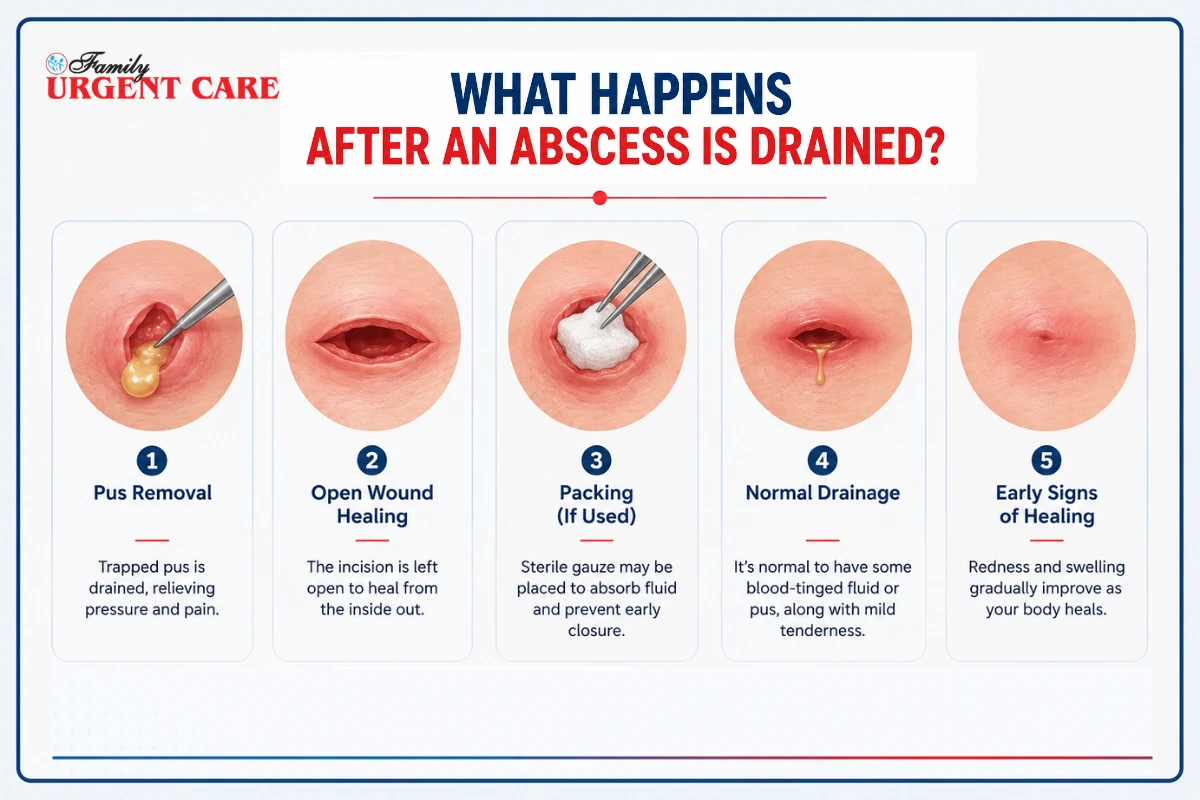
Wondering what happens after abscess drainage? We are about to make everything crystal clear so the recovery process becomes less stressful for you.
Incision and Drainage
During the procedure, your doctor numbs your skin using local anesthesia. Further, they make a small opening in the abscess to drain the trapped pus. This relieves the pressure inside the swollen area, which is why many people notice considerably less pain right after the procedure.
One thing that surprises many patients after draining an abscess is that the wound is usually not stitched immediately. Your provider may leave it open or even apply slight pressure to drain the pus completely. This is because closing the wound too early can trap bacteria inside, increasing the risk of infection.
Packing of Larger Wounds
After complete drainage, the doctor cleans the area with normal saline. If you have a deep or larger abscess, your provider may place a small piece of sterile gauze, known as packing, inside the wound. It absorbs any remaining fluid and prevents the wound from closing too soon. Not every abscess requires packing, and your provider will determine whether it’s necessary.
Note: After abscess drainage, it’s completely normal to notice a small amount of blood-tinged fluid or pus draining from the wound for a few days. Mild tenderness, redness around the incision, and slight swelling are also common as your body heals.
How Long Does an Abscess Take to Heal After Drainage?
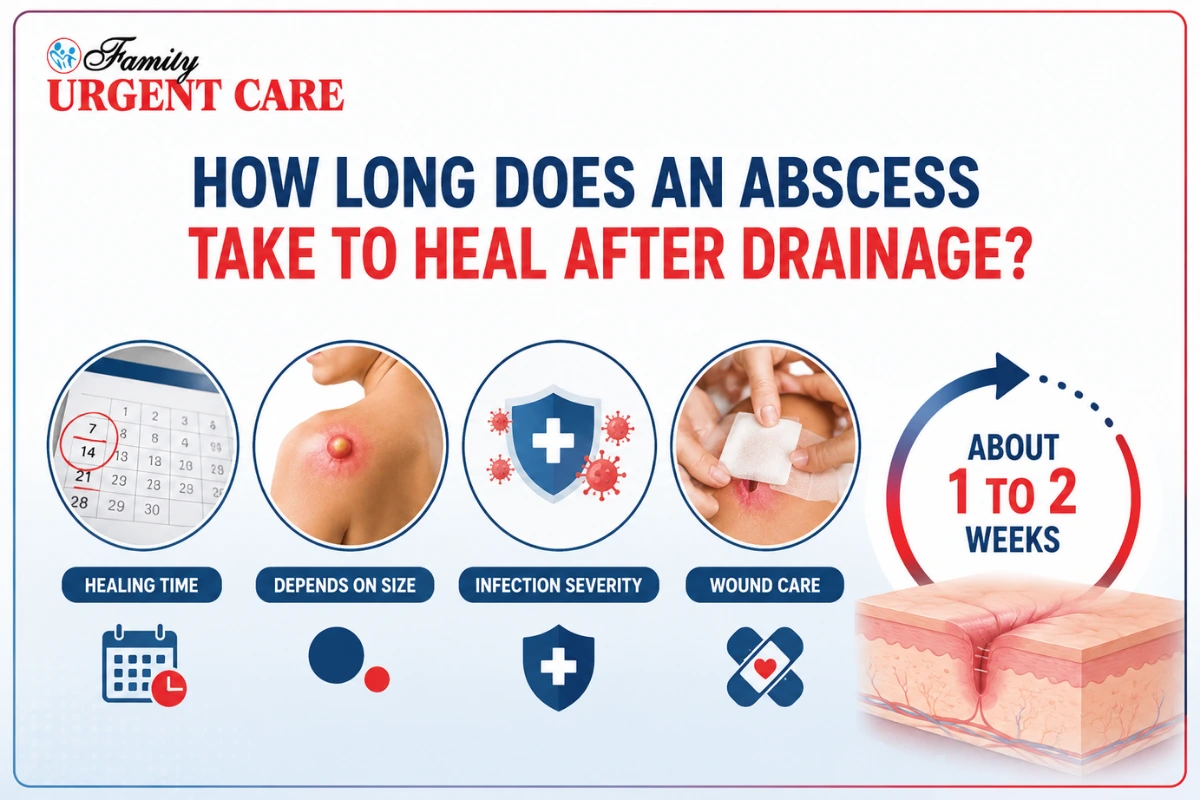
Generally, the abscess healing time after drainage is about 1 to 2 weeks, depending on several factors such as the site of abscess, extent of infection, and wound care practices.
Larger or deeper abscesses may take several weeks to heal completely, as the wound closes from the inside out.
The complete recovery time after abscess drainage depends on the following factors.
- Age of the patient,
- Medical history
- Any underlying medical condition.
For instance, a diabetes patient or any similar chronic disease patient usually needs more attention and care for a complete recovery.
Similarly, elderly patients with drained sores should be especially careful after the procedure. This is because fighting bacterial infections and healing can take longer with age.
Dr. Asrar Sheikh, MD at Family Urgent Care, recommends not squeezing the abscess before or after drainage, as it can lead to infections and push the abscess further into the skin.
Abscess Healing Stages
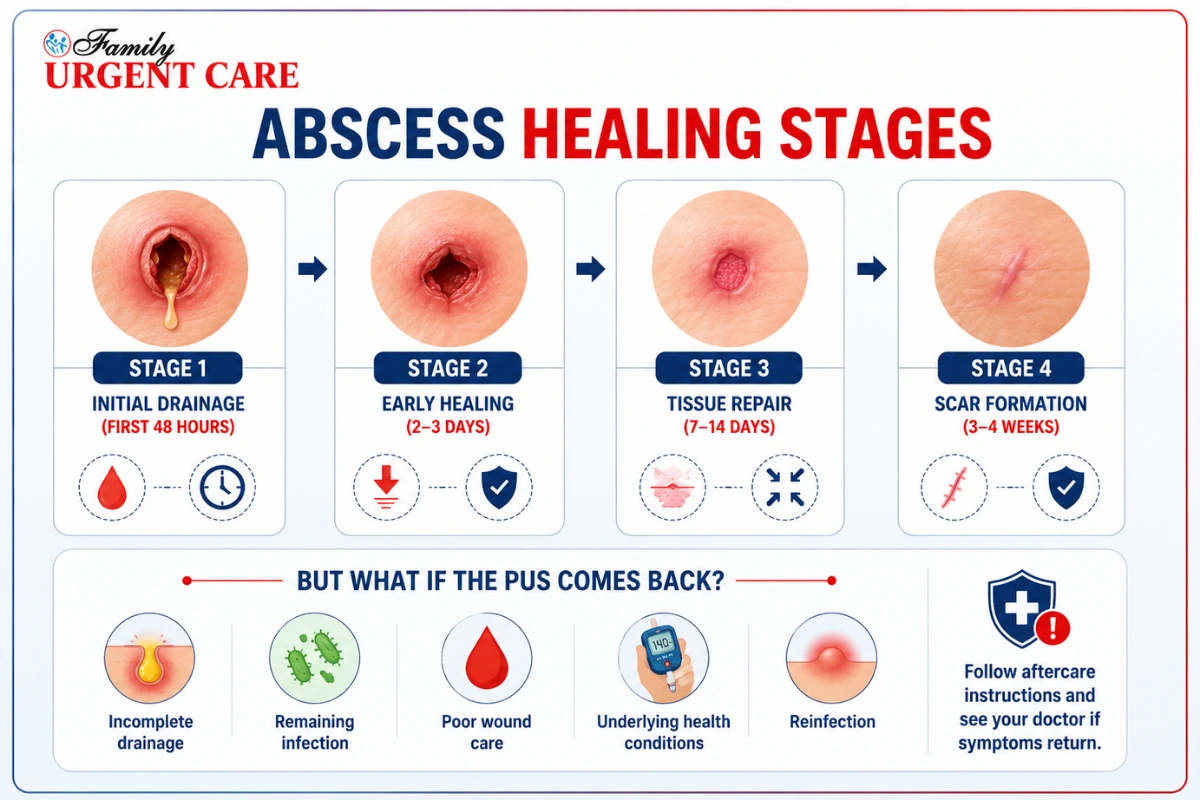
While healing time varies, most wounds follow the same stages of abscess healing as they gradually close and recover.
Stage 1 – Initial Drainage (First 48 Hours)
The first of the drained abscess healing stages begins immediately after the procedure. A small amount of clear, yellow, or blood-tinged drainage is normal during the first 48 hours, while pressure and pain gradually start to ease.
Stage 2 – Early Healing (2–3 Days)
Over the next few days, redness, swelling, and tenderness continue to improve. During this abscess wound healing stage, the wound begins repairing itself as the risk of infection decreases.
Stage 3 – Tissue Repair (7–14 Days)
Within one to two weeks, healthy pink granulation tissue fills the wound from the inside out. The opening gradually becomes smaller as new skin starts to form.
Stage 4 – Scar Formation (3–4 Weeks)
As healing nears completion, deeper tissues continue to repair and the skin fully closes. A small scar may remain, especially after a large or deep abscess, but it often fades over time.
But what if the pus comes back?
Can an Abscess Come Back After Being Drained?
Can an abscess come back after being drained is a common concern, and unfortunately, the answer is yes. In most cases, even when you remove the trapped pus, it can return due to improper drainage, squeezing the area, improper wound care, and bacterial infections.
Certain underlying conditions like diabetes, hypertension, or a weakened immune system can also increase the risk of recurrence.
Abscesses can also come back more often in people with repeated skin irritation, shaving cuts, or staph bacteria on the skin.
This is why some people experience an abscess drained and came back situation even after initial improvement.
Is It Normal to Have a Hard Lump After an Abscess Is Drained?
Yes, it’s often normal to notice a hard lump after an abscess is drained. In many cases, the lump is a result of induration, residual inflammation, and scar tissue as the wound starts to repair.
The wound softens and becomes less noticeable over several weeks to months. However, using physician-approved wound care techniques like keeping the site clean, changing the dressing regularly, and applying warm compresses can help a lot in healing.
If you have a persistent lump after an abscess has been drained, with concerning signs like intense pain, fever, chills, and redness, follow up with your healthcare provider for an examination.
How Do You Know If an Abscess Is Healing?
How to know if an abscess is healing? Well, if you notice gradual improvement and no worsening symptoms, it usually means that your wound is repairing itself. Knowing how to tell if an abscess is healing can help you keep track of your recovery.
Some common reassuring signs that an abscess is healing include:
- Less Pain: The incision site feels less tender and more comfortable each day.
- Less Swelling: Redness and swelling slowly improve.
- Less Drainage: Less pus or fluid is coming from the wound. The color of the drainage changes from thick yellow to pinkish/clear.
- Skin Closing: The wound slowly closes up with healthy new tissue replacing the open area.
- No fever: You feel better and don’t have a fever or chills.
How Long Will an Abscess Continue to Drain?
People usually have this one question in mind: “How long does an abscess drain after treatment?” Well, a small amount of drainage is usually expected for several days. For smaller abscesses, drainage usually last 1 to 2 weeks. Although larger or deeper abscesses may continue to drain for 6 to 12 weeks.
The drainage may appear clear, light yellow, or slightly blood-tinged during the first few days. As the wound heals, the amount of fluid should gradually decrease until it stops completely.
Abscess Drainage Aftercare Tips
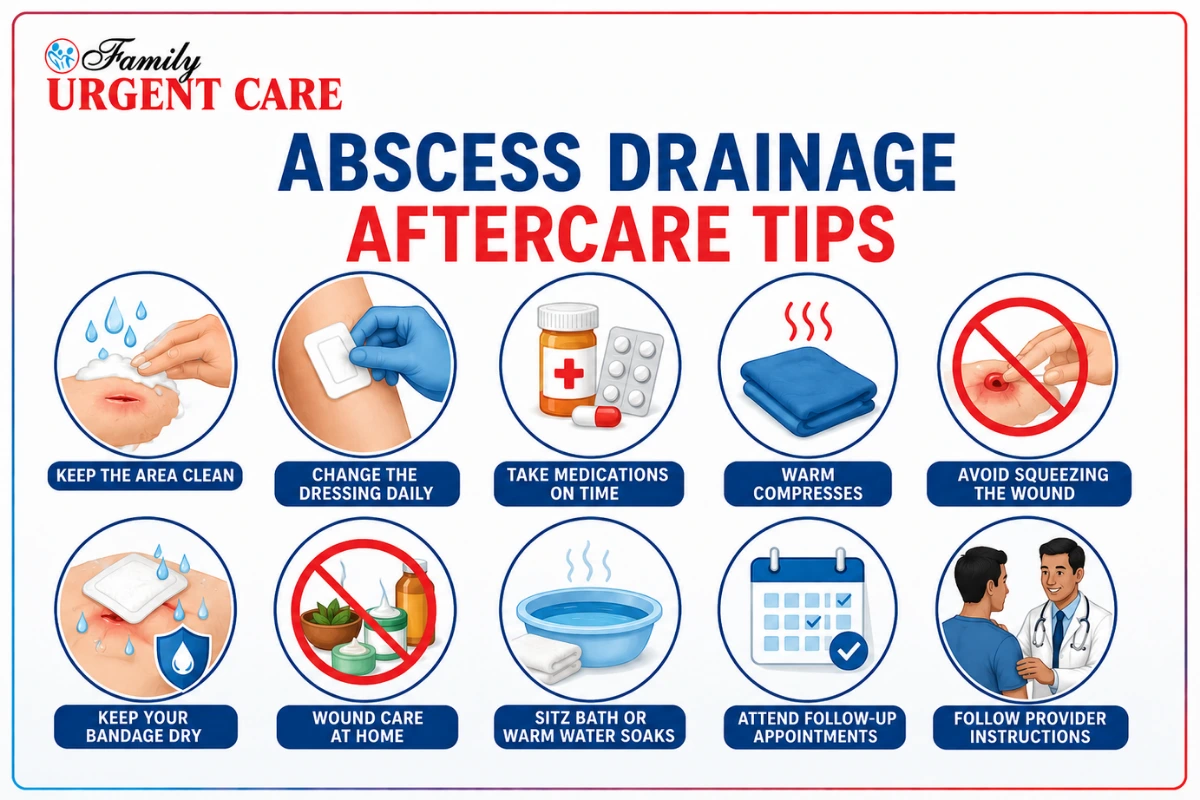
Proper abscess drainage aftercare helps lower the risk of infection and supports faster healing. Following your provider’s instructions and caring for the wound daily can make a big difference in your recovery.
- Keep the area clean: If you’re wondering how to clean an abscess after drainage, use mild soap or warm water to gently wash your wound as per the instructions of your healthcare provider. Avoid harsh products and scrubbing, as it could worsen the wound.
- Change the dressing daily: Change the outer bandage as soon as it gets wet or dirty to prevent the spread of infection. Good wound care after abscess drainage helps protect the area while it heals
- Take medications on time: Antibiotics, pain relievers, or anti-inflammatory medicines will ensure faster tissue repair and prevent abscess recurrence. Therefore, take the medicines as prescribed and complete the full course, even if you feel better in case of antibiotics.
- Warm compresses: Apply a heating pad or warm compresses several times a day. Remember not to place the warm compress directly on the skin, but first place a piece of cloth.
- Avoid squeezing the wound: Pressing or picking at the area can push bacteria into the wound. This may delay healing and increase the risk of the infection returning.
- Keep your bandage dry: Change your bandage as soon as it gets wet. This prevents bacterial growth and irritation, keeping the wound environment stable.
- Wound care at home: Avoid using home remedies or creams unless your healthcare provider gives you directions. Some products can slow healing.
- Sitz bath or warm water soaks: Depending on the location of the abscess area, your provider may recommend a sitz bath. This is especially helpful after drainage of perianal abscesses, as sitz baths can ease discomfort and support healing.
- Attend follow-up appointments: Your provider can check that the wound is healing properly and remove or replace packing if needed as part of your abscess care after drainage.
When Should You Call a Doctor?
Most abscesses heal without complications, but it’s important to know when symptoms may point to a problem. If you notice an abscess not healing after drainage or feel your abscess is still swollen after drainage with no signs of improvement, consult your healthcare provider.
You must seek medical attention if you experience any of the following:
- Severe pain that worsens
- Fever or chills
- Increasing redness or warmth around the wound
- Foul-smelling or heavy drainage from the incision site
- New swelling or a painful lump developing near the wound
You should also get checked if your abscess keeps draining for longer than expected, as it may indicate a recurring infection.
Get Fast & Expert Abscess Drainage & Treatment At Family Urgent Care
At Family Urgent Care, we provide fast, professional abscess drainage for patients in Chicago and Schererville so you don’t have to endure long wait times or unnecessary discomfort.
Once you visit our urgent care clinic, you can expect:
- Same-Day Abscess Drainage: You can walk into our clinic with no or minimal wait times.
- Expert Medical Care: Our providers are highly skilled in incision and drainage (I&D) procedures to ensure effective treatment.
- Affordable & Insurance-Friendly Services: We accept major insurance plans and offer self-pay options for your convenience.
Conclusion
In a nutshell, the recovery period after draining the abscess varies from person to person. The key is properly caring for the wound and following all the necessary steps to ensure faster healing.
Always pay attention to your wound after drainage, spot any changes, and follow your provider’s instructions. If your symptoms get worse, visit our walk-in clinic in Chicago right away.
You can also get in touch with our urgent care providers directly through video or phone consultations without leaving the comfort of your home.
FAQs
1. Can an abscess heal naturally without drainage?
Some minor or small skin abscesses can heal on their own within a few days, but if they don’t go away or there is persistent pain, swelling, or pus, then you need to see a healthcare provider right away. A large or internal abscess may need to be drained to prevent further complications.
2. Do abscesses leave permanent scars on the skin?
Yes, scarring is a sign that the drained abscess is healing properly. Initially, the scar may appear pink and raised. Over time, the color of the abscess changes, becoming lighter or darker depending on its size. There is a chance that abscess drainage might leave a permanent scar, but in most cases, proper wound care and treatments can minimize the appearance.
3. Which abscess size requires drainage?
Medical experts say skin abscesses or boils more than 0.4 cm in depth require a drainage procedure. In most cases, antibiotics may not resolve pus formation, and the patient may have to undergo an incision and drainage procedure. It is essential to visit a healthcare provider for proper evaluation and assessment to decide whether drainage is a safer option.