
Table of Contents
TogglePink Eye Treatment At Family Urgent Care
Red, itchy, crusty eyes can wreck a perfectly good day. Maybe it’s allergies. Maybe a virus. Maybe you rubbed your eye after touching something you shouldn’t have.
Whatever’s behind your pink eye & eye irritations, Family Urgent Care has you covered with fast, reliable pinkeye treatment in Chicago & Northwest Indiana.
You’ll find us in West Rogers Park, Logan Square, and Schererville. No appointment needed. Our walk-in clinic for pink eye treats patients of every age, and most visits wrap up in under an hour.
Conjunctivitis vs. Pink Eye: Are They the Same Thing?
Yes. Conjunctivitis is just the medical name for what most people call pink eye. It means inflammation of the conjunctiva, the thin, clear tissue that covers the white of your eye and lines your eyelid. Doctors use both words to mean the same thing. So if your chart says conjunctivitis, don’t worry. That’s the pink eye you came in for.
Symptoms of Pink Eye
Symptoms of pink eye don’t always look the same. A lot depends on the cause and how far along the infection is. Here are the signs to watch for:
- Redness or a pink tint in the white of the eye
- A swollen eyelid or puffy skin around the eye
- Itching, burning, or a gritty feeling
- Watery eyes or extra tearing
- Yellow, white, or green discharge
- Crusting around the lashes, especially after sleep
- Sensitivity to light
- A mild headache or general tiredness
Early Stage Pink Eye Symptoms
Early stage pink eye symptoms are easy to miss. It often begins as mild redness or a gritty feeling in one eye, maybe with a little tearing. The discharge, crusting, and puffiness usually show up a day or two later as things progress. The upside of catching it early? You can start treatment before it spreads to your other eye or to the people around you.
Adult Conjunctivitis Symptoms
Adult conjunctivitis symptoms look a lot like they do in kids. The difference? Adults tend to notice that annoying feeling of something stuck in the eye, plus more sensitivity to light. If you wear contacts, keep a close eye on things. Lenses can make bacterial pink eye more likely, and slower to clear up.
Stye vs. Pink Eye
People mix up stye vs pink eye all the time. Both bring redness and discomfort in the eye, so the confusion makes sense. A stye is a small, painful bump on the eyelid, caused by a blocked oil gland. It sticks to one spot. Pink eye spreads across the whole surface of the eye or the eyelid lining, tends to itch more than hurt, and jumps to the other eye or to other people far more easily. Not sure which one you’ve got? That’s a quick answer during a visit.
What Causes Pink Eye?
Pink eye comes in a few types, and the cause decides how you treat it:
- Viral: Usually tags along with a cold or the flu. It spreads through coughing, sneezing, and shared surfaces.
- Bacterial: Passes through hand-to-eye contact or shared items like towels and makeup. Look for thicker discharge.
- Allergic: Set off by pollen, dust, mold, or pet dander. It usually hits both eyes at once.
- Chemical or irritant: Comes from smoke, chlorine, or cleaning products.
Is Pink Eye Contagious?
Viral and bacterial pink eye spread easily, through touch, through coughs and sneezes, and through shared items. Allergic and chemical conjunctivitis don’t spread at all. So knowing your type matters for more than treatment. It also tells you how careful to be around family, coworkers, and classmates.
Pink Eye in Toddlers
Pink eye in toddlers is incredibly common, especially in daycares and preschools where it races through a room. Watch for red or puffy eyes, crusting around the lashes (you’ll often spot it right after a nap or in the morning), and more eye-rubbing than usual. Little ones can’t always tell you their eyes feel off, so a cranky day paired with red eyes is worth a closer look. Our providers see young kids all the time and can hand you a diagnosis and a plan the same day.
Eye Doctor vs. Urgent Care for Pink Eye
Not sure whether to see an eye doctor vs urgent care for pink eye? For most cases, urgent care for pink eye is the faster, easier call. We can figure out the cause, prescribe treatment if you need it, and see you the same day instead of weeks out.
An eye specialist makes more sense if you’ve got vision changes, eye pain that feels worse than typical pink eye, a possible injury, or symptoms that just won’t improve with standard treatment. And if we spot anything during your visit that needs a specialist, we’ll send you in the right direction.
When to See a Doctor for Pink Eye
Play it safe and get checked by a provider if you:
- Have a weakened immune system
- Are pregnant or recently had eye surgery
- Have a high fever or a lot of eye pain
- Notice your vision getting worse
- See no improvement within 24 to 48 hours
Go to the Emergency Room If You Have
- A puncture wound or injury to the eye
- Sudden vision loss or a suspected detached retina
- A toxic chemical splashed in the eye
How We Treat Pink Eye at Family Urgent Care
A provider will take a look at your eyes, go over your symptoms, and pin down whether your pink eye is viral, bacterial, or allergy-related. From there, treatment might include:
- Antibiotic eye drops or ointment for bacterial conjunctivitis
- Steroid eye drops to bring down inflammation
- Warm compresses to loosen crust and discharge
- Symptom relief guidance while a viral infection runs its course
Advice for Contact Lens Wearers
Switch to glasses until your eyes heal completely. Wearing lenses through an active infection slows you down and can make symptoms worse. Toss any disposables you wore while symptoms were active, and don’t reuse solution that’s touched an infected eye.
How to Avoid Pink Eye Spreading
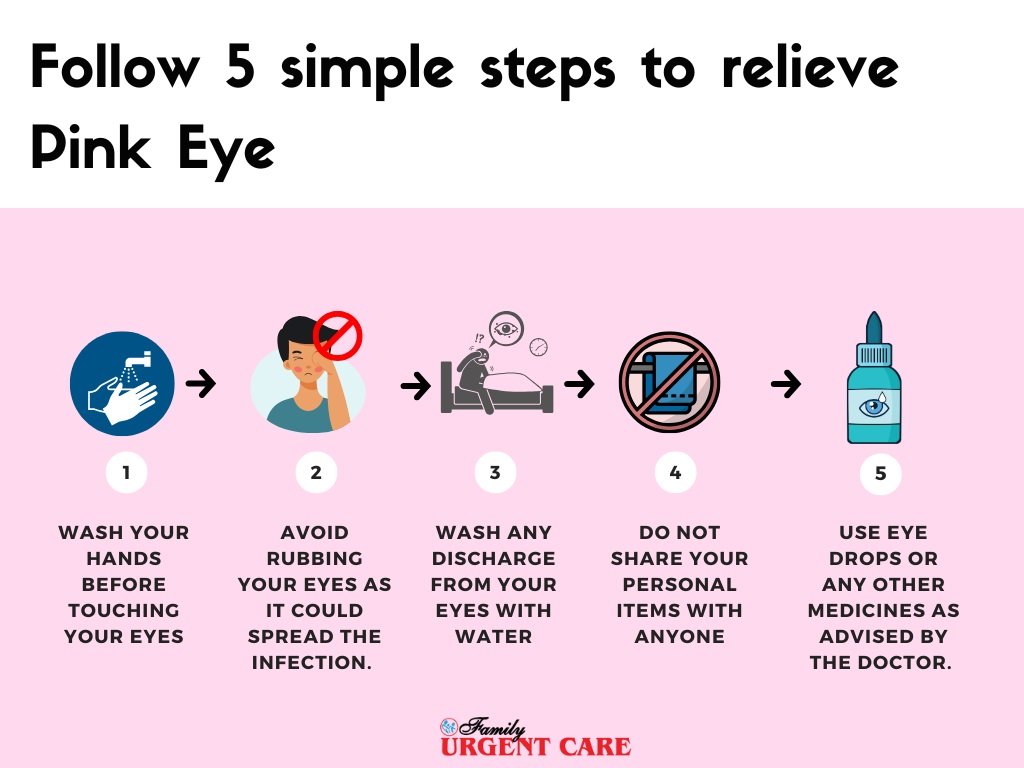
- Wash your hands often, especially before you touch your eyes
- Don’t share towels, pillowcases, or makeup
- Steer clear of anyone with active symptoms
- Never use eye drops or ointment that wasn’t prescribed to you
- Wipe down shared surfaces like doorknobs and faucets if someone at home is infected
When Can I Go Back to Work or School?
Once your fever and other symptoms clear, you can usually head back with your provider’s okay. Still dealing with discharge or a lot of redness? Stay home if your day means close contact with others. That’s when pink eye spreads the easiest.
Get Pink Eye Treatment Today
Red, itchy, crusty eyes? Don’t wait it out. Stop by Family Urgent Care in West Rogers Park, Logan Square, or Schererville for a fast diagnosis and a treatment plan built around what’s actually going on with your eyes. Walk in or book online.
Frequently Asked Questions
Viral pink eye usually runs its course in one to two weeks. Bacterial pink eye tends to improve within a few days once you start antibiotic drops. Allergic conjunctivitis is trickier. It can hang around as long as you're near the trigger, so it comes and goes with the seasons.
There's no overnight cure, sorry. But you can speed up your comfort and recovery. Use a clean warm compress a few times a day. Skip eye makeup and contacts until you've healed. Wash your hands a lot. And if it's bacterial, stick to your provider's treatment plan. Quitting the drops early, even when things look better, is what lets the infection drag on.
Often, yes, especially viral and mild allergic cases. Bacterial pink eye can sometimes clear on its own too, but it takes longer and spreads more easily while you wait. If you're not seeing improvement in a day or two, get it checked instead of toughing it out.
For most pink eye, go warm. A warm compress loosens crust and discharge and eases the discomfort. If itching and swelling from allergies are your main problem, a cold compress can help there. Either way, use a clean cloth every time, and a separate one for each eye if only one is affected. That keeps you from spreading it to the other side.
The giveaways are redness in the white of the eye, itching or a gritty feeling, watery eyes or discharge, and crusting around the lashes after sleep. If you've got a few of these at once, especially the discharge and crusting, it's more than simple irritation. That's pink eye.
Allergies, dry eye, styes, and contact lens irritation can all pass for pink eye at first glance. That's exactly why a proper diagnosis matters. The right treatment depends on what's really causing it.
Artificial tears can calm dryness and irritation. Antihistamine eye drops help with allergic conjunctivitis specifically. But over-the-counter drops won't touch bacterial pink eye, since that needs a prescription antibiotic. So if you're seeing thick discharge or crusting, get seen instead of leaning on OTC drops.
Yes. Our providers treat pink eye in kids and toddlers at all three locations, and we'll match the treatment plan to your child's age, same day.
It can happen. Chlorine and pool chemicals irritate the eyes, and shared water can carry viral or bacterial pink eye too. If your eyes are red and irritated after a swim and don't settle within a day, get them checked.
Disinfectants like Lysol kill plenty of germs on hard surfaces, which helps stop the spread at home. But they do nothing for an active eye infection. Wiping down shared surfaces is about protecting everyone else while you recover, not treating your eye.
If you've got viral or bacterial pink eye with active symptoms, stay home until a provider clears you, especially if your job puts you close to other people. Allergic or chemical conjunctivitis usually isn't contagious, so it doesn't come with the same rule.
Mild cases can clear on their own. But untreated bacterial or viral pink eye can get worse or spread to others, and in rare cases lead to more serious eye trouble. If symptoms aren't improving within a couple of days, the safe move is to get checked.