
Get Fast Relief from Norovirus Symptoms
Sudden vomiting, diarrhea, and stomach discomfort can leave you feeling weak and drained in no time. Norovirus is highly contagious and can cause symptoms to appear quickly, increasing the risk of dehydration and making everyday activities difficult.
Timely medical guidance can help you manage your norovirus symptoms and reduce the risk of complications.
At Family Urgent Care, our experienced healthcare providers evaluate your symptoms, assess for dehydration or potential complications, and provide supportive care tailored to your condition.
What Is Norovirus?
Norovirus is a highly contagious virus that affects the digestive system and commonly causes gastrointestinal symptoms. It spreads through contaminated food, water, and surfaces, as well as through close contact with an infected person.
The virus is more common during colder months, which is why it is often called the winter vomiting bug. Symptoms usually appear after a short norovirus incubation period, which is the time between exposure to the virus and the onset of symptoms.
How Does Norovirus Spread?
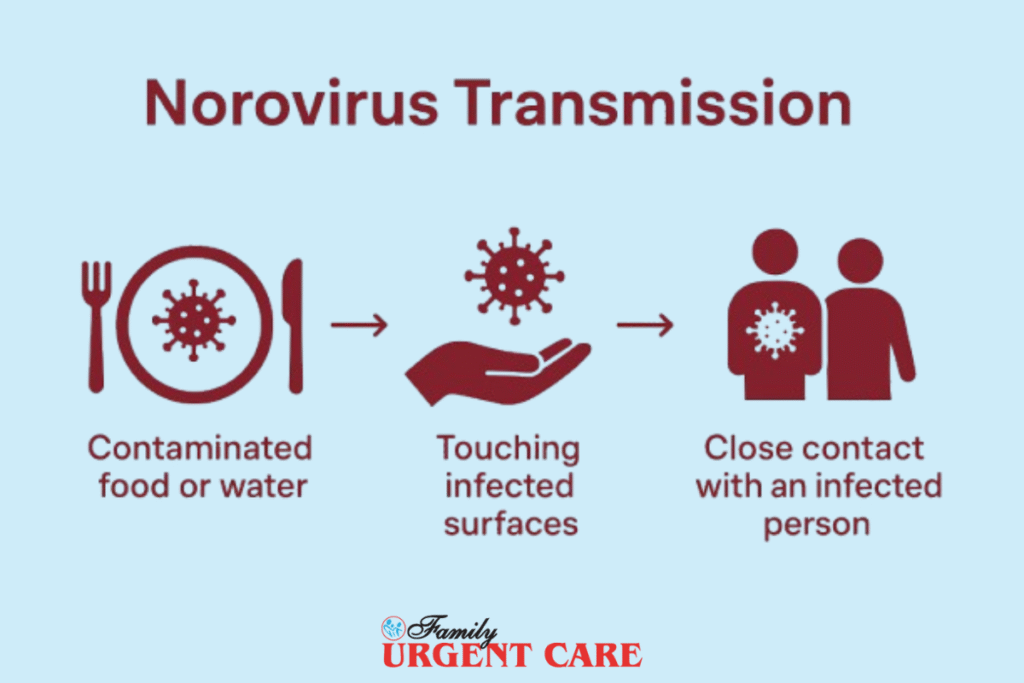
Norovirus is highly contagious and can spread easily through the following ways
Common ways norovirus can spread include:
Contact with an infected person
- Not washing hands properly after using the restroom
- Consuming food or drinks contaminated with norovirus
- Touching contaminated surfaces and then touching your mouth
First Symptoms of Norovirus
Symptoms of norovirus can vary from mild discomfort to more intense illness, depending on the individual.
Common symptoms include:
- Fever
- Nausea
- Vomiting
- Stomach pain
- Watery stools with diarrhea
- Signs of dehydration include dizziness, a dry mouth and less frequent urination.
When Should You Visit Urgent Care for Norovirus?
Most norovirus infections get better with rest and plenty of fluids. If symptoms are severe and do not improve after a few days, or you develop signs of dehydration, you may need urgent care for norovirus.
Seek medical care if symptoms become severe or worsen, such as:
- High temperature
- Blood in the stool
- Intense dehydration
- Severe abdominal pain
- Repeated vomiting that keeps you from
- keeping water down
- Increased risk due to age, pregnancy, or underlying health conditions.
If you aren’t sure whether you need urgent care or emergency care, our experts can assess your symptoms and help determine the appropriate level of medical attention.
Why Choose Fam Urgent Care for Norovirus?
When stomach symptoms appear unexpectedly, seeking medical advice promptly can help you receive the right care and prevent complications. At Fam Urgent Care, we provide convenient, patient-focused care to help you feel better.
Quick Symptom Evaluation
Our healthcare providers review your symptoms, medical history, and overall condition to understand the severity of your illness and recommend appropriate treatment.
Convenient Same-Day Care
Norovirus symptoms can occur unexpectedly. With walk-in availability and flexible care options, you can get timely medical attention when you need it.
Supportive Treatment Guidance
Although there is no specific medication that cures norovirus, our providers help manage symptoms, support hydration, and guide you through the recovery process.
Accessible Locations
We provide norovirus treatment in Chicago and Northwest Indiana, making it easier to receive care close to home.
How We Treat Norovirus at Family Urgent Care
During your visit, our providers focus on identifying the severity of your illness and creating a care plan that supports hydration, symptom relief, and recovery.
Here is what you can expect from us.

- Check for signs of dehydration
- Evaluate your overall condition
- Review your symptoms and medical history
- Provide guidance on preventing the spread of infection
After evaluating your symptoms, our providers determine whether additional testing is needed. An urgent care test for norovirus may not always be necessary because diagnosis is often based on symptoms and clinical evaluation.
Treatment recommendations may include:
- Drinking plenty of fluids to prevent dehydration
- Resting and allowing your body time to recover
- Following dietary recommendations during recovery
- Using appropriate medications for symptom relief when recommended by a healthcare provider
Don’t Let Norovirus Disrupt Your Day
If you are experiencing norovirus symptoms and need fast medical guidance, Family Urgent Care can help.
Our healthcare providers offer timely evaluation and supportive care to help you manage your symptoms. Book an appointment today for convenient urgent care.
FAQs
People with norovirus are most contagious while they have symptoms and for a few days after they recover. The virus may still be present in stool afterward, so good hygiene practices remain important.
Norovirus can survive on surfaces for some time. Properly cleaning and disinfecting frequently touched surfaces can help reduce the spread of infection.
Hand sanitizer may not work as well against norovirus as washing your hands well with soap and water. One of the best ways to reduce the risk of spreading the virus is to wash your hands thoroughly after using the bathroom and before eating.
Yes, some people can have norovirus without vomiting. While vomiting is a common symptom, others may experience diarrhea, nausea, stomach cramps, fatigue, or other digestive discomfort.
Masks are not a reliable way to prevent norovirus infection. The best protection comes from proper hand hygiene, cleaning contaminated surfaces with disinfectants, and staying isolated when symptoms appear. Masks may offer minimal benefit in certain situations, but they should not replace essential preventive measures.