
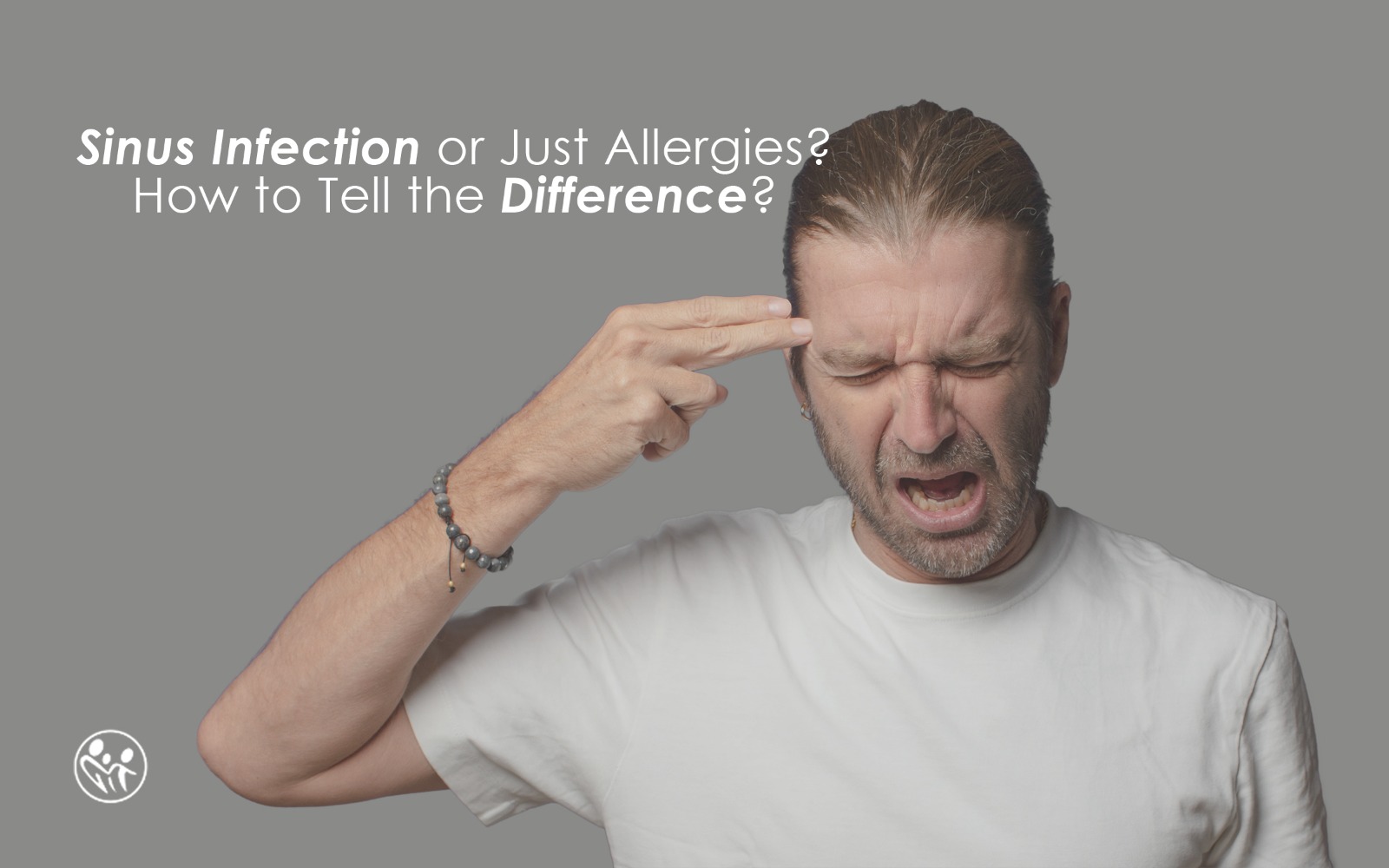
You wake up in the morning with a blocked nose, facial pressure, and nonstop coughing.
But after some time, the congestion feels heavier. Headaches begin to appear, and breathing through your nose becomes more difficult.
Many people struggle to determine whether they are experiencing allergies or a sinus infection.
Both conditions share similar symptoms, such as congestion, runny noses, and facial discomfort, but their causes, durations, and treatments differ.
Knowing these differences between sinus infections and allergies can help you recognise what your body is experiencing and decide when to seek medical help.
What Is a Sinus Infection and How Does It Develop?
Sinusitis is the inflammation and swelling of the tissues inside the sinuses, which are air-filled spaces located in the forehead, cheeks, and around the nose.
A sinus infection develops when the drainage pathways are blocked, preventing mucus from draining properly.
Normally, mucus helps keep the nasal passages clean by trapping bacteria, dust, and other particles.
It builds up in the sinuses, creating a condition in which bacteria and viruses can grow and cause symptoms such as nasal congestion and facial pressure.
Understanding Seasonal and Environmental Allergies
Environmental allergies, also called allergic rhinitis, occur when your immune system mistakenly identifies a harmless airborne substance, such as dust or mites.
These allergens trigger an immune response that causes inflammation in the nasal passages.
In addition to environmental allergies, seasonal allergies develop when the immune system overreacts to outdoor allergens such as pollens.
Seasonal allergies typically occur during spring, summer, and fall when pollen levels are higher.
Key Symptom Differences Between Sinus Infections and Allergies
Sinus infections and allergies often appear similar at first because both conditions affect the nose and surrounding facial areas.
Key differences in symptoms include:
| Sinus Infection | Allergies |
| Thick yellow or green nasal discharge | Clear, watery nasal discharge |
| Facial pain or pressure around the cheeks, forehead, or eyes | Usually no facial pain or pressure |
| Fever may occur in some cases | Fever does not occur |
| Itchy eyes and nose are uncommon | Itchy eyes and nose are very common |
| Symptoms usually last 7–10 days or longer | Symptoms continue as long as allergens are present |
How Long Do Symptoms Last? Allergies vs. Sinus Infection
Allergy symptoms can last for weeks or even months if the person continues to be exposed to the trigger, such as pollen in spring or indoor dust.
The symptoms may improve when the allergen is removed or when allergy medications are used.
In contrast, sinus infection symptoms usually follow a shorter but more defined course.
Acute sinus infections typically last about 7 to 10 days, and symptoms such as facial pressure, thick nasal discharge, and congestion may gradually worsen before improving with treatment.
Therefore, if symptoms persist beyond 10 days or worsen, the condition is more likely a sinus infection than allergies.
Can Allergies Turn Into a Sinus Infection?
Yes, allergies can sometimes lead to a sinus infection. During an allergic reaction, the lining of the nasal passages becomes inflamed and swollen.
This swelling can block the small openings that allow the sinuses to drain properly.
This condition creates an environment that allows bacteria to grow, potentially leading to a sinus infection.
For this reason, people with frequent or untreated allergies may have a higher risk of developing sinus infections.
Managing allergies early with the right treatment can help reduce nasal inflammation, improve sinus drainage, and lower the chances of developing a sinus infection.
Treatment Options for Sinus Infections and Allergies
Treatment for sinus infections and allergies focuses on relieving symptoms and addressing the underlying causes.
| Sinus Infections | Allergies |
| Saline nasal rinses help clear thick mucus from the sinuses. | Antihistamines reduce sneezing, itching, and a runny nose. |
| Decongestants reduce sinus swelling and pressure. | Nasal steroid sprays reduce allergy-related inflammation. |
| Pain relievers help ease facial pain and headaches. | Allergy eye drops relieve itchy and watery eyes. |
| Antibiotics may be used for bacterial sinus infections. | Allergy shots may help with long-term allergy control. |
| Steam inhalation helps loosen mucus and improve drainage. | Avoiding triggers such as pollen and dust helps prevent symptoms. |
Treatment options for sinus infections and allergies include:
How Long Do Symptoms Last? Allergies vs. Sinus Infection
Allergy symptoms can last for weeks or even months if the person continues to be exposed to the trigger, such as pollen in spring or indoor dust.
The symptoms may improve when the allergen is removed or when allergy medications are used.In contrast, sinus infection symptoms usually follow a shorter but more defined course.
Acute sinus infections typically last about 7 to 10 days, and symptoms such as facial pressure, thick nasal discharge, and congestion may gradually worsen before improving with treatment.
Therefore, if symptoms persist beyond 10 days or worsen, the condition is more likely a sinus infection than allergies.
Can Allergies Turn Into a Sinus Infection?
Yes, allergies can sometimes lead to a sinus infection. During an allergic reaction, the lining of the nasal passages becomes inflamed and swollen.
This swelling can block the small openings that allow the sinuses to drain properly.
This condition creates an environment that allows bacteria to grow, potentially leading to a sinus infection.
For this reason, people with frequent or untreated allergies may have a higher risk of developing sinus infections.
Managing allergies early with the right treatment can help reduce nasal inflammation, improve sinus drainage, and lower the chances of developing a sinus infection.
Treatment Options for Sinus Infections and Allergies
Treatment for sinus infections and allergies focuses on relieving symptoms and addressing the underlying causes.
Treatment options for sinus infections and allergies include:
| Sinus Infections | Allergies |
| Saline nasal rinses help clear thick mucus from the sinuses. | Antihistamines reduce sneezing, itching, and a runny nose. |
| Decongestants reduce sinus swelling and pressure. | Nasal steroid sprays reduce allergy-related inflammation. |
| Pain relievers help ease facial pain and headaches. | Allergy eye drops relieve itchy and watery eyes. |
| Antibiotics may be used for bacterial sinus infections. | Allergy shots may help with long-term allergy control. |
| Steam inhalation helps loosen mucus and improve drainage. | Avoiding triggers such as pollen and dust helps prevent symptoms. |
When Should You See a Doctor for Sinus or Allergy Symptoms?
In many cases, over-the-counter medicines such as antihistamines for allergies and decongestants for sinus infections can help relieve symptoms.
However, if symptoms last longer than 7 to 10 days, worsen over time, or do not improve with OTC medication, you should contact a healthcare professional.
Seek medical care immediately if you experience symptoms such as difficulty breathing, dizziness, facial swelling, severe congestion, or fever.
Because proper diagnosis is important for receiving the right treatment, the healthcare providers at Family Urgent Care are here to help. Book an appointment now.
FAQs
Can weather changes make sinus infections or allergies worse?
Yes. Sudden weather changes, especially shifts in temperature, humidity, or air pressure, can irritate the nasal passages. For people with allergies, seasonal pollen and environmental changes can trigger symptoms. These conditions can also create pressure in the sinuses, which may worsen discomfort if a sinus infection is already present.
Can sinus infections or allergies affect sleep quality?
Yes, both conditions can disturb sleep. Nasal congestion and sinus pressure may make it harder to breathe comfortably while lying down. This can lead to frequent waking, poor sleep quality, and fatigue.
Can sinus problems affect your sense of smell or taste?
Yes. Inflammation and congestion in the nasal passages can reduce the ability to smell. Because smell is closely linked to taste, some people may also notice that foods taste different or less flavorful during sinus issues.
Do sinus infections or allergies always require antibiotics?
No. Allergies are typically treated with antihistamines, nasal sprays, or avoiding triggers, while many sinus infections are viral and improve without antibiotics. A healthcare provider can determine the cause and recommend the most appropriate treatment.