

Are you recently experiencing persistent watery diarrhea, stomach cramps, or nausea after eating fresh produce, especially lettuce? You better not dismiss it as another stomach bug. These signs might be linked to cyclosporiasis, a foodborne illness caused by the Cyclospora cayetanensis parasite.
The cyclosporiasis outbreak has wreaked havoc in the United States, with cases reported in 41 different states. Public health officials have found that the recent outbreak has been linked to contaminated lettuce supplied to restaurants and grocery stores. While they have continued their efforts to identify the origin, people are more likely to get sick from the infected lettuce that has been in use.
People don’t usually realize that they are infected as the symptoms develop days later and they continue to consume contaminated produce. However, early diagnosis and treatment can help you recover while reducing the risk of complications.
In this guide, we will discuss everything you need to know about the cyclosporiasis outbreak and when to visit urgent care.
Continue reading to find out.
What Is Cyclosporiasis?
Cyclosporiasis is an intestinal illness caused by Cyclospora cayetanensis, a microscopic parasite that infects the small intestine. People become infected by consuming food or water contaminated with the Cyclospora parasite, most commonly fresh produce such as leafy greens, herbs, and berries.
Unlike a typical stomach bug that often resolves within a few days, Cyclospora disease can last for several weeks without proper treatment, and symptoms may come and go. While anyone can become infected, travelers, people who eat contaminated produce, and those with weakened immune systems are at a higher risk of severe illness.
Symptoms of Cyclospora Infection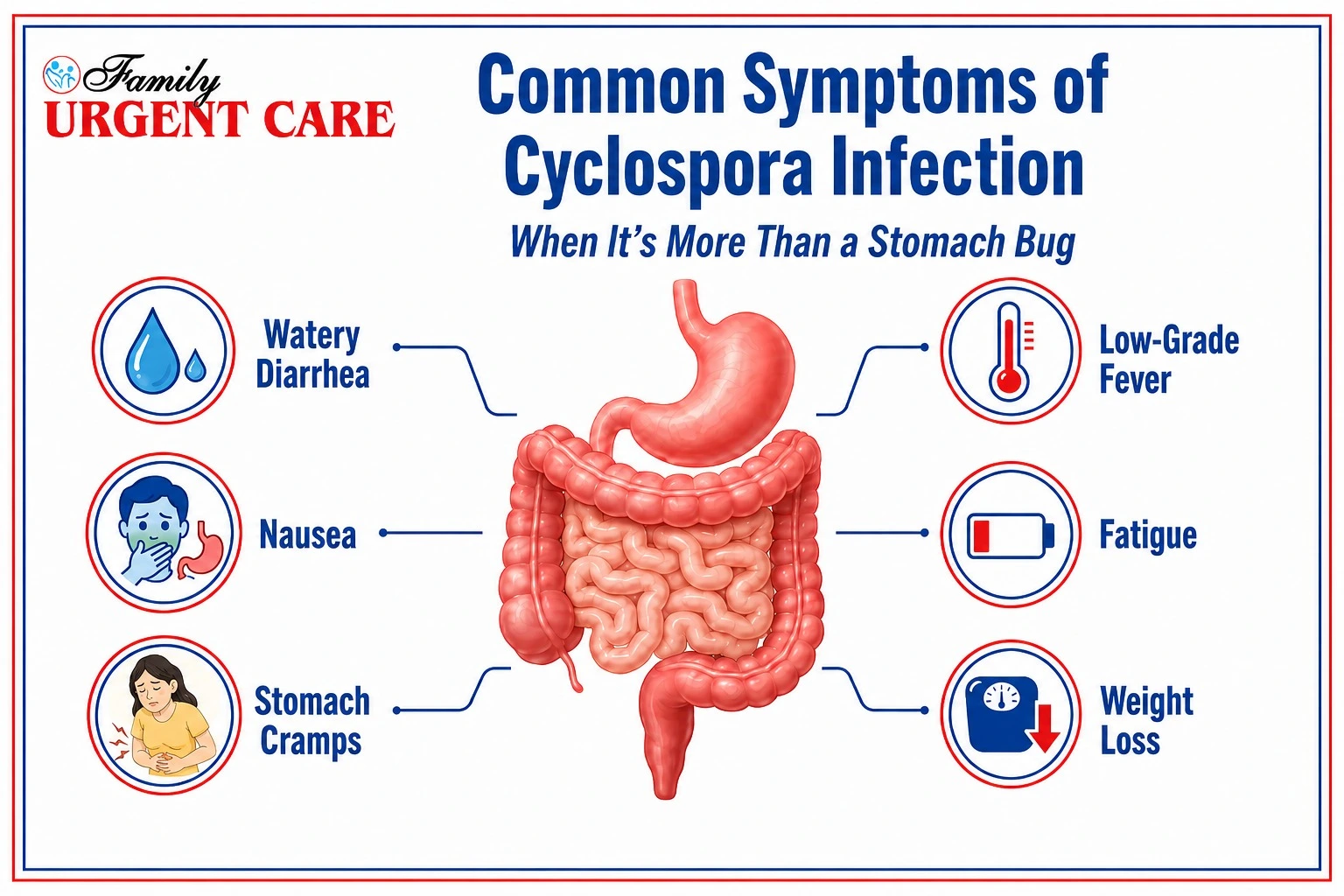
Cyclospora symptoms usually appear about one week after you consume contaminated food or water. However, they may begin as early as 2 days and as late as 12 days. While the severity varies from person to person, people with weakened immune systems have a high chance of complications.
Common Cyclospora infection symptoms include:
- Watery diarrhea (the most common symptom)
- Frequent bowel movements
- Stomach cramps or abdominal pain
- Bloating and excessive gas
- Nausea
- Loss of appetite
- Weight loss
- Fatigue or weakness
- Low-grade fever
How Long Do Cyclosporiasis Symptoms Last?
The symptoms may last several weeks to months if not treated. They also improve a bit only to return. Therefore, it’s important to get medical care if your diarrhea persists, gets severe, or you develop signs of dehydration, as the condition usually prolongs and makes things worse.
How Is Cyclospora Spread?
Cyclospora is not spread from person to person, as the parasite usually takes time to mature in the environment. People usually get infected by eating contaminated food or water. People usually get infected after eating contaminated fresh produce or water.
Common Sources of Infection
The most common Cyclospora food sources include:
- Contaminated fresh produce
- Fresh herbs
- Fruits
- Leafy vegetables
- Contaminated drinking or recreational water
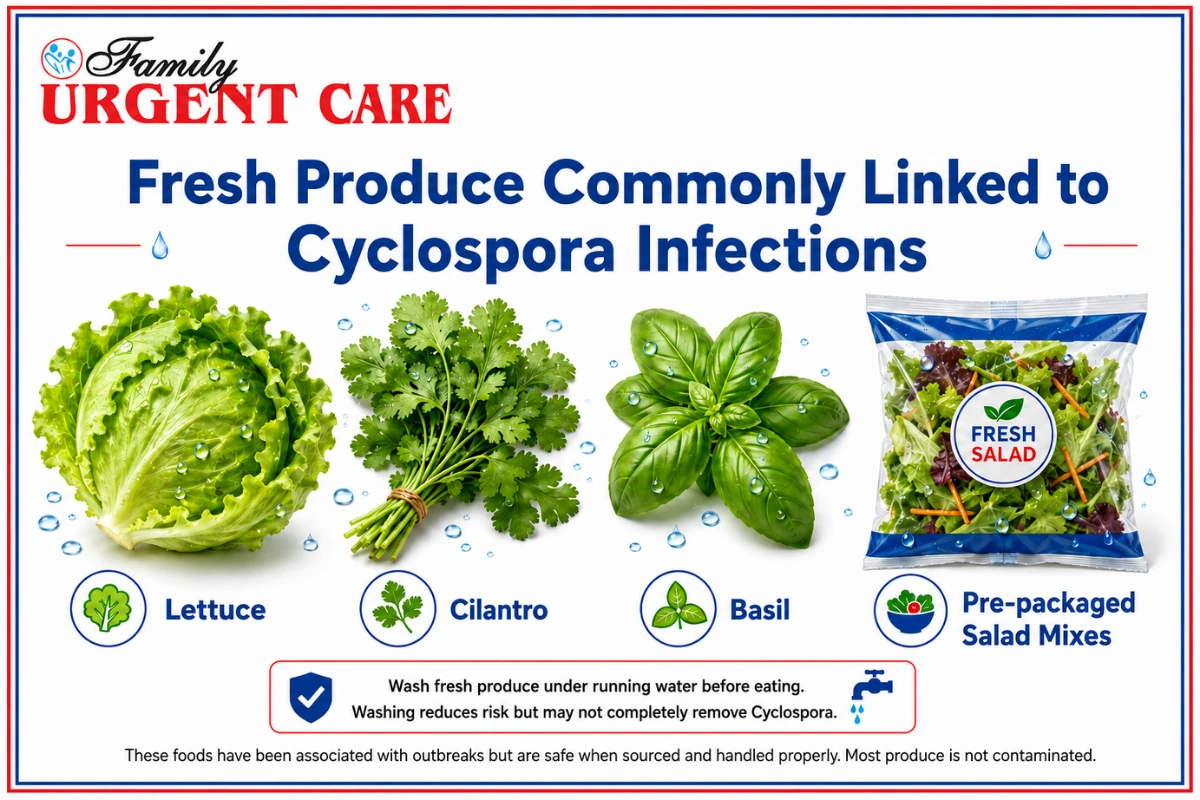
Fresh Produce Commonly Linked to Cyclospora Infections
Several foods have been associated with cyclosporiasis transmission during past outbreaks, including:
- Cilantro
- Basil
- Lettuce
- Pre-packaged salad Mixes (bagged leafy greens)
Washing fresh produce under running water before use is a safe practice that reduces the risk of infection. However, it doesn’t completely remove the Cyclospora parasite.
These foods have been associated with past outbreaks but are safe when sourced and handled properly. Most fresh produce is not contaminated.
Foods Commonly Linked to Cyclospora
Several foods have been associated with cyclosporiasis transmission during various outbreaks, including:
- Cilantro
- Basil
- Lettuce
- Bagged salads
- Raspberries
Although it’s a good practice to wash fresh produce to remove harmful substances and germs, you can’t completely remove the Cyclospora parasite. Following food safety measures and checking for food recalls can help reduce the risk of infection.
Why Is Cyclosporiasis Outbreak in the News Right Now?
Cyclosporiasis is in the news because of a multistate outbreak linked to contaminated iceberg lettuce. Health officials are investigating the outbreak to identify the source and prevent more people from getting sick.
As of late July, 2026, the CDC has reported more than 6,707 confirmed cases and is investigating over 11,500 additional suspected cases across 45 states. Because symptoms can take about a week to appear, more cases may continue to be reported even after the contaminated lettuce has been removed from stores and restaurants.
The Cyclospora parasite outbreak started on May 1, 2026, and cases are expected to increase until the seasonal peak ends on August 31.
How Is Cyclospora Diagnosed?
If you have persistent diarrhea and other symptoms that come with a Cyclospora infection, your healthcare provider may perform a thorough evaluation that includes.
- Asking about your medical history, including your symptoms, travel status, and if you have consumed any contaminated food source recently.
- Requesting multiple stool samples to check for the cyclosporiasis parasite. Stool samples collected on different days increase the accuracy of diagnosis, as the parasite may only be present at certain times.
- Using specialised tools like PCR and various staining techniques for detection, as the parasite may not be visible through routine stool testing.
How Is Cyclosporiasis Treated?
The cyclosporiasis treatment helps relieve symptoms and support faster recovery while reducing the risk of complications. Here is what you can expect as effective treatment options.
Antibiotics
Healthcare providers usually prescribe antibiotics like trimethoprim-sulfamethoxazole (TMP-SMX), also called Bactrim, Septa, and Cotrim, to treat Cyclospora infections. The antibiotic contains a “sulfa” component, TMP-SMX, so if you are allergic to sulfur, your provider may consider giving you the following options.
- Nitazoxanide
- Ciprofloxacin
Although these alternatives are not as effective as the first-line treatment. These medications help to get rid of the parasite, shorten the period of illness, and keep the symptoms from returning. Even if you start to feel better, it’s advised to complete the course of medication as prescribed.
Managing Symptoms at Home
Along with medical treatment, you can practice the following self-care steps to speed up healing:
- Drink plenty of water to prevent dehydration.
- Use oral rehydration solutions or electrolyte drinks to replenish lost electrolytes.
- Eat easy-to-digest foods until your symptoms improve.
- Get plenty of rest.
When Should You Visit Urgent Care for Cyclosporiasis?
Mild cases of cyclosporiasis may get better with treatment at home, but severe or persistent symptoms require immediate medical attention.
Seek urgent care if you are experiencing any of the following symptoms.
- Diarrhea with fever lasting more than two days or getting severe.
- Signs of severe dehydration, such as dizziness, dry mouth, or decreased urination.
- Bloody stool.
- Unexplained weight loss.
- Severe or persistent stomach cramps.
- Inability to keep fluids down due to ongoing vomiting.
- Symptoms improve but return again.
Early evaluation can help you receive the right treatment as soon as possible.
How Can You Prevent Cyclospora Infection?
While it’s not entirely possible to avoid the strain, you can reduce the risk of infection by following the Cyclospora cayetanensis prevention tips given below.
- Wash fresh fruits and vegetables thoroughly under running water before eating, cutting, or cooking to lower the risk of infection.
- Rinse fresh fruits and vegetables thoroughly under running water before eating, cutting, or cooking.
- Use bottled or boiled water or avoid consuming raw produce if you are travelling to areas where Cyclospora infections are common.
- Always wash your hands with soap and water after handling raw fruits or using the restroom.
- Stay alert regarding any news about the recalled foods, especially iceberg lettuce, from public health authorities.
- Wash utensils, cutting boards, and kitchen surfaces to help prevent cross-contamination.
Although these steps can’t eliminate the risk entirely, they can go a long way in reducing your chances of developing a Cyclospora infection.
Conclusion
Cyclosporiasis is a foodborne parasitic infection that may get better on its own. However, prompt diagnosis and treatment can help you recover faster amidst the ongoing cyclosporiasis outbreaks. People, young children, pregnant women, and those with weakened immune systems should look for early signs, as they get more severely affected.
If you are someone experiencing watery diarrhea, bloating, stomach cramps, and other digestive issues, visit your nearest Family Urgent Clinic right away. Our experienced providers will assess your symptoms, run diagnostic tests, and provide the right treatment based on your condition. With walk-ins available, you don’t have to go through the hassle of booking appointments.
FAQs
1. Where is Cyclospora found?
Cyclospora cayetanensis is mostly found in tropical and subtropical areas where poor water quality and sanitation are common. This species especially thrives in places where food and water are easily contaminated by fecal material. While Cyclospora is uncommon in the United States, most outbreaks are linked to imported fresh produce like basil, lettuce, and other leafy greens that become contaminated during harvesting or growing.
2. Does Cyclospora go away on its own?
Yes. Some mild cases eventually recover without treatment, but an infected person has to deal with symptoms for weeks or even months. Not just that, the symptoms usually come and go overtime, which makes them even more difficult to manage. So, you must get yourself checked by a healthcare provider instead of waiting it out. They first evaluate you to find the root cause and further prescribe antibiotics to shorten the recovery period.
3. How do you test for Cyclospora?
Cyclospora diagnosis requires you to pass a stool test. Your provider may ask for multiple stool samples on different days because the parasite may not be present in every sample. The laboratory uses specialized techniques including modified acid-fast stain, modified safranin stain, UV fluorescence microscopy, and molecular (PCR) testing to detect the parasite.
4. How long does Cyclospora infection last?
Cyclospora infection can last from several weeks to months without treatment. Most people get better in 1 to 2 weeks, but diarrhea may last longer. You often feel symptoms improve, then return, making the illness so exhausting. Your doctor may prescribe you antibiotics that make you feel better within a few days, but it’s important to complete the full course of medication.
5. Is Cyclospora contagious?
No, Cyclospora is not contagious, as it doesn’t spread from person to person through direct contact like hugging, sharing a bathroom, utensils, or caring for an infected person. The bacteria usually take days to weeks to mature in an environment, so direct transmission is quite unlikely. People usually get infected by eating contaminated food, water, or coming in contact with the feces of an infected person.
6. Can I go to urgent care for cyclosporiasis?
Yes. Urgent care is a great option if you have symptoms like persistent watery diarrhea, nausea, stomach cramps, severe vomiting, bloody stools, and signs of dehydration. Also, if your symptoms keep returning or last more than a few days, it’s best to get yourself checked by an urgent care provider.