
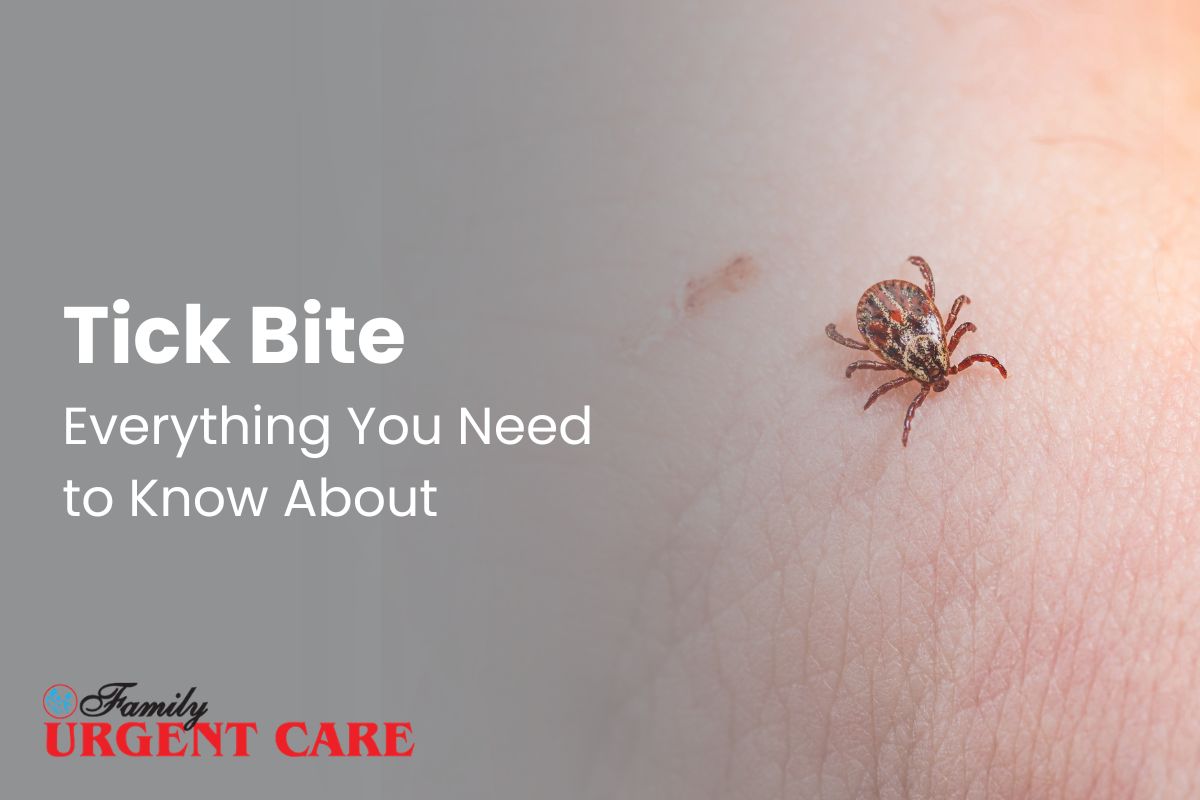
It only takes one unnoticed bite outdoors for a tiny tick to cause a serious health concern.
Tick bites are often easy to ignore, especially when they cause only mild redness or swelling. However, some ticks can transmit infections such as Lyme disease and other tick-borne illnesses that may require medical attention.
The best practice is to do a tick check if you have been living in a tick dominant area or spend most time outdoors. These species stick to your skin and feed on your blood for several days. However, if you get lucky enough to find the tick on your body and remove it in less than 36 hours, you can reduce the risk of Lyme disease and other serious infections.
In this guide, we will discuss how a tick bite looks, common tick bite symptoms that develop over time, treatment options, and warning signs for which you should seek urgent care for tick bite.
What Does a Tick Bite Look Like?
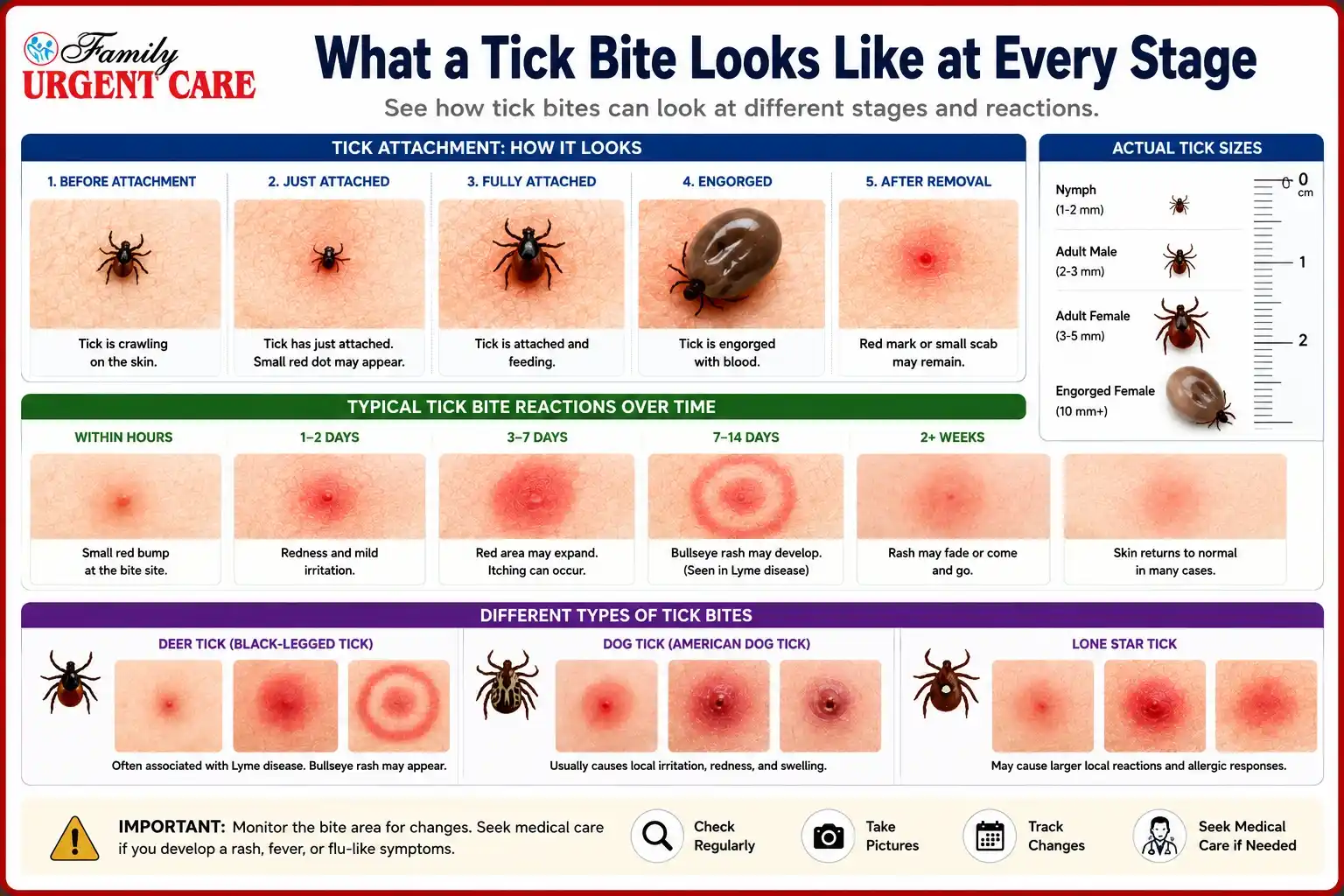
At first, it’s not easy to spot a tick bite until it feeds on your skin and becomes visible. You may notice a small red or brown bump with redness and swelling around the bite site. A tiny dark spot is also present at the center where the tick pierces its mouthparts into the skin. The site looks almost similar to a mosquito bite. While it doesn’t hurt due to anaesthetic substances in the tick’s saliva, some people may notice slight itching and irritation around the affected area.
However, if you notice an expanding rash with flu-like symptoms, it may be a sign of tickborne infection that needs prompt medical evaluation.
Where Is a Tick Usually Found on Skin?
The tick usually attaches to moist areas on the skin that includes
- Groin
- Armpit
- Scalp
- Skin behind the ear
- Behind the knees
- Around the waist
Early Stages of a Tick Bite (First Few Days)
A tick bite can change slightly over the first several days as your skin reacts to the bite and begins to heal. While mild redness, itching, and swelling are common, tracking how the area develops can help you identify signs that may need medical attention.
Day 1: Redness, Mild Swelling, Itching, or Tenderness
Within the first day, a tick bite may appear as a small red spot or bump on the skin. The area may feel itchy, tender, or slightly swollen, similar to a typical insect bite. These symptoms are usually caused by your body’s natural reaction to the tick bite.
Day 2: Increased Irritation or a Small Bump
On the second day, the bite site may remain irritated or become slightly more noticeable. You may see a small, raised bump, mild redness, or continued itching. Keeping the area clean and avoiding scratching can help prevent further irritation.
Day 3: Monitoring for Improvement or Unusual Changes
By the third day, many minor tick bite reactions begin to stabilize or slowly improve. The redness may start fading, and itching or tenderness may decrease. However, if the area becomes larger, more painful, warmer, or increasingly swollen, it may be a sign of irritation, infection, or a reaction that requires medical evaluation.
Day 4: Healing Signs or Changes That Need Attention
Around the fourth day, a typical tick bite may show signs of healing, with reduced swelling and discomfort. However, an expanding rash, worsening redness, pus, or new symptoms such as fever, fatigue, headache, or body aches should not be ignored, as they may indicate a possible tick-borne illness.
Symptoms
Mostly, tick bite symptoms are not noticeable at first, so you can only know about it when you find a tick on the skin. When symptoms develop over several days, they may point to a mild skin reaction, an allergic reaction, or a tick borne illness.
Common Tick Bite Symptoms
These symptoms usually affect the part of the skin where the tick is attached.
- Redness
- Swelling
- Mild pain or tenderness
- Itching
- Warmth
Symptoms of Tick-Borne Infections
Ticks carry various bacteria, viruses, or parasites and pass them to human hosts that results in serious illness. Symptoms often develop from days to weeks after a tick bites you and may include.
- Fever
- Chills
- Fatigue or unusual tiredness
- Headache
- Muscle aches or body pain
- Neck stiffness
- Swollen lymph nodes
- Joint pain
- Nausea or loss of appetite
- Rashes on the entire body
Lyme Disease Symptoms
Lyme disease is an infection caused by the bacterium Borrelia burgdorferi that is transmitted to humans when an infected black-legged tick bites. It is one of the most common tick borne illnesses that develops 3 to 30 days after you are bitten.
Common symptoms include:
- Erythema Migrans (an expanding rash which may or may not have a bull’s-eye appearance)
- Fever
- Chills
- Fatigue
- Sore throat
- Headache
- Muscle aches
- Joint pain
- Swollen lymph nodes
Lyme disease may lead to severe joint pain, nerve problems, and heart-related diseases if you don’t get the treatment on time.
Rocky Mountain Spotted Fever Symptoms
Rocky Mountain Spotted Fever (RMSF) is one of the most serious tick-borne illnesses in the United States. It causes serious damage to the internal organs and can be life threatening at times if left untreated. Symptoms of Rocky Mountain Spotted Fever usually show up 2 to 14 days after a tick bite and only get worse with time.
You can watch for the following signs.
- Sudden high fever that stays for almost 2 to 3 weeks.
- Severe headache
- Muscle aches
- Nausea
- Vomiting
- Abdominal pain
- Poor appetite
- A rash that often begins as small flat pink spots on the wrists and ankles before spreading to other body parts. (although it may not appear in the early stages)
Although it can be treated with starting antibiotics within the first 5 days, delaying treatment can lead to serious health risks.
Allergic Reaction to a Tick Bite
Some tick bites lead to severe allergic reactions like anaphylaxis along with the following symptoms.
- Significant redness or swelling around the bite
- Burning sensation
- Blisters
- Low blood pressure
- Hives or a widespread itchy rash
- Swelling of the lips, tongue, face, or throat
- Wheezing
- Shortness of breath
Tick Bite Rash: Is It Lyme Disease?
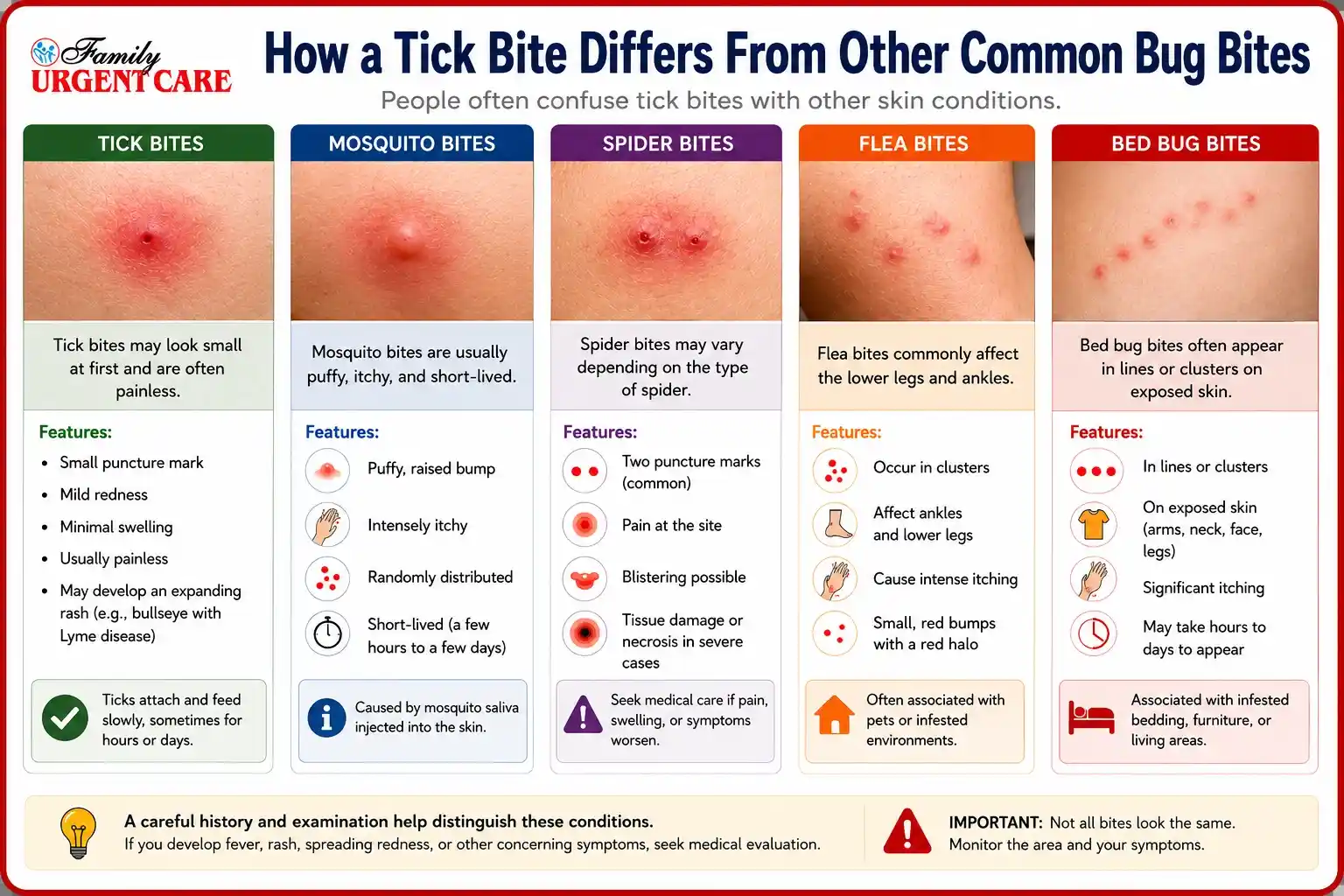
Not every rash after a tick bite means you have Lyme disease. Many tick bites cause a small area of redness, irritation, or swelling that improves as the skin heals. However, certain changes in a rash may be a warning sign of a tick-borne infection.
A Lyme disease rash, known as erythema migrans, usually appears within 3 to 30 days after an infected tick bite. It often starts as a small red spot and gradually expands over several days. While it is commonly described as a “bull’s-eye” rash, it does not always have that appearance and may simply look like an enlarging red patch.
Tick Bite Treatment: What Should You Do?
When you find a tick attached to your skin, you can treat it with simple first aid, especially when you have no signs of infection. Here are some steps you can take.
- Remove the tick carefully: With the help of fine-tipped tweezers, gently grasp the tick to the skin and pull it straight out without squeezing to avoid the chances of leaving parts behind.
- Clean the bite area: Wash the bite site and your hands with soap and water to make sure you have gotten rid of the tick’s saliva.
- Store the tick: Keep the tick in a sealed container. This step helps you find out if the tick carried any disease or not.
- Monitor for changes: Look out for an expanding rash or other symptoms that may point to a tick-borne infection.
Minor tick bite reactions usually get better within a few days. However, you should seek medical help if symptoms get worse, you experience symptoms of Lyme disease, or have any concerns about your risk after a tick bite.
At Family Urgent Care, we provide safe tick removal if you are not sure about doing it properly. Also, if you are worried about the embedded parts that might remain during your attempt, we are here to rescue you.
Medicine for Tick Bites
For mild symptoms, over-the-counter options may help relieve discomfort. If you develop signs of infection or a tick-borne illness, you may need a prescription medicine.
- Pain relievers: Medications such as acetaminophen or ibuprofen may help with mild soreness or tenderness around the bite area.
- Antihistamines: These may help reduce itching or an allergic skin reaction when appropriate.
- Topical treatments: Anti-itch creams or soothing skin treatments may provide temporary relief from irritation.
- Antibiotics: Antibiotics such as doxycycline are not needed for most tick bites. They may be prescribed by a healthcare provider to prevent or treat Lyme disease and other tick-borne bacterial infections in people if the bite is considered high risk.
Is Antibiotic Ointment Needed for a Tick Bite?
Antibiotic ointment is not usually necessary for every tick bite. However, it may be recommended if the skin has been scratched, damaged, or shows signs of a minor bacterial infection.
Keep in mind that topical antibiotic ointments only help prevent or treat bacteria on the skin surface. They do not prevent tick-borne diseases such as Lyme disease, which occur when bacteria transmitted by a tick enter the body.
The most important steps after a tick bite are cleaning the area properly, keeping it protected if needed, and monitoring for any changes such as worsening redness, swelling, pain, or signs of infection.
Tick Bite Home Remedies: What Helps and What to Avoid
Most tick bites can be managed at home with simple self-care measures to relieve discomfort and support healing. Here are a few tick bite home remedies that may help and practices you should avoid.
| What Helps | What to Avoid |
|---|---|
| Apply a cold compress to help reduce itching and swelling. | Don’t scratch the bite, as it can irritate the skin and increase the risk of infection. |
| Wash the bite area with soap and water to keep it clean. | Don’t apply petroleum jelly, nail polish, alcohol, or essential oils to an attached tick in an attempt to remove it. |
| Use an over-the-counter anti-itch cream (such as hydrocortisone or calamine lotion) to relieve irritation. | Don’t burn the tick with a match or other heat source, as this is ineffective and may increase the risk of disease transmission. |
How to Prevent a Tick Bite Infection
Whether you’re hiking, gardening, or spending time in grassy or wooded areas, these simple precautions can help reduce your risk of tick bites:
- Wear protective clothing, including long sleeves, long pants, and closed-toe shoes. Tucking your pants into your socks can provide extra protection.
- Apply an EPA-registered insect repellent to exposed skin and clothing according to the product instructions.
- Avoid tall grass, bushes, and leaf litter where ticks are more likely present. Stay on marked trails whenever possible.
- Check your body for ticks after spending time outdoors.
- Shower and change into clean clothes soon after coming indoors to help remove unattached ticks and make tick checks easier.
- Inspect your pets and outdoor gear before bringing them inside, as ticks can easily hitch a ride into your home.
When Should You Seek Urgent Care After a Tick Bite
You should seek urgent care if you develop the signs of infection that are as follows.
- Erythema migraines (bull’s eye rash), which continues spreading over 3-30 days.
- Flu-like symptoms including fever, chills, body aches, fatigue, or headache after a tick bite.
- Persistent redness, swelling, warmth, or if pus forms around the bite site.
- Joint pain and stiffness
- Swollen lymph nodes near the bite site.
- Difficulty removing the tick or if parts of the tick remain embedded in the skin.
Early medical evaluation can help get the treatment for a tick-borne illness faster while reducing the risk of complications. If you develop signs of a severe allergic reaction, such as difficulty breathing, swelling of the face or throat, or widespread hives, call 911 immediately.
Looking for tick removal and treatment? We have got you covered.
At our walk-in clinic in Chicago and Schererville, we have skilled physicians who carefully assess if you have Lyme disease or any other tick-borne illness and provide proper treatment before things get worse. We also offer safe and professional tick removal if you aren’t confident to do it yourself.
With no appointments needed, you can visit your nearest Family Urgent Care clinic and get rid of those pesky ticks with our next level support.
FAQs
1. When should you worry about a tick bite?
You should worry about a tick bite if you experience an expanding rash, flu-like symptoms, severe difficulty breathing, skin changes, swelling around the bite, and if the tick remains attached for a long time. These symptoms may point to a tick-borne illness like Lyme disease or a skin infection.
2. When do you need antibiotics after a tick bite?
An antibiotic is ideally given within 72 hours of tick removal as a preventive treatment. While most cases of tick bites don’t require antibiotics, healthcare providers may recommend them if you live in high risk areas where Lyme disease is common. Also, if the tick remains attached for longer or you develop symptoms of tick-borne illness, your doctor may prescribe you a single dose of doxycycline.
3. What does a tick bite look like after a week?
A tick bite that heals normally usually disappears after a week or leaves a tiny dot that seems fainting. However, if you notice a red spot that’s expanding, swelling, warmth, or has other signs of infection, you should get it checked by a healthcare provider immediately.
4. Can a tick bite make you sick immediately?
No. Tick bites do not immediately make you sick even if they carry tick-borne illnesses such as Lyme disease. This is because pathogens have an incubation period during which they multiply to cause symptoms days to weeks later.
5. Do tick bites itch?
Yes, tick bites do itch. Itching is the common response to tick saliva or venom that lasts a few days. However, it’s not like everyone will experience itching the same way. Some people don’t even feel the itch at all.