

Key takeaways
- Strep throat is a bacterial infection that causes a sudden painful sore throat, fever, body aches, and swollen tonsils without a cough. However, flu and COVID are viral infections that may cause sore throat with cough, congestion, fever, runny nose, body aches, and hoarseness.
- While COVID and flu have many symptoms in common, COVID spreads gradually over the course of days and may last longer. On the other hand, flu develops within a day or two and takes a few days to two weeks to subside.
- You can’t completely tell strep throat, COVID-19, and the flu apart by just looking at symptoms as they overlap. This is why early testing is important to identify the right treatment option.
During seasonal changes, sore throat, cough, fever, and body aches become a new normal for many people.
Well, it doesn’t end here.
Things get worse when you can’t identify whether you have Strep, Flu, or COVID, let alone treat them.
While these conditions are quite distinct, the symptoms usually overlap. That’s where testing helps in figuring out what’s actually causing the illness.
In this article, we have brought some important differences and similarities between these conditions to give you a better idea of each disease.
Strep vs COVID vs Flu: How to Tell?
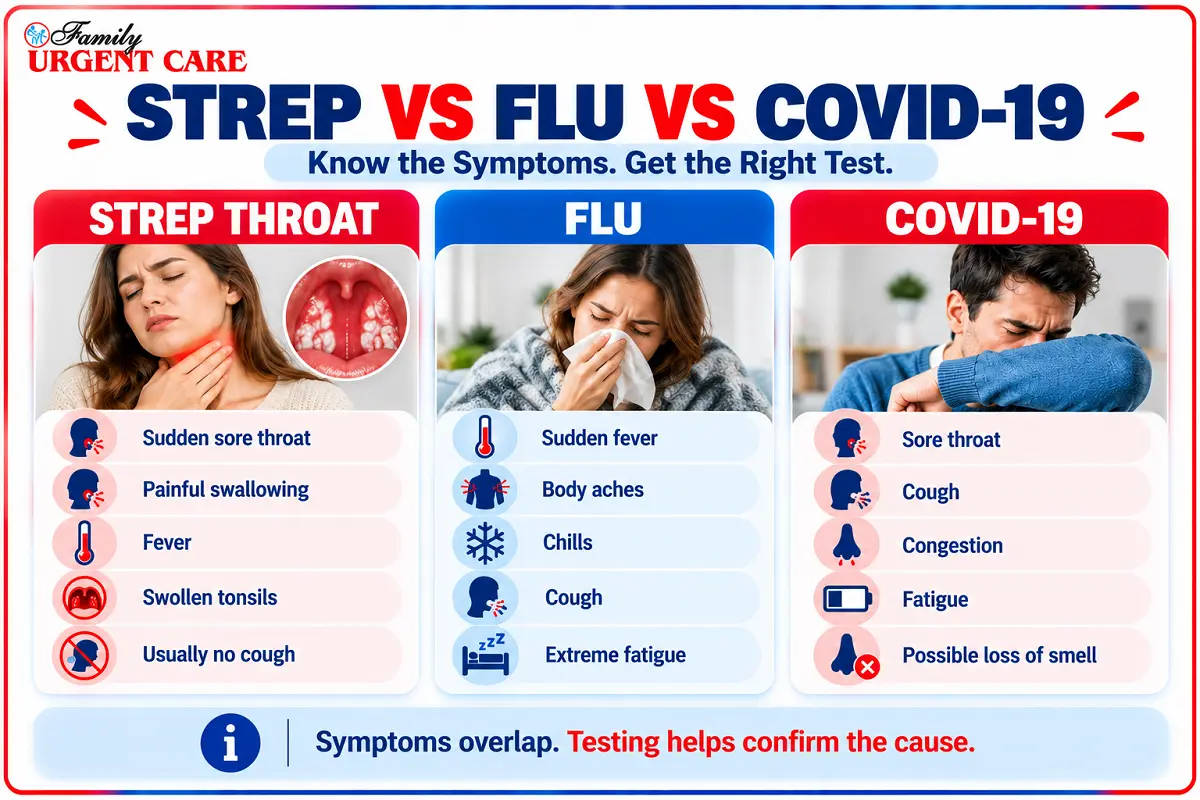
Strep throat is a bacterial infection that often causes a sudden sore throat and fever. On the other hand, COVID-19 and the flu are viral infections that can cause sore throat, cough, fever, and fatigue. While symptoms can offer clues, they often overlap, so testing may be needed to identify the cause.
| Symptoms | Strep Throat | COVID 19 | Flu |
| Cause | Bacteria (Streptococcus A) | Covid (SARS-COV-2) virus | Influenza virus |
| Sore throat | Prominent (Often sudden and painful) | Common | Common |
| Fever | Common | Possible | Common, often with chills |
| Cough | Usually absent | Common | Common |
| Runny or stuffy nose | Less common | Possible | Possible |
| Body aches | Possible | Possible | Often Prominent |
| Fatigue | Possible | Common | Often Pronounced |
| Swollen neck glands | Common | Possible | Possible |
| White patches on tonsils | May occur | Not common | Not common |
| Onset of Symptoms | Sudden | Gradual | Sudden |
Which Symptoms Point More Toward Strep, COVID, or Flu?
Although strep throat, COVID-19, and the flu share some symptoms, the way they start and the symptoms you notice most may offer clues. Here’s what to look for.
Signs That May Point Toward Strep Throat
Strep throat is caused by the Streptococcus A bacterium. It often starts suddenly, with a sore throat that hurts when you swallow. You may also notice the following symptoms
- Your throat may look red, and your tonsils feel swollen with white patches or streaks of pus sometimes.\
- You may have a fever, usually over 101°F
- The glands at the front of your neck may feel swollen or sore when touched.
- Small red spots appear on the roof of your mouth.
- You may have little to no cough. A cough, runny nose, hoarseness, or pink eye is more common with a viral infection than strep.
Signs That May Point Toward COVID-19
COVID-19 can look like a common cold, the flu, or even strep throat. Symptoms may include:
- Sore throat
- Congestion
- A runny or stuffy nose, or both.
- Cough
- Fever
- Difficulty breathing
- You may feel unusually tired, weak, or achy.
- Changes in taste or smell can occur, although it’s less common with recent variants of COVID like Omicron.
- Nausea and vomiting
- Diarrhea
Signs That May Point Toward the Flu
The flu often comes on suddenly. You might feel relatively well and then develop several symptoms within a short period.
- High fever (above 100°F),although not everyone with the flu develops a fever
- Muscle and body aches can make everyday activities uncomfortable
- Stuffy or runny nose
- You may feel exhausted and need more rest than usual
- Chills
- Cough
- Sore throat
Note: A sudden, painful sore throat without a cough may raise suspicion for strep, while abrupt body aches and fatigue may point toward the flu. COVID-19 can cause either pattern. If symptoms overlap, testing and clinical evaluation can help identify the cause.
Similarities Between Flu and COVID
- Both are respiratory illnesses caused by different viruses.
- Both are asymptomatic at the start.
- Both can cause fever, cough, sore throat, a runny or stuffy nose, fatigue, headache, and body aches.
- Both are contagious and spread through respiratory particles released when an infected person breathes, talks, coughs, or sneezes.
- Both have antiviral treatment options for eligible patients, particularly those at higher risk of complications.
Flu vs COVID: What’s the Difference
While COVID and flu share many similar symptoms, certain differences can help you tell them apart. Let’s explore some key differences below.
- While both are viral infections, COVID is caused by coronavirus (SARS-CoV-2), while the flu is caused by the influenza virus.
- COVID spreads more easily and may cause more severe illness in people than flu.
- A loss or change in taste or smell may point toward COVID-19, although this symptom is less common than it was earlier in the pandemic.
- Difficulty breathing or shortness of breath is also specific to COVID and seems rare with flu.
- COVID symptoms usually develop gradually over days, while flu symptoms may appear within a day or two. According to the CDC, flu symptoms typically appear 1–4 days after infection, while COVID-19 symptoms may appear 2–14 days after exposure.
- Most people with the flu recover within a few days to two weeks, although complications can occur. COVID-19 can sometimes lead to Long COVID, with symptoms that continue for weeks, months, or longer.
What If You Have a Sore Throat but No Cough?
A sudden sore throat without a cough may point toward strep throat, especially if you also have a fever, painful swallowing, swollen lymph nodes, or white patches on the tonsils. In contrast, a sore throat with a cough, runny nose, or hoarse voice is more often linked to a viral infection, such as COVID-19 or the flu.
However, not having a cough doesn’t automatically mean you have strep. You can also get a sore throat because of dry air, mouth breathing, the common cold, allergies, and postnasal drip, so your clinician may recommend a rapid strep test or throat culture if strep is suspected. This is especially important if your sore throat starts suddenly or comes with fever and swollen tonsils.
When Should You Visit Urgent Care?
Knowing when to get tested or seek care can help you avoid unnecessary treatment and catch infections that need prompt attention.
Consider visiting urgent care if:
- You have a sudden sore throat, fever, painful swallowing, or swollen tonsils that may indicate strep throat.
- You’re unsure whether your symptoms are caused by strep, COVID-19, or the flu and need testing.
- Your fever persists, throat pain worsens, or you start feeling worse instead of better.
- You’re at higher risk of complications due to age, pregnancy, or an underlying health condition and develop flu-like symptoms.
Antiviral treatments for flu and COVID-19 can be time-sensitive, so don’t wait until symptoms become severe to ask whether treatment is appropriate. Seek emergency care if you and your child have trouble breathing, persistent chest pain or pressure, confusion, difficulty staying awake, or signs of severe dehydration.
How Long Do Strep, COVID, and Flu Symptoms Last?
Strep throat, COVID-19, and the flu can take different amounts of time to improve. How long you feel sick depends on the infection, its severity, and your overall health.
- Strep throat: Symptoms often start improving within 24 to 48 hours after starting appropriate antibiotics. Finish the prescribed course, even if you feel better sooner. If symptoms don’t improve within 48 hours of starting treatment, contact your healthcare provider.
- Flu: Many people feel better within a few days to two weeks. However, a cough or fatigue may linger after the fever and body aches have eased.
- COVID-19: Recovery varies from person to person. Mild symptoms may improve within days to a few weeks, while some people experience lingering fatigue, cough, or other symptoms for longer.
Strep vs COVID vs Flu: Diagnosis and Treatment
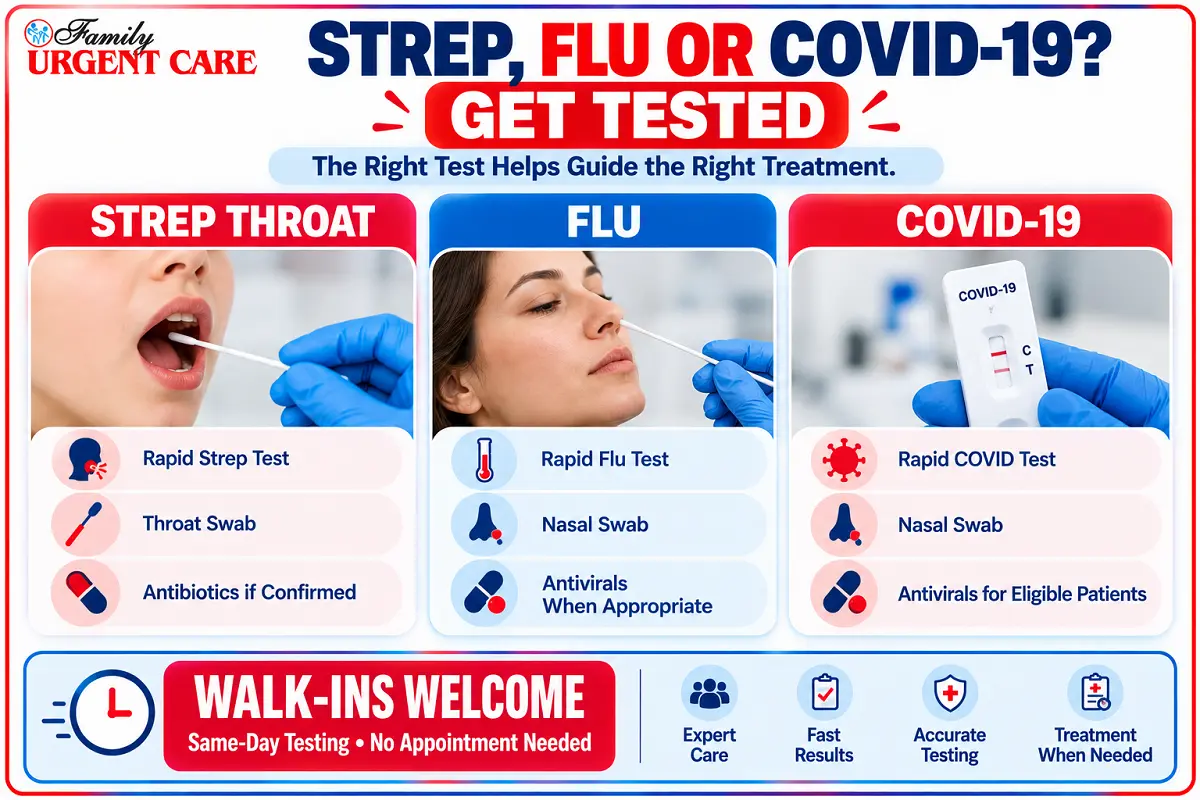
You can’t completely tell about each disease through symptoms alone. That’s where testing helps identify the infection and guide the right treatment.
| Infection | Diagnosis | Treatment |
| Strep Throat | A rapid strep test and throat cultures may be needed to confirm the diagnosis. | Antibiotics, such as penicillin or amoxicillin, treat confirmed strep throat. Take them exactly as prescribed and complete the full course even if you start to feel better. |
| Flu | A nasal swab sample can detect influenza A and B using rapid or molecular tests. | Rest, fluids, and symptom relief. Antiviral medicines may help, especially when started within the first 48 hours. |
| COVID 19 | A rapid antigen test or a molecular test like PCR, can detect the virus using a nasal swab. | Treatment usually focuses on antiviral therapy, especially for high risk individuals, which needs to be started early within 5 to 7 days of symptoms onset. |
Note: Rapid antigen tests may provide results in about 15–30 minutes, while PCR and other molecular tests are generally more sensitive. A negative rapid COVID-19 test may not rule out infection, so repeat testing or a more sensitive test may be needed. If you’re at higher risk of severe illness, contact a healthcare provider immediately because antiviral treatment works best when started early.
Not sure if you have COVID, Flu, or Strep Throat? Visit Us
If you are dealing with multiple overlapping symptoms and can’t determine the actual cause,we have got you covered. At Family Urgent Care, we offer rapid testing for strep throat, flu, and COVID-19 at our Chicago and Schererville locations, with same-day results.
We help you find out what may be causing your symptoms, get guidance from our healthcare team, and learn about your treatment options.
Walk in for same-day care and start your journey towards healing sooner.
1. Why does it matter whether you have strep, COVID-19, or the flu?
Knowing which infection you have helps you choose the right treatment option. For instance, if you have strep throat, which is caused by bacteria, you may require antibiotics, while COVID-19 and the flu are viral infections that may need antivirals. Knowing the cause helps you understand illness severity, the best care options, and steps you can take to prevent spreading the infection.
2. Do I need an appointment for a rapid test or flu shot?
No. At Family Urgent Care, we offer walk-in visits for rapid strep, COVID-19, and flu testing, as well as flu vaccinations, so you don’t have to go through the hassle of booking an appointment that also comes with long wait times.
3. How long does it take to get tested?
We provide results for rapid strep tests in about 10–15 minutes, while rapid flu and COVID-19 may take a bit longer, usually around 15-30 minutes. However, your total visit time may vary as it can include check-in, assessment, and sample collection. Some tests need laboratory processing that may take longer to return results.
4. Can you test for strep, flu, and COVID-19 during the same visit?
Yes. Family Urgent Care can evaluate and test for all three infections during the same visit. Strep testing is done through a swab test, while flu and COVID are usually performed as a combined antigen test (SARS‑CoV‑2 and Influenza A+B) using a nasal swab.
5. How much does a rapid test cost?
Family Urgent Care charges $40 for a rapid flu and COVID-19 combo test and $20.50 for a rapid strep test for self pay patients. While rapid testing is covered by insurance, a separate office fee is applied, so always check with your insurance provider or contact any of our nearest clinics to avoid any hidden surprises in terms of cost.
6. Can I get an antibiotic shot instead of pills for strep throat?
Yes. Your healthcare provider may prescribe you a single antibiotic shot like penicillin (benzathine penicillin G), which provides a complete treatment for confirmed strep throat in a single dose. It is a really good option for children and adults who have difficulty swallowing pills or completing a course of antibiotics. However, its suitability for you depends on factors like your age, weight, medical history, allergies, etc.
7. Can I get a flu shot if I’m not sick?
Yes. You can get a flu shot even if you are sick or not, as the vaccine works to prevent influenza virus and lowers the risk of severe illness, not just treating an existing infection. It’s recommended to get vaccination each year, especially for children aged 6 months or older. However, if you are severely ill, consult with your healthcare provider, as they might suggest you wait until recovery to get vaccinated.
8. Can a child have flu and strep throat at the same time?
Yes. Strep and flu in kids can occur at the same time, especially during peak flu season when the immune system is already compromised. This happens because flu weakens your defences, providing an opportunity for the Streptococcus A bacterium to cause a strep throat. As both illnesses have overlapping symptoms like sore throat along with fever and body aches, it’s best to consult a healthcare provider to determine if further tests are required.