

Key takeaways
- The best time to get a flu shot is between September and October, preferably the end of October for maximum protection.
- If you have missed the September-October window, it’s not too late as you get vaccinated later in the season.
- It takes approximately 2 weeks for your body to develop protection against flu after getting vaccinated.
- Children aged 6 months through 8 years may need two doses at least four weeks apart, depending on their previous flu vaccination history.
- Nasal spray vaccine (FluMist) is not recommended during pregnancy
Wondering what the best time is to get a flu shot for the 2026–27 flu season? As per the CDC, September and October are ideal months for people to get vaccinated, preferably at the end of October, before the flu wave peaks across the US.
Getting vaccinated at the right time matters because your body takes about 2 weeks to develop protective antibodies after a flu shot. This helps you build immunity before peak transmission months (December-January), but if you miss the recommended timeline, it’s not too late. You can get it later as various flu strains keep circulating throughout the season.
In this guide, we’ll discuss everything you need to know about getting flu shots this season.
Continue reading to find out more.
Is It Too Late to Get a Flu Shot in November or December?
Missing the recommended September–October window doesn’t mean you’ve missed your chance to protect yourself against the flu. You may continue flu vaccination after October and throughout the flu season, as long as flu viruses are circulating and the vaccine is still available.
This is particularly important because flu activity can increase during the winter months and may continue well into spring. Even if November or December has arrived, getting vaccinated can still help reduce your risk of flu illness and its potentially serious complications.
Should You Get a Flu Shot When You Are Sick?
Feeling under the weather and not sure if you should get the flu shot at this time? You are not alone. Many people think that getting vaccinated while being sick could make their symptoms worse.
Well, minor illnesses generally do not affect the body’s response to vaccination. So, if you are experiencing a mild cold, runny nose, cough, or slight congestion, but otherwise feel well, you can generally get your flu shot as scheduled.
However, if you’re dealing with a moderate or severe illness, with or without a fever, your healthcare provider may ask you to delay the vaccination until you feel better. It’s a precautionary measure, as the symptoms of a current infection and vaccine side effects may overlap and get confusing for you to understand. Also, the flu vaccine may not work well if you get it when the body is already fighting an underlying infection.
How Long Does It Take for the Flu Shot to Work?
A flu shot doesn’t provide immediate protection, so you may still be vulnerable to infection shortly after vaccination. It takes approximately two weeks for your body to develop enough antibodies to protect against influenza.
During this time, your immune system is building a response to the viruses targeted by the vaccine. This is why getting vaccinated before flu activity increases is important. If you’re exposed to the flu shortly before or within those two weeks, you may still get sick before your body develops enough protection.
How Long Does the Flu Shot Last?
A flu shot doesn’t provide lifelong protection, and its effectiveness can gradually decrease over time as your body’s immune response changes. Protection generally lasts through one flu season, but it may weaken over several months.
This is one reason getting vaccinated at the right time matters, especially if flu activity tends to peak later in the winter. Understanding how long immunity lasts can help you decide when to get vaccinated and why an annual flu shot is recommended rather than relying on last year’s vaccine.
Who Needs a Flu Shot This Season?
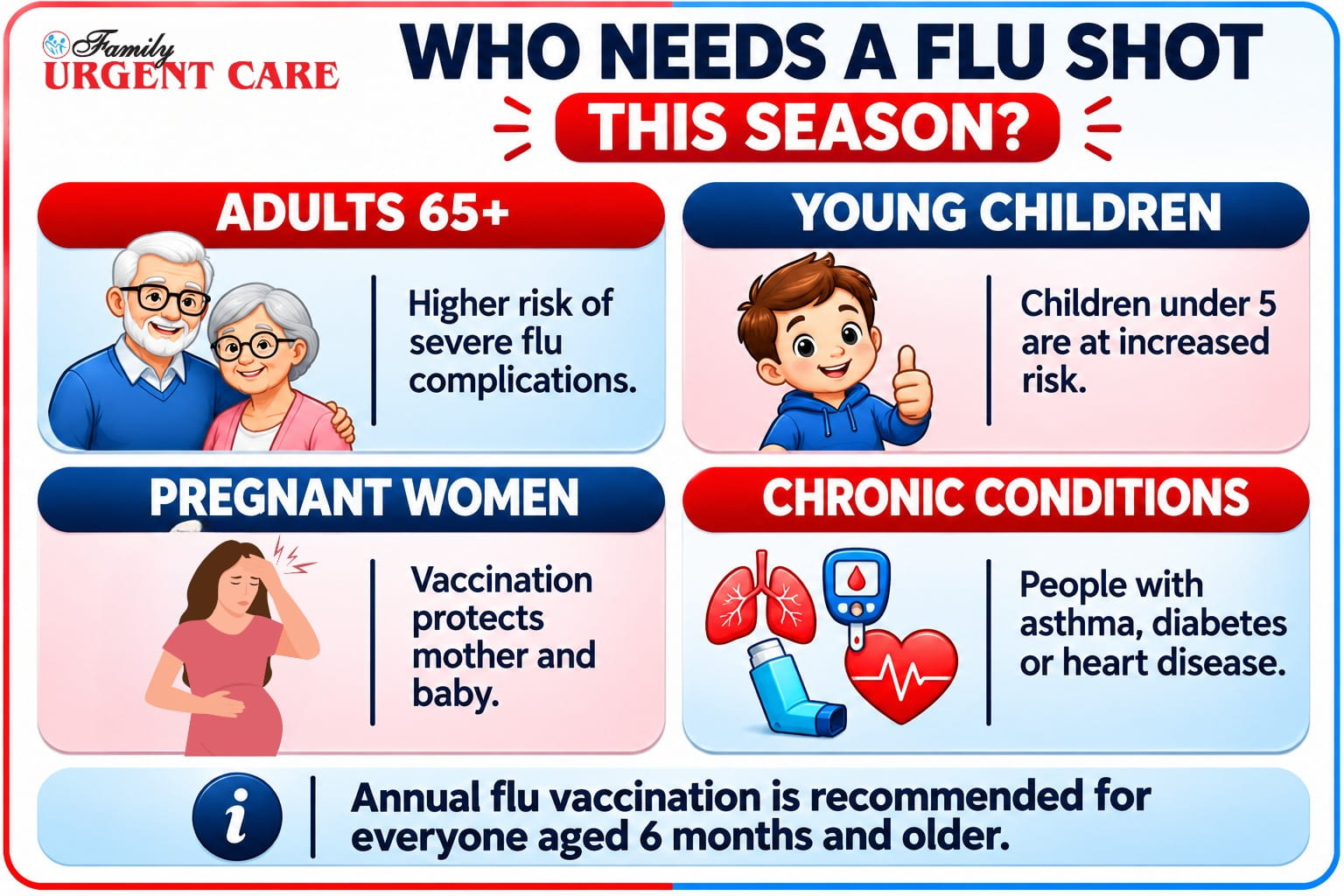
Although flu vaccination is recommended for everyone aged 6 months and older, certain groups are more vulnerable to severe illness and flu-related complications. These include:
Adults Aged 65 and Older
Older adults have a higher risk of severe flu complications because immune defenses tend to weaken with age. Certain vaccines, including high-dose, adjuvanted, and recombinant flu shots, are preferably recommended for adults aged 65 and older to help produce a stronger immune response.
Infants and Young Children
Children under 5, especially those younger than 2, are more vulnerable to flu complications. Children aged 6 months through 8 years may need two doses at least four weeks apart, depending on their previous vaccination history. Babies younger than 6 months are too young to receive a flu shot.
Pregnant Women
Pregnancy increases the risk of severe flu illness. An injectable flu vaccine can be given during any trimester, which protects both the mother and baby through antibodies passed during pregnancy. The nasal spray vaccine (FluMist) is not recommended during pregnancy.
People With Chronic Health Conditions
People with certain underlying conditions have a greater risk of serious flu complications. These include:
- Asthma and chronic lung disease
- Heart disease
- Diabetes
- Kidney or liver disease
- Weakened immune systems
Annual flu vaccination can help reduce their risk of severe illness and hospitalization.
People With an Egg Allergy
An egg allergy is not a reason to skip your flu shot. People with egg allergies can receive any age-appropriate flu vaccine, including egg-based vaccines like Fluzone, Fluad, or FluMist. However, those with a previous severe allergic reaction to a flu vaccine should consult their healthcare provider before vaccination.
2026–27 Flu Vaccine Options by Age Group
| Vaccine type | Brand names | Suitable for |
|---|---|---|
| Standard-dose inactivated influenza vaccine (IIV) | Fluarix, FluLaval, Fluzone | Most people aged 6 months and older. |
| Cell-based inactivated influenza vaccine (ccIIV) | Flucelvax | People aged 6 months and older |
| Recombinant influenza vaccine (RIV) | Flublok | People aged 18 years or older |
| High-dose inactivated influenza vaccine | Fluzone High-Dose | Adults aged 65 and older |
| Adjuvanted inactivated influenza vaccine | Fluad | Adults aged 65 and older |
| Live attenuated influenza vaccine (LAIV) | FluMist (needle-free nasal spray) | Eligible for people aged 2–49 years |
| mRNA influenza vaccine | mFlusiva | Adults aged 50 and older |
Note:
Fluzone High-Dose, Fluad, or Flublok are preferably recommended for people aged 65 years and older.
Can You Get the Flu and COVID Shot at the Same Time?
Yes, you can get your flu shot and COVID-19 vaccine during the same appointment if you’re eligible for both. Getting them together is a convenient way to stay protected without scheduling two separate visits.
Both vaccines can be administered safely during the same visit, although you may experience common side effects. If you’d like to get them separately, there’s no required waiting period between the two vaccines.
What Are the Side Effects of Flu Vaccine?
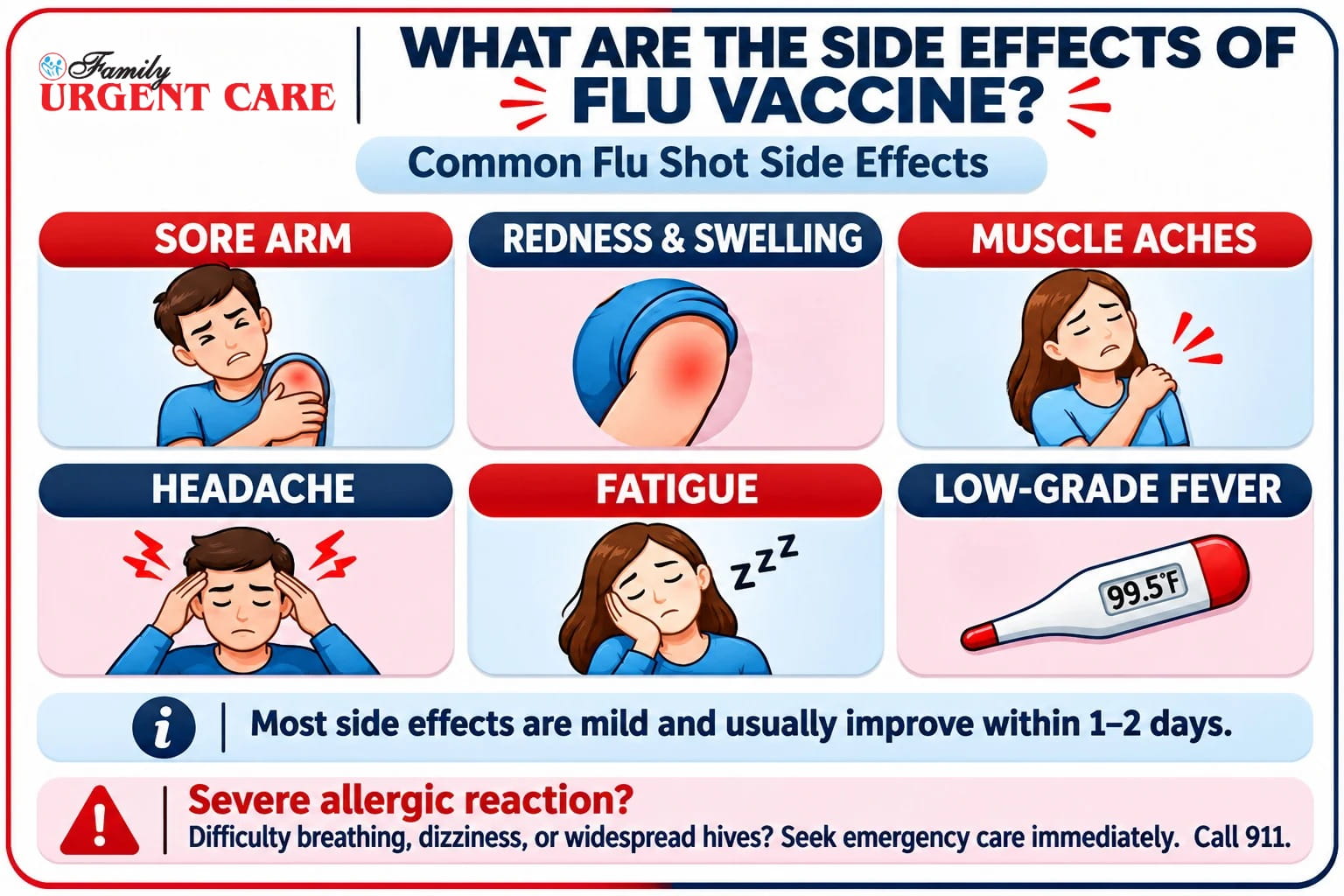
Most flu shot side effects are usually mild and go away on their own within a day or two. This usually signals that your immune system is responding well to the vaccine and may include.
- Sore arms
- Redness and swelling at the injection site.
- Pain
- Muscle aches
- Headache
- Fatigue
- Low-grade fever
- Nausea
The side effects of the flu vaccine are milder than flu symptoms and don’t require medical treatment. However, visit urgent care if the discomfort doesn’t improve after a few days, with persistent fever or symptoms getting worse.
If you notice severe allergic reactions like difficulty breathing, dizziness, or widespread hives, call 911 or go to emergency care, as these can be life threatening.
Get a Flu Shot at Family Urgent Care Before the Season Peak
Getting flu shots earlier is a simple and straightforward way to protect yourself and your loved ones from seasonal flu.
As flu season is already on the calendar, don’t wait until the cases surge and get convenient flu vaccination at Family Urgent Care today.
Whether you are looking for walk-in flu shots or booking an appointment to get vaccinated, our team is here to help you stay protected before the flu season 2026–27 sneaks up on you.
Get in touch beforehand to learn more about flu shot availability at our Chicago and Schererville locations.
FAQs
1. Is November Too Late for a Flu Shot?
No, It’s not too late to get a flu shot in November. Flu season can continue throughout winter and sometimes into spring too. So, if the influenza virus is still circulating in your region, getting a fl shot can help you protect against the flu variants even if you missed the recommended early fall (September–October) window.
2. Can I Get a Flu Shot If I Have a Runny Nose?
Yes. You can get a flu shot if you have a runny nose, mild cold, or sinus infection. These are supposed to be minor symptoms that don’t affect the effectiveness of flu shots. However, if you have a fever with moderate to severe illness, consult a health specialist to discuss if it’s better to postpone a vaccination until you recover or not.
3. Should I Get a Flu Shot If I Already Had the Flu?
Yes, you should still consider getting a flu shot even if you’ve already had the flu this season.
While different strains circulate every season, your natural immunity can protect you from a specific strain at the time of infection. It means you may catch another flu strain during the same season and this is where getting vaccinated helps you get broader protection against other circulating strains.
4. Can You Get a Flu Shot While on Antibiotics?
Yes. You can get a flu shot while on antibiotics as both serve different purposes. Antibiotics treat bacterial infections so it doesn’t interfere with flu vaccines or reduce its efficacy in any way. However, if you are taking them for moderate or severe illness, it’s better to wait for recovery before getting vaccinated.
5. Does the Flu Shot Make You Sick?
Flu shots are made with inactivated (killed) viruses or viral proteins, not infectious flu viruses, so they don’t make you sick. Well, you may likely experience soreness at the site of injection, mild fever, headache, or muscle aches as some temporary side effects that usually resolve within a few days.
6. Do You Need a Flu Shot Every Year?
Yes. Everyone aged 6 months or older, with few rare exceptions, needs to receive an annual flu vaccination. As flu viruses mutate constantly, vaccines are updated each year to protect you against the strains expected to cause infection. So, the immunity you built from last year’s vaccine won’t be able to protect you this season.