
Timely Care for Cuts That Need More Than a Bandage
A sudden cut can quickly become stressful, especially when the bleeding does not stop, the wound appears deep, or its edges remain open. Waiting too long may make the injury harder to manage and increase the risk of infection.
At Family Urgent Care, we provide urgent care for cuts in Chicago & Northwest Indiana, including prompt wound evaluation, cleaning, closure, and aftercare. Our providers assess the severity of your injury and determine whether your wound requires stitches, another closure method, or a higher level of care.
What Is a Laceration?
A laceration is a cut or tear in the skin. It may be smooth, uneven, shallow, or deep, depending on how the injury occurred. A deep wound may extend beyond the skin and affect muscles, tendons, nerves, or blood vessels.
Since lacerations are often confused with other types of wounds, it helps to understand how they differ from abrasions. When comparing abrasion vs laceration, an abrasion usually scrapes the surface of the skin, while a laceration creates an opening or tear that may extend through deeper layers.
Common Causes of Lacerations
Lacerations can occur during everyday activities, workplace accidents, sports, or unexpected falls. Common causes include:
- Broken glass
- Sports injuries
- Household accidents
- Falls on rough surfaces
- Kitchen knives or sharp tools
Regardless of how the injury occurs, even a wound that appears small may need medical attention if it is deep, contaminated, or located over a joint or sensitive area.
When Does a Cut Need Medical Attention?
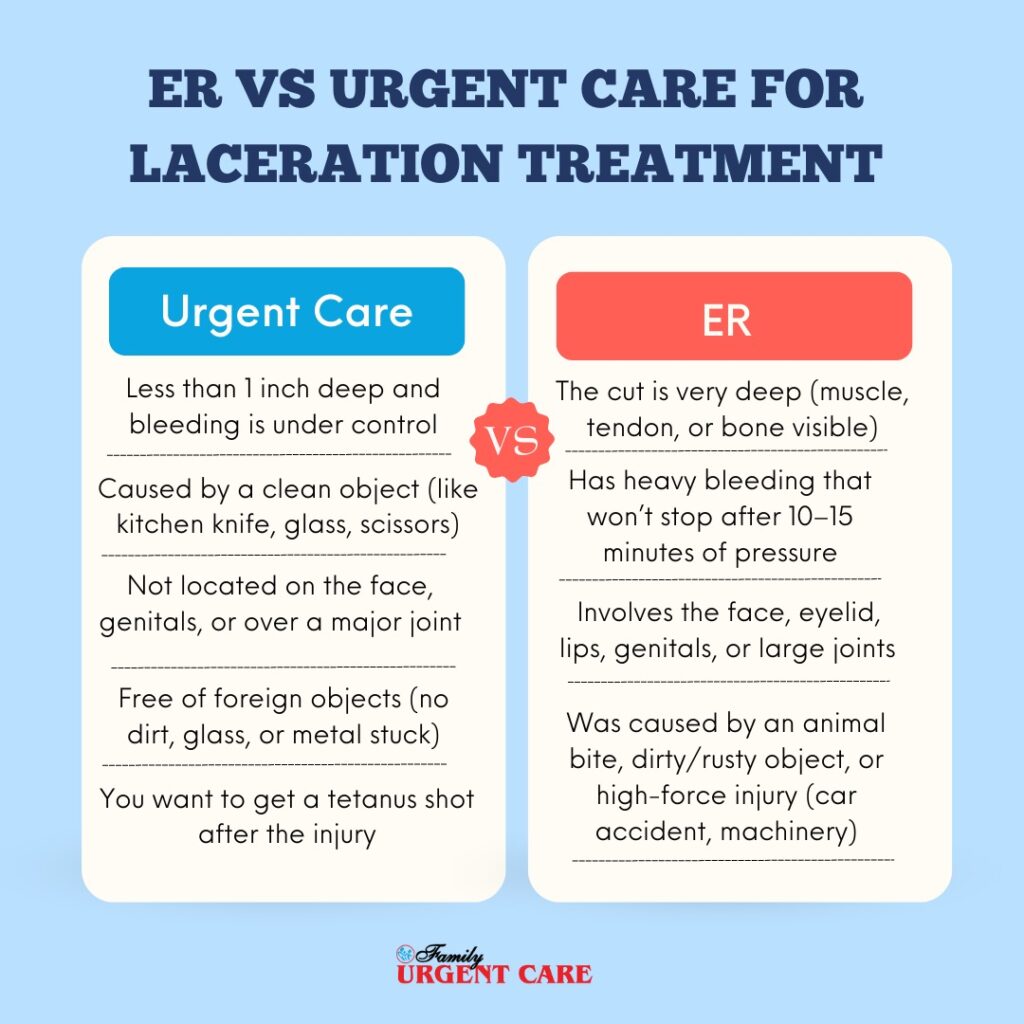
Minor cuts can often be cleaned and treated at home. However, you should consider urgent care for lacerations when:
- The wound is deep and wide
- Bleeding continues despite firm pressure
- Redness, swelling or worsening pain develops
- The injury was caused by a dirty or rusty object
- The wound is on the face, hand, foot, or over a joint
After receiving treatment, continue monitoring the wound for signs of infection as it heals.
Why Choose Family Urgent Care for Laceration Repair?
A cut can happen without warning, and you should not have to wait several days for an appointment. That’s why Family Urgent Care provides accessible wound care to help you receive the right treatment promptly.
Prompt Wound Evaluation
Our providers examine the wound carefully to determine its depth, location, level of contamination, and whether deeper structures may be affected.
Convenient Walk-In Care
We offer walk-in care for deep cuts, so you can be evaluated as soon as possible after your injury without waiting for an appointment.
Guidance for Continued Healing
Before you leave, we explain how to keep the area clean, when to change the dressing, which symptoms require attention, and when stitches or staples may need to be removed.
How Urgent Care Treat Lacerations
Your visit begins with an examination of the wound and a discussion about how and when the injury occurred. We may also check your sensation, circulation, and ability to move the affected area
Treatment may include:
- Numbing the area
- Controlling the bleeding
- Applying a clean dressing
- Cleaning and irrigating the wound
- Closing the wound with stitches and adhesive
- Removing visible dirt or debris when appropriate
Although many lacerations can be treated safely at urgent care, it is also important to recognize when emergency treatment is the safer choice.
Don’t Let a Deep Cut Heal the Wrong Way
A cut that remains open, continues bleeding, or shows signs of infection should not be ignored. Visit Family Urgent Care for professional wound evaluation and laceration repair in Chicago & Northwest Indiana.
Whether you choose to walk in or book an appointment, our team is ready to provide timely treatment to help you heal as quickly as possible.
FAQs
For a minor cut, wash your hands. Gently rinse the wound with clean running water. Wash the area around the wound with mild soap. Use a clean cloth or bandage to apply consistent pressure to help stop the bleeding, then put a clean, non-stick bandage over the wound.
A cut may need urgent care if it is deep, wide, painful, contaminated, or continues bleeding after firm pressure. You should also get evaluated if the wound edges remain open, deeper tissue is visible, or you notice numbness, weakness, limited movement, or infection symptoms.
Yes. Urgent care may repair a simple eyebrow laceration with stitches or another closure method. However, injuries involving the eyelid, eyeball, tear duct, facial nerve, or vision changes may require emergency or specialist care.
Healing time depends on the wound’s depth, size, location, treatment, and your general health. Small superficial wounds may begin closing within several days, while deeper lacerations may take a few weeks or longer to heal fully.
A small, shallow laceration may heal without stitches when the bleeding has stopped, and the edges stay close together. A larger or deeper cut may not heal properly on its own and could lead to infection, reopening and delayed healing.
Yes. Many urgent care clinics provide stitches for cuts. A provider will clean and examine the wound, check for more serious damage, and decide whether stitches, staples, adhesive strips, or another treatment is needed.