

Key takeaways
- Yes, you can have the flu without a fever. Influenza can cause a cough, sore throat, body aches, chills, and fatigue even when your body temperature stays normal.
- The flu is contagious even without a fever. You can spread the virus before symptoms begin and while you are sick.
- Most uncomplicated flu symptoms improve within 3 to 7 days, although coughing and tiredness may continue for two weeks or longer.
- Flu testing can confirm the infection, while rest, fluids, symptom relief, and prescribed antiviral medications can support recovery.
Feeling exhausted, experiencing body aches, or dealing with a persistent cough but no fever? You might assume it’s just a common cold.
However, these symptoms could also indicate the flu. Although many people associate influenza with a high fever, chills, and severe body aches, the infection doesn’t always raise your body temperature.
According to the Centers for Disease Control and Prevention (CDC), not everyone infected with influenza develops a fever.
In this article, we’ll explain why the flu can occur without a fever, the symptoms to watch for, how doctors diagnose it, and when you should seek medical attention.
Can You Have the Flu Without a Fever?
Yes, you can have the flu without developing a fever because the body’s immune response to influenza viruses varies from person to person.
While some people develop a high fever, others may experience respiratory symptoms and general discomfort without a noticeable increase in body temperature.
These symptoms may include coughing, headaches, muscle aches, and fatigue.
People who experience flu symptoms without fever may still have an active influenza infection, even when their body temperature remains normal.
The absence of fever doesn’t necessarily mean the infection is mild. Flu symptoms can vary by age, immune response, and underlying health conditions.
That is why it’s important to watch your overall symptoms rather than rely on body temperature alone.
What Are the Symptoms of the Flu Without a Fever?
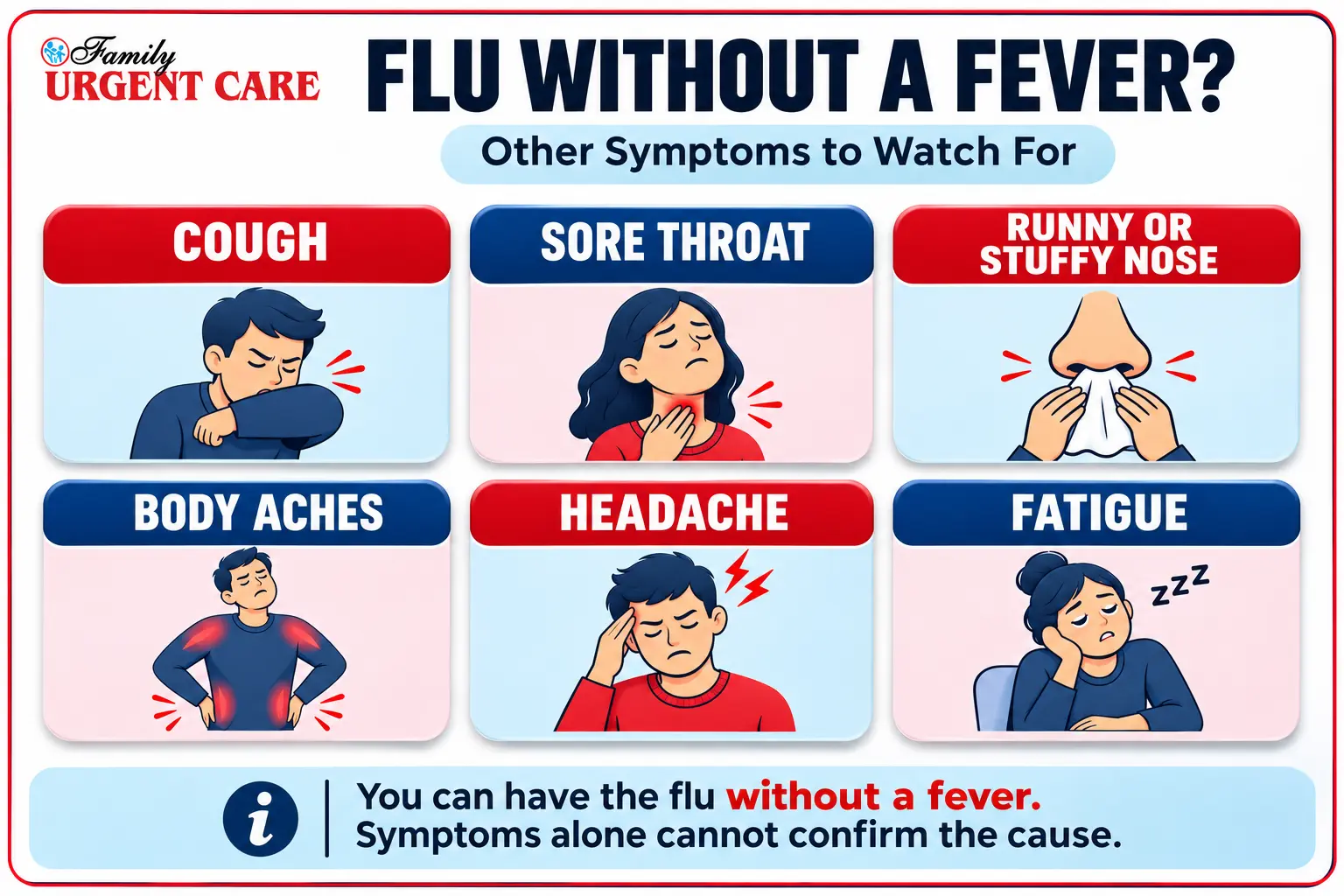
The signs of the flu without a fever also develop suddenly. You might feel fine in the morning and develop noticeable discomfort within a few hours.
Common symptoms include:
- Chills
- Cough
- Headache
- Sore throat
- Body aches
- Nausea or vomiting
- Runny or stuffy nose
Not everyone experiences all these symptoms. In adults, flu symptoms without a fever may include coughing and fatigue, while others may experience several symptoms at once.
Why Can You Have the Flu Without Developing a Fever?
Fever is part of your body’s immune response to infection. When the immune system detects influenza viruses, it releases substances that can raise your body temperature to help fight the infection.
However, this response varies from person to person, and several factors may explain why some people develop the flu without a fever.
Differences in Immune Response
Every person’s immune system responds differently to influenza. Some people develop a noticeable fever, while others fight the infection without a significant increase in body temperature.
Age-Related Changes
Older adults may not develop a fever because their bodies may not respond as strongly to infections as they did when they were younger.
Weakened Immune System
People with weakened immune systems may have the flu without developing a fever because their bodies may not produce a strong enough response to raise their temperature.
Previous Immunity or Vaccination
Previous exposure to influenza viruses or vaccination may influence how your body responds to infection. Although vaccination can reduce the risk of severe illness, vaccinated individuals can still develop influenza, sometimes with mild flu symptoms without fever.
Fever-Reducing Medications
Medicines such as acetaminophen or ibuprofen can lower body temperature. If you’ve taken these medications, a fever may be temporarily reduced or difficult to detect.
Not having a fever doesn’t rule out influenza. A healthcare provider may recommend testing based on your symptoms, exposure history, and overall health.
How Do Doctors Diagnose the Flu Without a Fever?
You can have influenza without a fever, but diagnosing it can be challenging because its symptoms often overlap with the common cold, COVID-19, and other respiratory illnesses.
Your healthcare provider will usually begin by reviewing your symptoms, when they started, and whether you’ve recently been around someone with the flu.
They may also check your breathing, examine your throat, and assess your overall condition.
If influenza is suspected, your provider may recommend one of the following tests:
- Rapid Influenza Diagnostic Test (RIDT): Uses a nasal swab to detect flu antigens, with results typically available in 10–15 minutes. A negative result does not completely rule out the flu.
- Rapid Molecular Influenza Test: Detects flu virus genetic material with greater accuracy than rapid antigen tests and often provides same-visit results.
- Polymerase Chain Reaction Test (PCR) or Other Laboratory Molecular Testing: Detects influenza A or B using highly sensitive laboratory methods.
Since flu and COVID-19 share several symptoms, your provider may also recommend combined testing for both infections.
Identifying the infection early can also help healthcare providers determine whether antiviral treatment is appropriate, especially for people at increased risk of complications.
Is the Flu Contagious Even Without a Fever?
Yes. You can spread the influenza virus even without a fever.
The flu can spread through respiratory particles released when an infected person coughs, sneezes, talks, or breathes. People nearby may inhale these particles and become infected.
The virus is most likely to spread during the first few days of infection. People are generally most contagious during the first three days of illness, although young children and those with weakened immune systems may remain contagious longer.
To reduce the risk of transmission:
- Avoid close contact with others while sick.
- Wash your hands frequently with soap and water.
- Avoid sharing drinks, utensils, and personal items.
- Cover your mouth and nose when you cough or sneeze.
- Consider wearing a well-fitting mask around other people.
If you suspect or have confirmed influenza, stay home until your symptoms improve for at least 24 hours and you are fever-free without fever-reducing medication.
How Long Does the Flu Last Without a Fever?
Flu symptoms typically improve within 3 to 7 days, even without a fever. However, recovery time may vary depending on your overall health and the infection’s severity.
During this period, symptoms such as sore throat, nasal congestion, and body aches usually begin to improve. However, coughing and fatigue may persist for two weeks or longer.
Resting enough, staying hydrated, and following appropriate treatment can help manage symptoms during recovery.
If your symptoms worsen, persist longer than expected, or improve and then return, seek medical attention to rule out possible complications.
How Can You Treat the Flu Without a Fever?
Treatment for influenza without a fever generally focuses on relieving symptoms, supporting recovery, and reducing the risk of complications.
For most people with mild symptoms, this means managing the illness at home, though some may benefit from prescription antivirals.
Here are some ways to manage your symptoms:
- Get plenty of rest
- Use saline nasal sprays
- Take over-the-counter pain relievers
- Avoid smoking and secondhand smoke
- Stay home and limit contact with others
- Consider antiviral medications if prescribed
Note: Antibiotics do not treat influenza because a virus, not bacteria cause it. Also, aspirin should not be given to children or teenagers with suspected influenza because of the risk of Reye’s syndrome.
When Should You See a Doctor for Flu Symptoms Without a Fever?
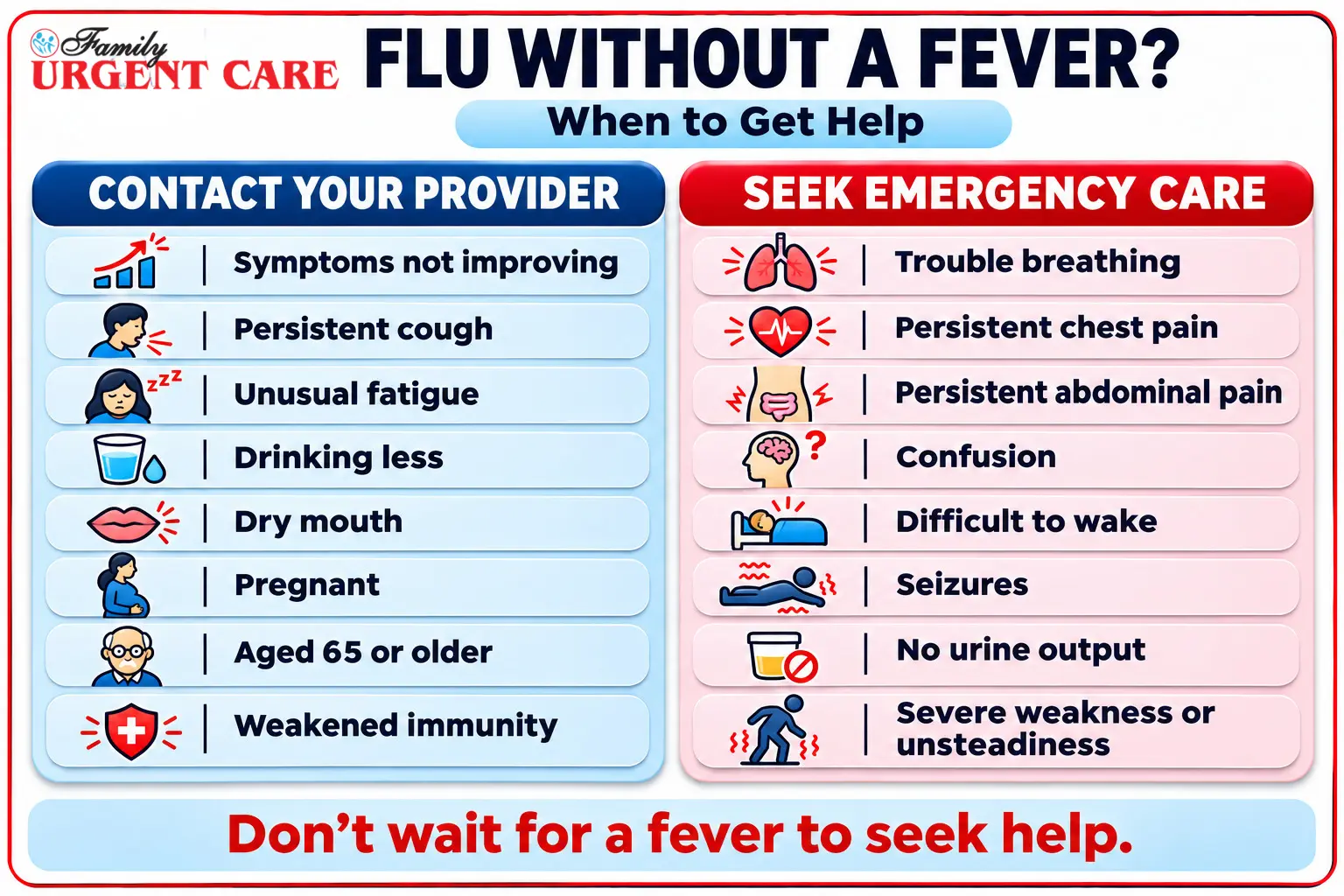
Although many people recover from influenza without medical treatment, certain symptoms may indicate that the infection requires professional evaluation.
Consider visiting a healthcare provider if you experience:
- Persistent or worsening flu symptoms that aren’t improving as expected.
- A cough that worsens or interferes with daily activities.
- Unusual fatigue or weakness that makes routine tasks difficult.
- Signs of dehydration, including reduced urination, dry mouth, or dizziness.
- Symptoms that improve at first but then return or worsen.
- Worsening asthma, diabetes, heart disease, or other existing medical conditions.
- Flu-like symptoms if you’re pregnant, aged 65 or older, immunocompromised, or have another condition that increases your risk of complications.
Seek emergency medical care immediately if you experience difficulty breathing, persistent chest pain or pressure, severe dizziness, confusion, inability to stay awake, or severe weakness.
Children may also require emergency care for bluish lips, breathing difficulties, dehydration, seizures, or unusual difficulty waking.
Frequently Asked Questions
1. Can you have the flu without a fever?
Yes, you can have the flu without a fever. Influenza can cause symptoms such as coughing, sore throat, body aches, and exhaustion even without a fever. Not having a fever doesn’t exclude the flu, and it doesn’t imply the infection can’t be passed on to other people.
2. What are the common symptoms of the flu without a fever?
Common flu symptoms without fever are cough, sore throat, headache, muscle aches and nasal congestion. Some people may also have a cold, nausea or loss of appetite. Symptoms may differ by age, immune response, and overall health.
3. Can you have the flu without a fever but with body aches?
Yes. You can have the flu without a fever but still have body aches. Aches in the muscles are typical. You may have a normal body temperature, but the infection might still cause inflammation and muscle pain. You may also have symptoms like tiredness, headaches, or a cough.
4. Can you spread the flu without having a fever?
Yes. The flu can be contagious without a fever. Coughing, sneezing, talking or breathing out releases respiratory particles that can spread the infection. People with the flu can spread it to others before they know they have the flu and for several days after they get sick.
5. How long does the flu last without a fever?
Most flu symptoms improve within 3 to 7 days, but recovery time varies by person. Symptoms such as cough and tiredness can last for two weeks or more. See a healthcare provider if symptoms worsen or return after you start to feel better.
6. How can you tell the difference between the flu and a cold without a fever?
The flu may come on unexpectedly and cause more noticeable body aches, headaches, and exhaustion. A common cold typically develops more slowly and more often involves sneezing, a runny nose, and mild throat irritation. However, symptoms often overlap, and testing may be needed to confirm the infection.
7. Can you have the flu without a cough or fever?
Yes. Influenza symptoms vary, and not everyone develops a cough or fever. Some people may experience fatigue, headaches, body aches, or a sore throat without these typical symptoms. A healthcare provider can assess your symptoms and determine whether flu testing is appropriate.
8. Can you test positive for the flu without having a fever?
Yes. You can test positive for the flu even without a fever. Influenza tests detect the virus or its components in respiratory samples, so a fever is not required for a positive result. Some people may experience symptoms such as coughing, fatigue, body aches, or a sore throat without developing a fever. If you have flu-like symptoms or were recently exposed to someone with influenza, a healthcare provider may recommend testing to confirm the infection and determine the appropriate treatment.