
Key takeaways
- RSV starts with cold-like symptoms like runny nose, congestion, sneezing, fever, and fatigue in all age groups, but infants, older adults, and those with weakened immune systems are at risk of severe disease.
- Symptoms usually show up 4-6 days after infection and peak around 3-5 days. However, the infected person may spread RSV 1-2 days before the symptoms appear.
- RSV symptoms may vary by age. While infants have poor feeding, irritability, apnea, and fewer wet diapers, adults with asthma and COPD may experience chest tightness, shortness of breath, and worsening symptoms.
- If fever is not present in infants with RSV, it does not rule out the infection.
RSV can look like an ordinary cold at first, but the signs can look different depending on age. A baby who feeds less than usual, a child with a worsening cough, or an adult struggling with wheezing may all be experiencing the same virus. Understanding what symptoms to watch for at each age can help you spot warning signs before the illness becomes more serious. This article guides you on how RSV looks at different stages of life.
What is RSV?
RSV (respiratory syncytial virus) is a contagious virus that affects the respiratory tract, from the nose and throat to the lungs. It spreads through respiratory droplets and contaminated surfaces.
While its symptoms often feel like a common cold, it can lead to severe diseases like bronchiolitis or pneumonia in children and older adults with underlying health conditions. According to WHO, half of RSV deaths among children are reported in infants under the age of 6 months.
Early RSV Symptoms: How it Starts?
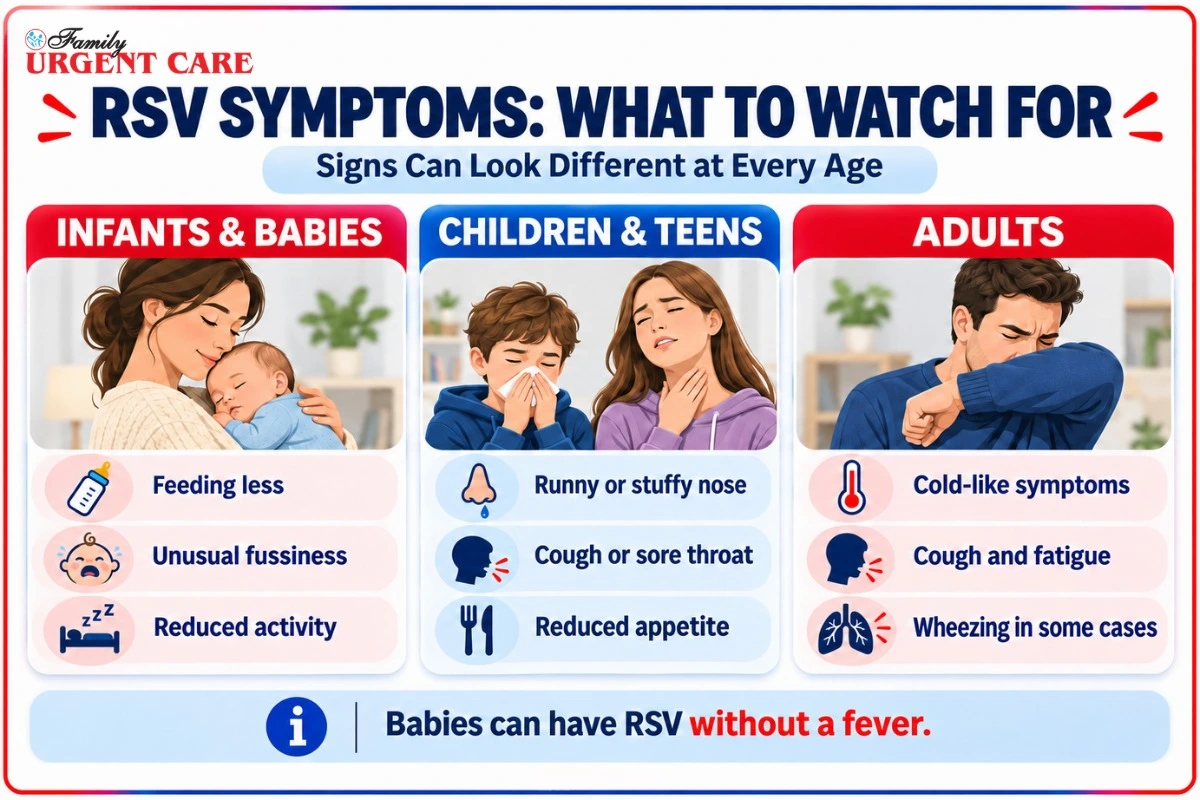
RSV symptoms often start 4-6 days after infection with mild symptoms that worsen over the next few days before gradually improving. Here is how symptoms typically progress.
- RSV often begins with mild cold-like symptoms like a runny or stuffy nose, sneezing, congestion, and a reduced appetite. A fever may develop, but not everyone gets one.
- Congestion may persist, and coughing can become more frequent. Young children may feed less, seem fussier, or have less energy than usual.
- Symptoms may worsen. Coughing may intensify, and some people develop wheezing or faster, more difficult breathing. These changes are particularly important to watch for in infants and high-risk adults.
- Gradual recovery may begin. Many people start feeling better within this period, although cough and congestion can linger for one to two weeks or longer.
RSV symptoms often peak around 3-5 days after symptoms appear, and usually resolve within 1 to 2 weeks in mild cases. The virus is contagious around 3 to 8 days and may even start to spread before the onset of symptoms.
RSV Symptoms in Infants and Newborns
- Runny nose
- Nasal congestion
- Feeding less than usual or tiring during feeds
- Coughing, sometimes accompanied by wheezing
- Unusual fussiness, irritability, or reduced activity
- Faster or more difficult breathing, including skin pulling inward around the ribs
- Pauses in breathing (apnea), particularly in very young infants
Note: Symptoms of RSV for infants may not include developing a fever, especially in the earliest months of life, so a normal temperature does not rule out infection.
RSV Belly Breathing: What It Looks Like
Belly breathing happens when a baby’s abdomen moves noticeably with each breath. Although some belly movement is normal in infants, RSV can make breathing harder, causing the belly to rise and fall more forcefully than usual.
Watch for the skin pulling inward beneath the ribs or between the ribs with each breath, nostrils flaring, or grunting. These signs may indicate respiratory distress and need urgent medical assessment. If your baby is struggling to breathe, has pauses in breathing, or develops blue or gray lips, seek emergency care immediately.
RSV Symptoms in Toddlers and Young Children
Here is what RSV in toddlers and young children may look like.
- Runny nose
- Nasal congestion
- Persistent coughing and sneezing
- Fever, although some children may not develop one
- Reduced appetite or drinking less than usual
- Trouble swallowing
- Wheezing or faster-than-normal breathing
- Unusual tiredness or irritability
- Less interest in play
- Signs of dehydration, such as fewer wet diapers or urinating less often
Note: Toddlers may not be able to explain how they feel, so changes in their breathing, fluid intake, energy, or usual behavior can offer important clues.
RSV Symptoms in Older Children and Teens
- Runny or stuffy nose
- Sneezing
- Sore throat
- Persistent cough that may become more noticeable over several days
- Fever
- Headache
- Fatigue
- Wheezing or shortness of breath in some cases
- Reduced energy or difficulty keeping up with usual activities
Note: RSV in teens and older children may feel like an ordinary cold, but worsening cough, wheezing, or difficulty breathing can signal a more serious illness.
RSV Symptoms in Adults
- Runny or stuffy nose
- Congestion
- Sneezing
- Sore throat
- Persistent cough, sometimes accompanied by wheezing
- Fatigue
- Mild fever
- Headache
- Reduced appetite or a general feeling of being unwell
- Mild or no noticeable symptoms in some cases.
Note: In healthy adults, RSV often resembles a common cold and resolves on its own. RSV in older adults can be severe due to weakened immune systems. As per the CDC, RSV leads to 110,000-180,000 hospitalizations among adults aged 50 or more each year in the U.S.
RSV Symptoms in Adults With Asthma or COPD
- Worsening cough
- Chest congestion
- Increased wheezing or shortness of breath
- Chest tightness or difficulty breathing during routine activities
- Asthma or COPD symptoms may worsen and may lead to pneumonia
- Increased fatigue
- Reduced ability to perform everyday tasks
Note: RSV in adults with asthma or COPD can exacerbate existing lung conditions, making breathing symptoms more severe than usual. Seek medical advice if symptoms worsen or your usual treatment becomes less effective.
RSV vs Flu vs COVID: What’s the Difference
| Symptom | RSV | Common Cold | Flu |
| Runny or stuffy nose | Common | Very common | Sometimes |
| Cough | Common: may worsen overtime | Common, usually mild | Common, can be severe |
| Fever | May occur | Uncommon in adults; possible in children | Common |
| Sneezing | Common | Very Common | Sometimes |
| Body Aches | Sometimes | Sometimes (mild, if present) | Common |
| Fatigue | Rare (usually mild to moderate) | Sometimes (usually mild) | Often pronounced |
| Wheezing or breathing difficulty | More concerning in infants and high-risk people | Less typical | Possible, especially with complications |
| Symptom onset | Often gradual | Usually gradual | Often sudden |
Note: RSV, colds, and flu share many symptoms, so you can’t reliably identify the virus by symptoms alone. Also, RSV deserves particular attention in infants, older adults, and people with asthma, COPD, or heart disease. Therefore, testing may be needed to determine which infection is causing symptoms.
How Long Does RSV Last and When Is It Contagious?
RSV symptoms usually improve within 1–2 weeks, although a cough may linger longer. Symptoms can become more noticeable around days 3–5 before gradually easing.
People with RSV are typically contagious for 3–8 days, starting about 1–2 days before symptoms appear. However, infants and people with weakened immune systems may spread the virus for four weeks or longer.
Treatment of RSV in Newborns and Babies
While there is no specific treatment for most RSV infections, you can use doctor recommended at-home care tips to ease symptoms and keep your child comfortable during the course of illness.
- Use saline nose drops and nasal aspirators to ease congestion and clear mucus, especially before feeding.
- A clean cool-mist humidifier can work wonders to help your child breathe easily.
- Give breast milk or formula milk frequently to keep them hydrated as they don’t easily eat or drink due to congestion.
- Avoid giving over-the-counter cough or fever- reducing medicines to your baby unless prescribed by a pediatrician. Also, never give honey to a child under 12 months because of the risk of botulism.
- Seek medical help if you notice symptoms like faster breathing, chest retractions, poor feeding, or fewer wet diapers than usual.
Urgent Care or ER? A Quick Checklist for RSV
Wondering when to go to urgent care or the ER for RSV? We have simplified it for you below.
When to Visit Urgent Care for RSV
You should seek urgent care if you or your child experience:
- A cough or nasal congestion that persists or gets worse.
- Mild wheezing or faster-than-usual breathing.
- Trouble feeding or less fluid intake.
- Fewer wet diapers in infants
- Reduced urination in older children and adults.
- Unusual tiredness, fussiness, or reduced activity.
- Fever that persists or comes with worsening symptoms, particularly in young infants.
- Symptoms not improving or getting worse with each passing day.
When to Go to the ER for RSV
You must call 911 or seek emergency care in the following situations.
- Severe difficulty breathing or pronounced chest retractions in infants.
- Pauses in breathing (apnea), particularly in infants.
- Blue or gray lips, face, or skin.
- Fever (100.4 °F) or higher in infants under 3 months.
- Difficulty waking, confusion, or reduced responsiveness.
- Severe shortness of breath, fainting, or chest pain in older adults
- Sudden confusion or severe breathing problems, especially in older adults or people with underlying health conditions.
How to Prevent RSV This Season?
While you can’t avoid the spread of RSV completely, a few precautions can really work in reducing the risk of infection, especially in people at high risk of exposure.
- Wash hands regularly with soap and water.
- Avoid close contact with people who are sick with cold-like symptoms this season.
- Regularly clean and disinfect commonly touched surfaces that may carry respiratory secretions.
- Make sure to get updated with recommended RSV vaccines for adults and preventive antibodies for infants to stay protected against severe RSV diseases.
RSV Vaccines and Preventive Antibodies: Who Needs Them?
Keep yourself and your family protected this RSV season 2026 with the following recommended vaccinations for certain age groups.
- RSV vaccine during pregnancy: In the U.S., the Abrysvo vaccine is recommended during weeks 32–36 of pregnancy to help protect babies through antibodies passed before birth.
- Preventive antibodies for infants: Long-acting monoclonal antibodies, such as nirsevimab or clesrovimab, provide direct protection against severe RSV disease for eligible babies. Most infants need either maternal vaccination or an infant antibody, rather than both.
- RSV vaccines for older adults: In the U.S., the 3 FDA licensed RSV vaccines for adults 50+ include SK’s Arexvy, Moderna’s mResvia, and Pfizer’s Abrysvo. CDC recommends a single dose of RSV vaccine for all adults aged 75 and older and adults aged 50–74 who are at increased risk of severe RSV. Current recommendations do not call for annual RSV vaccination.
Need Care for RSV? Visit Any of Our Locations in Chicago and Schererville
RSV symptoms can change quickly, especially in young children and high-risk adults. So whether you, your baby, or anyone in your family is dealing with fever, cough, wheezing, and difficulty breathing, don’t wait it out and visit your nearest Family Urgent Care center. Our expert providers will evaluate your symptoms, check for oxygen levels, and guide you on testing and treatment for overall wellness.
FAQs
1. Is RSV contagious from babies to adults?
Yes. Babies can shed RSV for up to 4 weeks, so they can pass it to adults through respiratory droplets, close contact, and contaminated surfaces. Adults can also spread the virus to babies if they are not careful with handwashing and avoiding close contact while being sick, especially around infants.
2. Can I use a humidifier with RSV?
Yes. A clean cool-mist humidifier can add moisture to the air, which helps thin mucus, ease nasal congestion, and reduce coughing. Try to keep humidity around 40–50% and clean it regularly according to the manufacturer’s instructions.
3. When does RSV peak in babies?
RSV symptoms in babies may usually peak around 3–5 days after symptoms begin. Your baby may begin to develop noticeable coughing, wheezing, or breathing difficulties, especially if they are under 6 months old. Close monitoring of symptoms is important during this time.
4. How do I tell if I have RSV or a cold?
While RSV and the common cold share various symptoms, RSV may cause wheezing, breathing difficulties, fever, and deep chest congestion, especially in infants and high-risk individuals. However, you cannot reliably distinguish between them based on symptoms alone. Further testing may be recommended by a healthcare professional.
5. Will RSV go away on its own?
Yes. Most RSV infections go away without specific treatment within 1–2 weeks, especially in otherwise healthy individuals. Symptoms usually improve within 7–14 days, although a cough may persist for longer.
6. How long does RSV illness last in kids?
RSV often lasts 7–10 days in children, but it may last longer in children with underlying health conditions. Symptoms often peak around days 3–5 before gradually improving. Seek medical care immediately if your child’s breathing worsens or they show signs of dehydration.
7. Should I take my toddler to the ER for belly breathing?
Some abdominal movement is normal in toddlers, but pronounced belly breathing accompanied by chest retractions, such as skin pulling inward beneath or between the ribs, grunting, or flaring nostrils, may indicate respiratory distress and require immediate medical attention. If your toddler is struggling to breathe, has blue or gray lips, or becomes unusually difficult to wake, seek emergency care immediately.
8. Can I treat RSV at home?
Yes. Mild RSV can often be managed at home with rest, hydration, saline nose drops, and gentle nasal suction. Do not give over-the-counter cough and cold medicines to infants and young children without your doctor’s advice. If you notice severe shortness of breath, fainting, blue or gray lips, or pauses in breathing (apnea) in infants, call 911 immediately.