
Key takeaways
- You can get the flu and RSV at the same time, a condition known as a co-infection.
- Both infections share symptoms, but flu often causes sudden fever and body aches, while RSV more commonly causes a runny nose and wheezing.
- Co-infection may increase the risk of complications, especially in infants, older adults, and people with chronic medical conditions.
- Flu and RSV testing can help identify the infection when symptoms are similar.
- Annual flu vaccination is recommended for most people aged 6 months and older, while RSV vaccination is recommended for eligible individuals but is not currently required every year.
- Most eligible people can get their flu and RSV shots at the same appointment.
Yes, you can get the flu and RSV at the same time. This is known as a co-infection, which occurs when two different viruses infect the body at the same time. Because influenza and RSV often circulate during the same season, children and adults can become infected with both, causing overlapping respiratory symptoms.
Getting the flu and RSV at the same time can make recovery more challenging, particularly for people at higher risk of complications.
With the RSV and flu season 2026 underway, understanding how these viruses differ, who needs testing, and which vaccines are recommended can help you make informed healthcare decisions.
In this article, we’ll explain whether you can have flu and RSV together, how to recognize their symptoms, available treatment options, and when to seek medical attention.
Can You Get the Flu and RSV at the Same Time?
Yes. You can get the flu and RSV at the same time because influenza and RSV are two different respiratory viruses that can infect a person simultaneously.
Influenza is caused by influenza viruses, while RSV is caused by respiratory syncytial virus. Flu spreads mainly through respiratory particles released when an infected person coughs, sneezes, or talks.
RSV also spreads through respiratory particles, but direct contact with infected people or contaminated surfaces can also transmit the virus.
When someone becomes infected with both viruses at the same time, the condition is called a flu and RSV co-infection.
You may develop both infections around the same time or catch one shortly after the other. Since their symptoms overlap, it can be difficult to determine whether you have one infection or both without testing.
Getting infected with both viruses at the same time is less common than having a single infection. However, it can happen in children and adults, particularly when both viruses are circulating in the community.
Flu vs. RSV: How Symptoms Differ
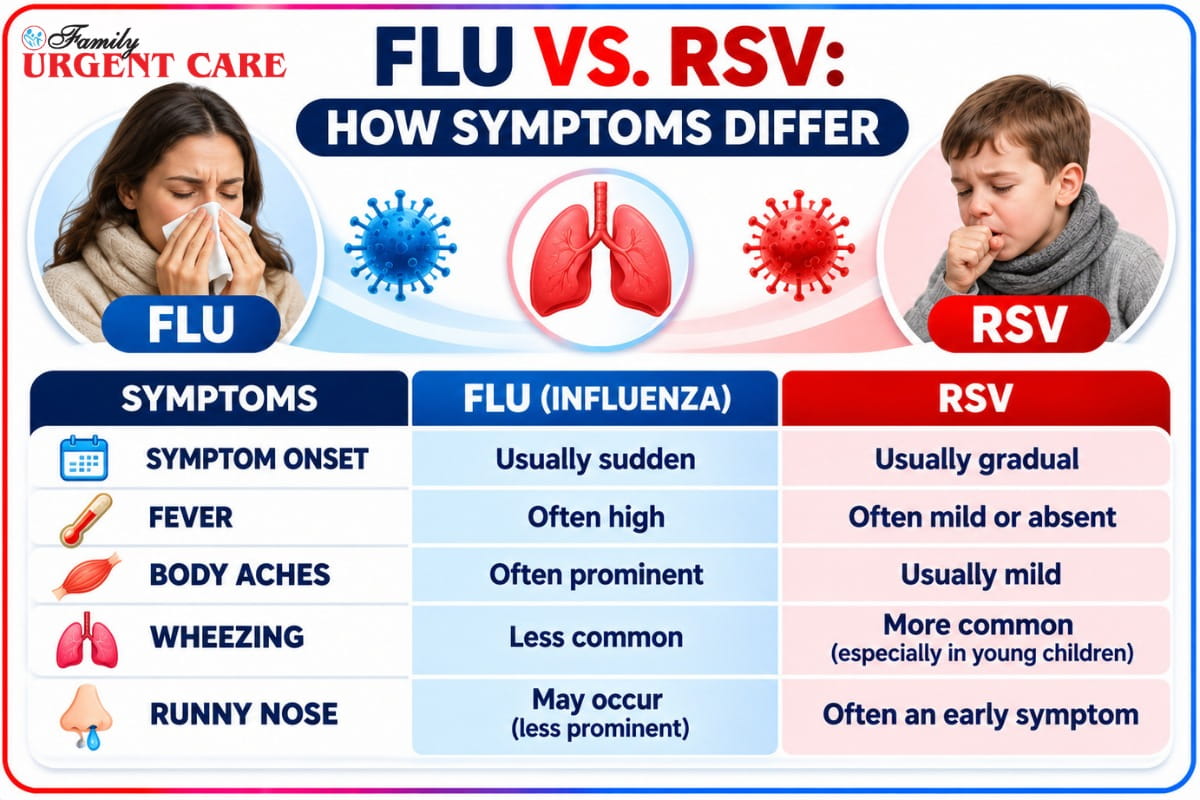
Flu and RSV share several respiratory symptoms, but comparing RSV vs flu symptoms can help you understand how the infections typically differ.
The following comparison highlights common RSV vs flu symptoms:
| Symptoms | Flu (Influenza) | RSV |
|---|---|---|
| How Symptoms Begin | Usually sudden | Usually gradual |
| Fever | Often high and sudden | Often mild or absent |
| Body Aches | Often prominent and widespread | Usually mild or less noticeable |
| Wheezing | Less common | More common, especially in young children |
| Runny Nose | May occur but is usually less prominent | Often an early and prominent symptom |
Is It Worse to Have Flu and RSV Together?
Having flu and RSV together can potentially cause more serious illness than having either infection alone.
A flu and RSV co-infection can be serious, particularly for people already vulnerable to respiratory illness.
Possible complications include:
- Pneumonia
- Dehydration
- Difficulty breathing
- Bronchiolitis, particularly in infants
- Worsening asthma or chronic obstructive pulmonary disease (COPD)
However, not everyone infected with both viruses will experience severe symptoms. The risk of complications depends on age, immune health, pre-existing medical conditions, and the severity of each infection.
Research results are contradictory on whether RSV co-infection with other respiratory viruses always leads to more severe illness. So, having both infections doesn’t necessarily mean a person will develop major complications.
Who Is Most at Risk of Flu and RSV Complications?
Although anyone can get the flu and RSV at the same time, certain groups are more vulnerable to severe illness and respiratory complications.
- Babies and Young Children: Infants, especially those under 6 months, are at higher risk of breathing difficulties, bronchiolitis, and hospitalization.
- Older Adults: Adults aged 65 and older are more likely to develop serious complications, including pneumonia and worsening respiratory conditions.
- People With Chronic Medical Conditions: Individuals with asthma, chronic obstructive pulmonary disease (COPD), heart disease, diabetes, or weakened immune systems face a higher risk of severe illness.
- Pregnant Individuals: Pregnant individuals are at higher risk of developing serious flu complications, including pneumonia, and may require hospitalization.
If you belong to a high-risk group and develop symptoms of flu and RSV together, seek medical advice early to reduce the risk of complications.
How Urgent Care Tests for Flu and RSV
Because influenza and RSV cause similar symptoms, testing can help determine which virus is causing your illness.
Your healthcare providers may use different tests depending on your symptoms, age, medical history, and risk of complications.
Flu and RSV Test
A flu and RSV test typically involves collecting a nasal swab sample.
Some molecular tests can detect influenza A, influenza B, and RSV from the same sample. Other tests may require separate samples or testing procedures.
Molecular tests, including polymerase chain reaction (PCR) tests, are generally more sensitive than rapid antigen tests.
Rapid RSV Test
A rapid RSV test detects signs of RSV infection using a respiratory sample.
Rapid antigen tests may provide results within approximately 15–30 minutes, depending on the test. However, these tests are generally less sensitive than molecular testing, particularly in adults.
A negative rapid test does not always rule out RSV or influenza. Your healthcare provider may recommend additional testing if symptoms strongly suggest an infection.
RSV testing may be especially useful for older adults and people with chronic heart or lung conditions who develop respiratory symptoms.
Can You Get RSV Vaccine and Flu Shot Together?
Yes. If you are eligible for both vaccines, you can generally receive the RSV and flu vaccine at the same time. Both vaccines protect against different respiratory viruses and may be administered during the same appointment.
Both vaccines help protect against different respiratory viruses. The influenza vaccine is recommended annually, while the RSV vaccine is currently given as a single dose to eligible adults.
Getting both vaccines at one appointment can be convenient, especially for older adults who may have difficulty scheduling multiple visits.
Who Should Get the RSV Vaccine in 2026–27?
According to the American Academy of Family Physicians (AAFP), RSV vaccination and preventive immunization are recommended for the following groups:
- Older and high-risk adults: Vaccination is recommended for everyone aged 75 and older and adults aged 50–74 at increased risk of severe RSV illness.
- People with chronic medical conditions: Heart disease, lung disease, severe obesity, and certain other conditions are risk factors considered for adult vaccination.
- People with weakened immune systems: Moderate or severe immune compromise is another risk factor for adult vaccine eligibility.
- Pregnant women: Eligible women may receive Pfizer’s Abrysvo vaccine during weeks 32–36 of pregnancy.
- Infants: Babies younger than 8 months who are not adequately protected through maternal vaccination may receive preventive RSV antibodies.
- High-risk young children: Certain children aged 8–19 months may receive preventive RSV antibodies before their second RSV season.
Is the RSV Vaccine Needed Every Year?
No. Unlike the flu shot, RSV vaccination is not currently recommended every year.
Adults who have already received an RSV vaccine generally do not need another dose at this time.
However, recommendations may change as researchers learn more about how long vaccine protection lasts.
Flu and RSV Treatment and Recovery
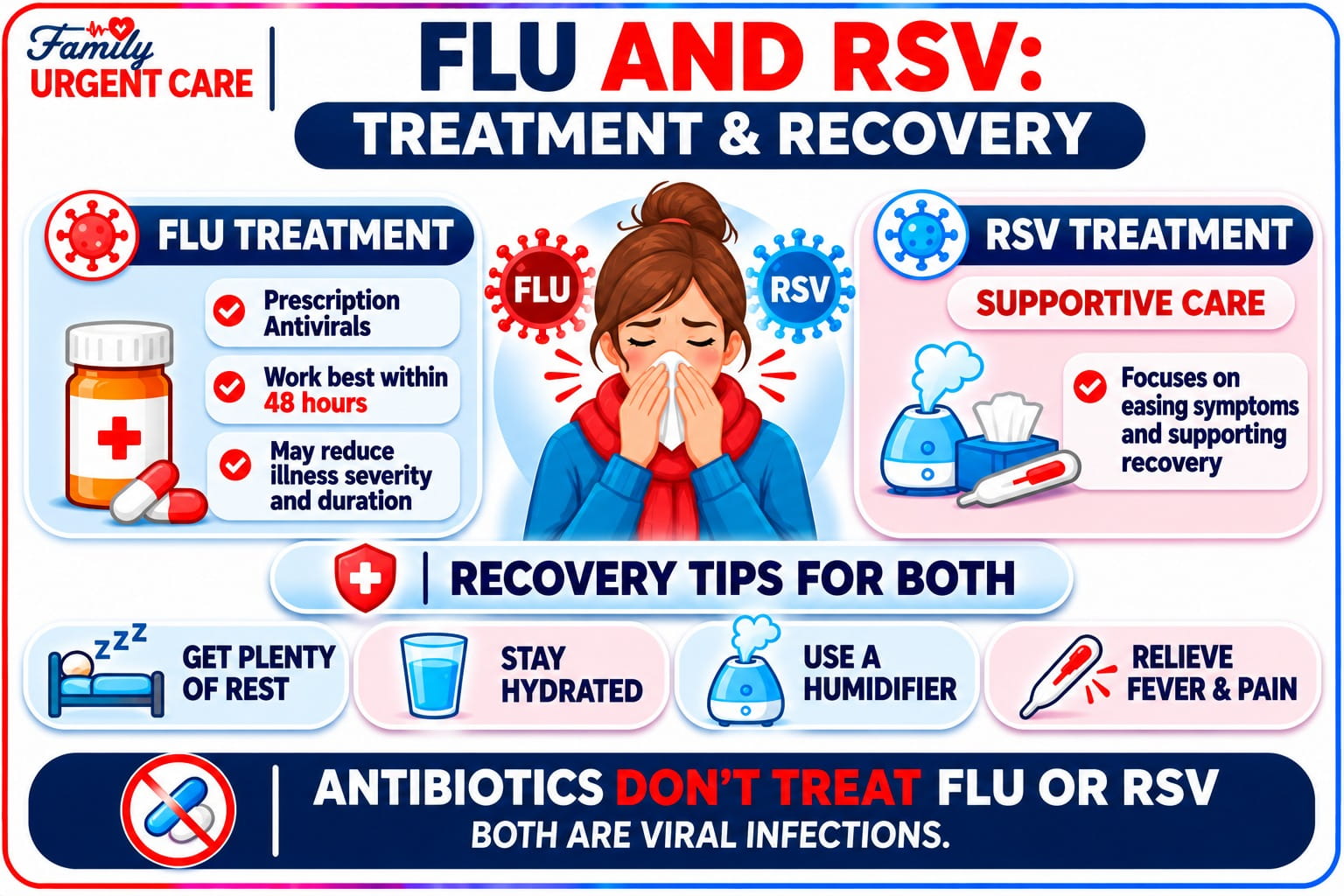
If you have the flu and RSV at the same time, treatment depends on symptom severity, your age, and any underlying medical conditions.
Although both are viral infections, their treatment options are different.
Flu Treatment
Influenza may be treated with antiviral medications, such as oseltamivir (Tamiflu), when prescribed by a healthcare provider.
These medications work best when started within the first 48 hours of symptoms. However, treatment may still be beneficial after 48 hours for people with severe illness or an increased risk of complications.
RSV Treatment
For most people, RSV treatment focuses on relieving symptoms while the body fights the infection.
Supportive care may include:
- Getting enough rest
- Drinking plenty of fluids
- Using a humidifier to ease congestion
- Taking appropriate fever or pain medication
- Using saline nasal drops to relieve nasal congestion
Antibiotics do not treat influenza or RSV because both infections are caused by viruses. However, antibiotics may be necessary if a healthcare provider diagnoses a secondary bacterial infection.
When to Go to Urgent Care vs. the ER
Flu and RSV symptoms can vary in severity, so it’s important to know which healthcare setting is appropriate for your condition.
| Urgent Care | Emergency Room (ER) |
|---|---|
| Persistent fever | Severe difficulty breathing |
| Mild wheezing | Persistent chest pain or pressure |
| Worsening cough or congestion | Blue or gray lips or skin |
| Symptoms not improving after several days | Confusion or difficulty staying awake |
| Mild dehydration | Severe dehydration |
If you are unsure where to seek care, contact a healthcare provider for guidance. However, do not delay emergency treatment if serious warning signs develop.
Not Sure If You Have Flu or RSV? Visit Family Urgent Care
Dealing with a persistent cough, fever, or congestion? Not sure whether you have the flu and RSV at the same time?
At Family Urgent Care, our healthcare providers evaluate your symptoms, review your medical history, and recommend respiratory testing when needed. Based on your diagnosis, we may prescribe flu antivirals, recommend symptom-relief medications, and provide supportive care to help you recover.
We provide walk-in care at our Chicago and Schererville locations, making it easier to seek medical attention without scheduling an appointment in advance.
FAQs
1. Is it worse to have flu and RSV together?
Having both infections may increase the risk of respiratory complications, particularly in babies, older adults, and individuals with weakened immune systems. However, not everyone with both viruses develops severe illness.
2. How long do flu and RSV last together?
Flu symptoms often improve within three to seven days, while RSV usually lasts one to two weeks. If both infections occur simultaneously, recovery may vary depending on symptom severity, age, and overall health.
3. Can a baby have RSV and flu at the same time?
Yes. Babies can become infected with RSV and influenza at the same time. Both infections may cause coughing, fever, feeding difficulties, and breathing problems. Because infants are more vulnerable to respiratory complications, prompt medical evaluation is important.
4. How do I know if I have RSV or flu?
Flu often causes sudden fever, chills, body aches, and fatigue, while RSV commonly begins with a runny nose, coughing, and congestion. However, symptoms overlap, so a healthcare provider may recommend testing to identify the infection.
5. Can you get flu, COVID, and RSV vaccines at the same time?
Yes. Eligible individuals can generally receive flu, COVID-19, and RSV vaccines during the same visit. However, vaccine eligibility varies by age, medical history, and current recommendations. Your healthcare provider can help determine which vaccines are appropriate for you.
6. Do you need an RSV vaccine every year?
No. The RSV vaccine is not currently recommended annually. According to the CDC, eligible adults generally need one dose, and those who have already received an RSV vaccine do not need another dose at this time.